Address
No. 3F07, Tao Cube, No.68, CCIH, Jihua West Road,Chancheng District, Foshan City, Guangdong, China.

How to Verify a Wood Look Porcelain Tile Supplier in China — Audit Checklist for Philippines Importers

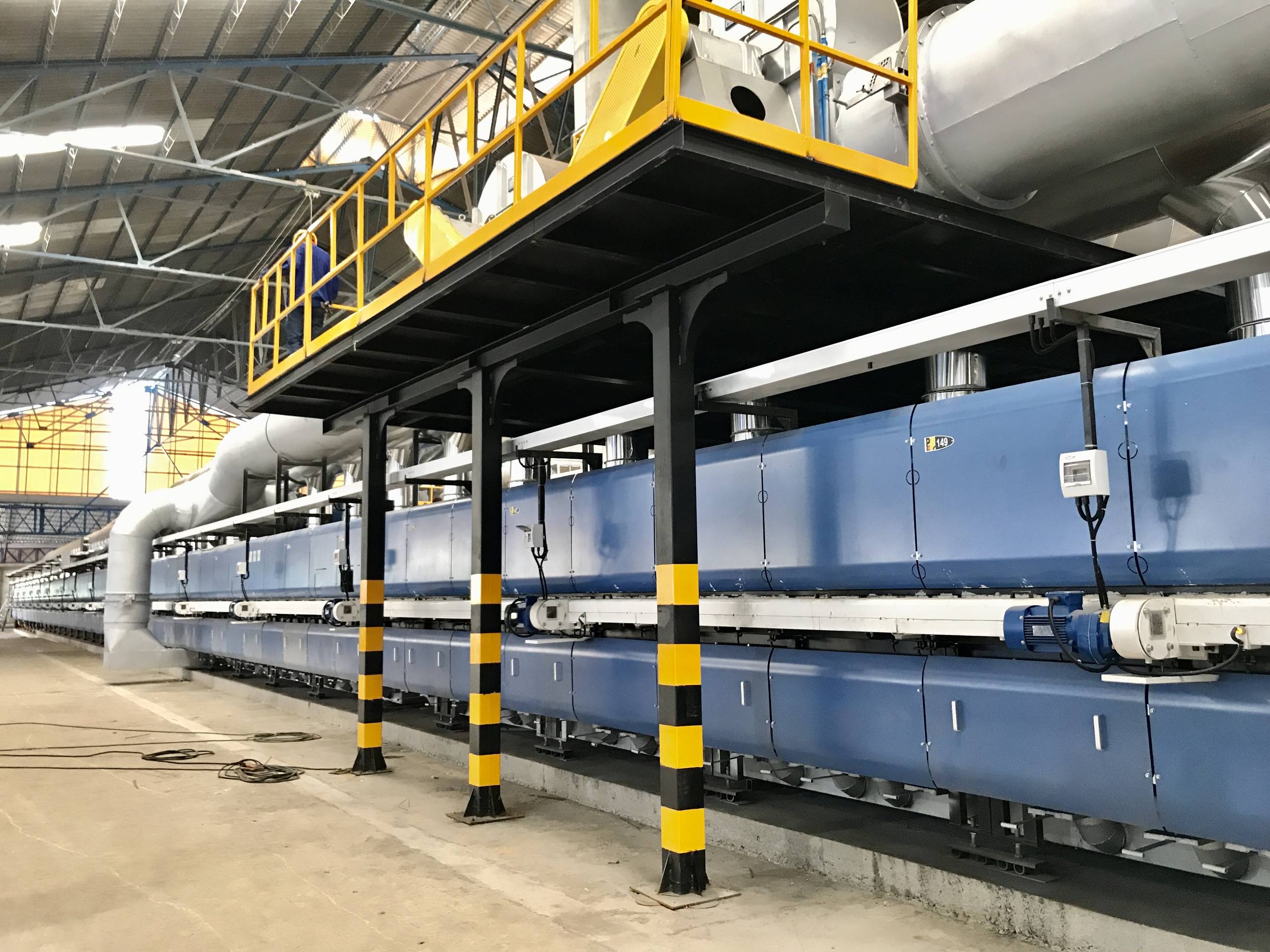
Why Verifying a Chinese Wood Look Porcelain Tile Supplier Matters — Real Risks of Buying Sight-unseen
For importers in the Philippines, sourcing wood look porcelain tile from China is a proven way to get competitive pricing and diverse designs. But every year, thousands of pesos are lost to suppliers who deliver tiles that warp, shade, or break after installation. The hidden cost of buying sight-unseen goes far beyond the container price: shipping delays, customs holds, and rejected shipments from substandard material can wipe out your profit margin. A thorough factory audit — conducted before you sign a single purchase order — is the only way to separate a genuine manufacturing partner from a middleman without its own kiln.
At Contigo Ceramics, we opened our doors in Foshan in 1999 and have shipped over 2,000 containers to Southeast Asian markets. We know the difference a real factory makes. Below is an audit checklist that every Philippines buyer can use to verify a wood look porcelain tile supplier before committing to a container.
Factory Audit Checklist Table: 8–10 Items to Verify
When you cannot visit the factory in person, use this checklist to confirm the supplier is a genuine manufacturer with quality control processes.
| Audit Item | What to Check | Why It Matters |
|---|---|---|
| 1. Business License (营业执照) | Registered company name, legal representative, registered capital, business scope (must include “porcelain tile manufacturing”). | Confirms legal entity and manufacturing capability. Cross-check with China’s National Enterprise Credit Information Publicity System. |
| 2. Export License & Customs Registration | Valid customs registration code (10 digits). Ask for recent export declarations showing shipments to the Philippines. | Ensures they can legally export and have experience with Philippine customs procedures. |
| 3. Live Video Tour (via WeChat or WhatsApp) | Real-time video showing production floor, kiln, packaging area, and warehouse. No pre-recorded clips allowed. | Prevents the use of stock footage. You see current stock and active production. |
| 4. Physical Sample Quality | Request 5–10 samples of different wood grain patterns and sizes (e.g., 600×600mm, 600×1200mm). Measure thickness, flatness, and color consistency under natural light. | Reveals actual body quality, glaze adhesion, and rectification accuracy. |
| 5. ISO 10545 & ANSI A137.1 Certificates | Certification body name, certificate number, issue date. Verify on iso.org or through the CB. | Guarantees that fired tiles meet international standards for water absorption, modulus of rupture, and abrasion resistance. |
| 6. Factory Visit (or third-party audit report) | If you cannot go, engage SGS, Bureau Veritas, or TUV to inspect the factory and prepare a report. | Unbiased confirmation of production capacity, equipment age, and quality management systems. |
| 7. Reference Clients in the Philippines | At least three recent B2B clients. Ask for contact person, container quantity, and product types shipped. | Demonstrates market experience and willingness to be transparent. |
| 8. Production Lead Time & Capacity | Current monthly output in square meters. Typical lead time for a 20ft container of wood look tile (Contigo: 25–35 days). | Reveals if they are a trading company who must wait for their sub-supplier’s schedule. |
| 9. MOQ & Payment Terms | MOQ should be one 20ft container (~1,000m²). Payment terms: typical is 30% deposit, 70% against copy of Bill of Lading. Be wary of 100% upfront. | Industry-standard FOB Foshan/Huangpu port. Unusually low MOQ may indicate a trading company. |
| 10. Written Warranty | Documented warranty covering shading variation (≤∆E 2.0), chipping, and freeze-thaw resistance for outdoor use. | Protects you against batch defects that become visible only after installation. |
How to Do a Video Factory Tour via WeChat — What to Look For
A live video tour is the next best thing to a physical visit. Here is how to conduct one effectively:
1. Request a WeChat video call during local working hours (9:00–17:00 CST).
Ask the supplier to walk the camera through each station: raw material silos, ball mill, spray dryer, press, kiln entry, glaze line, kiln exit, quality inspection area, and finished goods warehouse.
2. Look for production noise and operating equipment.
A real factory has the hum of working machinery — presses, kiln burners, and conveyor belts. If the video is silent or shows a dark, empty floor, something is off.
3. Check the kiln control panel.
Ask to see the kiln temperature readout. A consistent firing temperature of 1,200–1,250°C for porcelain is necessary for full vitrification. Also note the manufacturer name on the kiln (SACMI, System, or Chinese brands like DLT).
4. Verify warehouse stock.
Have the camera pan across the warehouse. You should see pallets of finished tiles with labels. Count the layers — a genuine factory carries inventory of multiple colors and sizes.
5. Request close-ups of the tile edges.
Rectified edges should be sharp and consistent. Run your nail across the surface — no chipping at the corners.
Certification Guide: ISO 10545, CE Marking, and Country-Specific Certs — How to Verify They’re Real
Many Chinese tile suppliers claim ISO 10545 compliance, but not all certificates are valid. Here is how to verify:
- ISO 10545 — The standard for ceramic tiles (methods for water absorption, flexural strength, etc.). A legitimate certificate includes the scope of accreditation and the CB’s accreditation mark (e.g., IAS, ANAB). Call the CB or use iso.org to confirm the certificate number.
- CE Marking (EN 14411) — Required for European markets and increasingly accepted in the Philippines for high-end projects. Ask for the Declaration of Performance and the Notified Body number (e.g., 1234). Verify on the EU NANDO database.
- TCNA / ANSI A137.1 — This standard is used widely in North America and by premium specifiers in Asia. Check tcnatile.com for accredited testing labs. Contigo Ceramics holds both ISO 10545 and ANSI A137.1 certification, and we provide copies transparently.
Red flag: If the supplier’s certificate number is not searchable online, or if the certificate lists a different company name, walk away.
Third-Party Inspection: SGS / Bureau Veritas / TUV — Cost, Process, What They Check
A pre-shipment inspection is the ultimate risk mitigation for Philippines importers of wood look porcelain tile.
Cost
For a single container (20ft), a basic quality inspection from SGS or Bureau Veritas in Guangdong costs approximately USD 400–600 (including travel within Foshan). For a full factory audit, expect USD 1,200–1,500.
Process
The importer books the inspection through the agency’s local office, provides the purchase order and packing list, and the inspector visits the factory during production or upon completion. The report arrives within 3–5 working days.
What They Check
- Dimensions: length, width, thickness, straightness.
- Surface quality: cracks, pinholes, chipping, color variation across pieces.
- Physical properties: water absorption (≤0.5% for porcelain), modulus of rupture, and scratch resistance (Mohs hardness ≥6).
- Packing: carton condition, labeling, pallet strapping, and container loading photographs.
An inspector may also take lab samples for ASTM testing if requested (additional cost). We at Contigo Ceramics welcome third-party inspections at any stage. Our quality control team cooperates fully with SGS and Bureau Veritas.
Red Flags: 5 Warning Signs of a Trading Company Posing as a Factory
- They can’t show the kiln. A legitimate factory will always showcase its kiln because that is the heart of porcelain tile production. If the video tour avoids the kiln area, you are likely talking to a trader.
- Mismatch between claimed capacity and available stock. A trading company may claim 50,000m² monthly output but only show a small showroom. Genuine factories have large warehouses with pallets ready to ship.
- No dedicated production line for your product. Wood look porcelain tile requires specialized glaze lines and engraving cylinders. If the supplier cannot show you the specific line, they buy from multiple sources.
- Overly flexible MOQ or payment terms. If they accept any MOQ (e.g., 100m²) or demand 100% upfront, be suspicious. A real manufacturer has minimum production runs and takes deposits only to secure raw materials.
- They refer you to another company for factory tour. Classic sign of a broker. Insist on meeting the production manager directly.
FAQ: 3–4 Questions About Supplier Verification
Q1: Can I trust a video tour if the supplier uses pre-recorded clips?
No. Always request a live video call with a specific request, such as “show me the kiln control panel with today’s date written on a whiteboard.” Pre-recorded videos can be borrowed from any factory.
Q2: What is the cost of a third-party inspection for a single container from Foshan?
Expect between USD 400 and USD 600 for SGS or Bureau Veritas standard visual and dimensional inspection. Add approximately USD 200 if a sample is sent to a lab for full ASTM testing.
Q3: How do I verify a supplier’s ISO 10545 certificate online?
Ask for the certificate number and the name of the certification body. Then visit iso.org or the CB’s website (e.g., TUV Rheinland, SGS) and search the certificate number. If the company name or scope does not match, proceed with caution.
Q4: Are there any country-specific certifications required for the Philippines?
The Philippines Bureau of Philippine Standards (BPS) does not yet require mandatory PS certification for imported porcelain tiles, but many project specifiers demand ISO 10545 compliance. It is also wise to have a certificate of origin (Form E) for ASEAN preferential tariff under ACFTA.
External Reference: ISO 10545 ceramic tile standards
Ready to Start Your Supplier Verification?
Whether you need a live video tour of our large-format wood look tiles, want to see our polished finish range, or schedule a third-party inspection, we are ready to assist. Contigo Ceramics has served Philippine importers since 1999 with direct FOB Foshan/Huangpu pricing, MOQ of one 20ft container, and full ISO 10545 / ANSI A137.1 certification. Contact us to request a factory video tour or book your third-party inspection today.