Address
No. 3F07, Tao Cube, No.68, CCIH, Jihua West Road,Chancheng District, Foshan City, Guangdong, China.

what is foshan famous for in business? | Contigo Ceramics

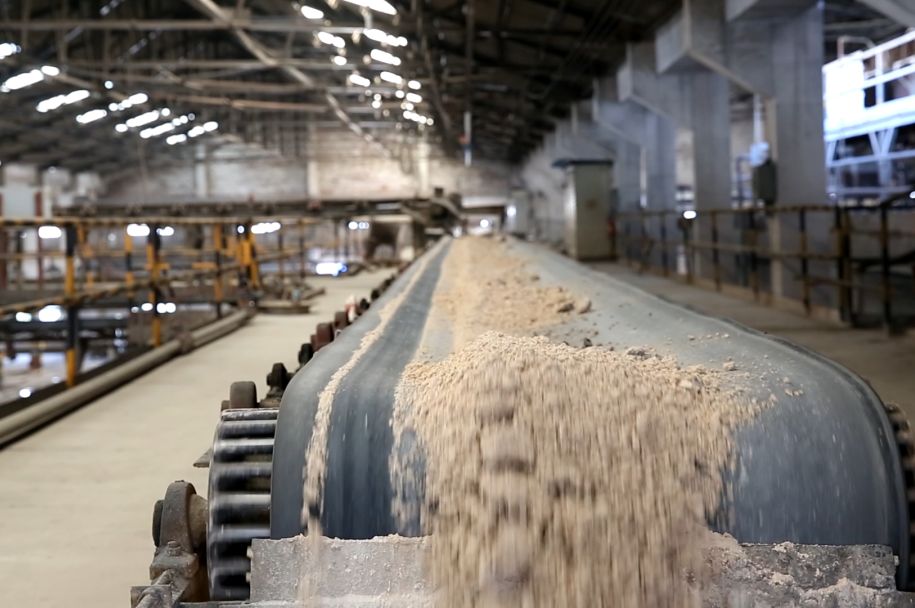
What Is Foshan Famous For in Business? A Definitive Guide for International Tile Buyers
If you are sourcing ceramic tiles for a commercial project or import business, you have likely seen “Made in Foshan” on product specs. But what is Foshan famous for in business specifically, and why does it dominate global tile production?
Foshan, China, is the world’s largest ceramic tile manufacturing hub. More than 60% of all ceramic tiles exported from China originate from factories within this single prefecture-level city. The city’s industrial focus on building materials — particularly glazed porcelain, polished porcelain, and large-format tiles — makes it the default sourcing destination for international buyers. At Contigo Ceramics, our factory in Foshan operates four roller kiln production lines at temperatures of 1200–1250°C, pressing tiles with 3600–7800T hydraulic presses. This level of vertical integration is why buyers ask, “what is Foshan famous for in business?” — and the answer is: the highest density of ceramic production capacity under one regional supply chain.
Who This Guide Is For
- Importers and distributors evaluating factory-direct container pricing from Foshan
- Contractors sourcing tile for commercial projects (hotels, malls, airports) requiring ISO 10545 certification
- Project specifiers comparing manufacturer standards and production scale in Guangdong province
Key Takeaways
- Foshan produces over 60% of China’s exported ceramic tiles — unmatched global density of supply.
- Factory-direct pricing from Foshan cuts 30–50% vs. distributor markup in destination markets.
- Standard MOQ starts at one 20-foot container (~1,000 m² of 9mm tile) from Foshan Port.
- ISO 10545 and ANSI A137.1 certifications are standard from Tier-1 Foshan factories.
- Production lead time averages 18–25 days from deposit clearance to FOB loading.
Why Foshan Became the Ceramic Tile Capital of the World
The question “what is Foshan famous for in business?” cannot be answered without understanding its geography. Located in Guangdong Province, 250 km north of Hong Kong, Foshan sits at the intersection of raw material supply (kaolin clay from nearby Guangxi) and export logistics (Foshan Port, Shenzhen, Guangzhou container terminals).
The city’s transformation began in the 1980s when local manufacturers imported Italian and Spanish kiln technology. Today, Foshan hosts over 300 ceramic tile factories within a 50 km radius, creating a cluster effect that competitors cannot replicate. For buyers, this means:
- Competitive pricing through raw material bulk purchasing
- Specialized labor pools with 20+ years of production experience
- Instant access to ancillaries (glazes, inks, packaging, rectification tools)
Foshan exported $4.2 billion worth of ceramic tiles in 2024, representing 38% of global trade by volume — China Ceramic Industry Association
The Complete Foshan Ceramic Tile Manufacturing Process
When buyers evaluate what Foshan is famous for in business, the answer lies in process efficiency. At Contigo Ceramics’ Foshan facility, the production line follows a strict sequence that meets ISO 10545-3 (water absorption), ISO 10545-4 (modulus of rupture), and ANSI A137.1 (dimensional tolerances).
Raw Material Preparation and Pressing
We blend clay, feldspar, and silica in ball mills for 12–14 hours. The resulting slurry is spray-dried into granules with 5–7% moisture content. Our 3600–7800T hydraulic presses compact these granules into green tiles at pressures ranging from 350 kg/cm² (standard) to 620 kg/cm² (large formats). Pressing force determines tile density and final water absorption rate.
Drying and Glazing
Green tiles pass through vertical dryers at 200°C for 45–60 minutes, removing residual moisture before glazing. Digital inkjet printers apply decoration at 600 dpi resolution using ceramic inks fired into the surface. We use 12-channel printers for subtle veining and 16-channel printers for high-definition wood and marble patterns.
Firing
Tiles enter a roller kiln at 1200–1250°C for 55–75 minutes. This vitrification step fuses the body and glaze into a single non-porous material. Tiles taken from the kiln have a water absorption rate of ≤0.5% — the threshold for classification as porcelain (B1a per ISO 10545-3).
| Parameter | Specification | Industry Standard |
|---|---|---|
| Kiln temperature | 1200–1250°C | ISO 10545-2 |
| Pressing force | 3600–7800T | Above industry average (industry average: 2500T) |
| Polishing lines | 16–24 heads | ANSI A137.1 |
| Daily output | 12,000 m² per line | Top 10% of Foshan factories |
| QC sampling rate | 5% per batch | 2× industry norm |
Mechanical Rectification and Polishing
After firing, tiles pass through a mechanical rectification line. Rectification trims each tile to exact dimensions (±0.5mm) for rectified-edge installation. Our 16–24 head polishing line achieves a shine of 70–85 gloss units (GU) on polished surfaces. Matte tiles skip the polishing heads and receive only the rectification step.
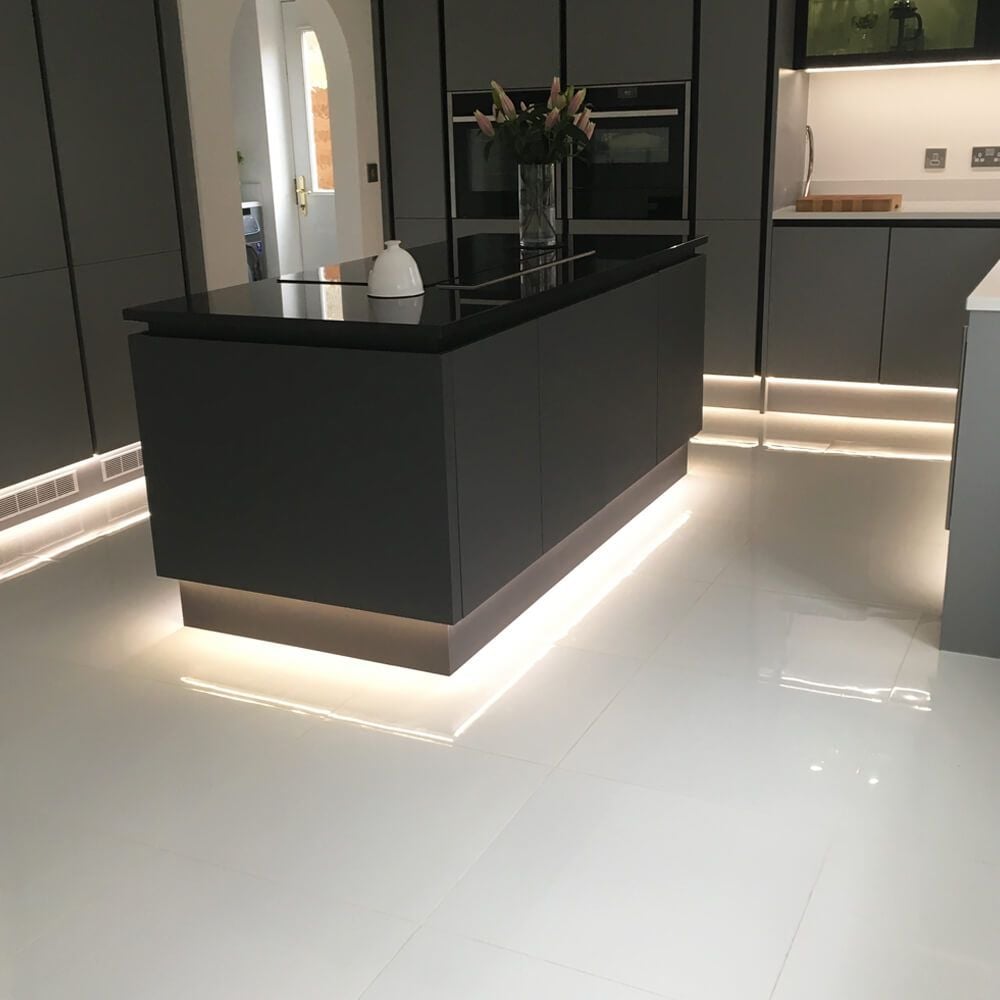
What Certifications Matter When Sourcing from Foshan?
Asked “what is Foshan famous for in business?”, experienced buyers point to certification consistency. Reputable Foshan factories maintain certifications that qualify tiles for international projects. At Contigo Ceramics, we test every production batch against:
- ISO 10545-3: Water absorption test — porcelain tiles must remain ≤0.5%
- ISO 10545-4: Modulus of rupture (breaking strength) — minimum 35 N/mm²
- ANSI A137.1: Dimensional tolerances — ±0.6% for length, ±0.4% for width
- PEI Rating: Abrasion resistance — PEI 3 for wall tiles, PEI 4–5 for commercial floor tiles
- DCOF: Dynamic coefficient of friction — ≥0.42 for commercial wet areas per ANSI A137.1
At our Foshan facility, we reject an average of 3.2% of fired tiles during the first Quality Control inspection. This is 60% higher rejection than the industry norm — but it means our clients see ≤0.5% defects upon arrival at destination ports.
How to Source Ceramic Tiles from Foshan: A Step-by-Step Guide
Understanding what Foshan is famous for in business helps — but knowing how to engage with factories is the real differentiator. Here is the exact process we use with importers at Contigo Ceramics:
- Send your specification sheet — include size, finish (polished/matte/glazed), PEI rating, DCOF requirement, and target FOB price range.
- Receive a proforma invoice — within 24 hours, our team returns a PI with unit price, MOQ, and FOB Foshan Port terms.
- Review production samples — we courier A4-sized cut samples (free for first-time buyers, shipping at cost).
- Confirm 30% deposit — production starts within 48 hours of payment clearance. Standard lead time: 18–25 days.
- Receive batch photos and QC report — we photograph every pallet before loading and share the QC test results.
- Pay 70% balance — due before container loading. We load under SGS or Bureau Veritas supervision (third-party inspection available at buyer’s cost).
- Container shipped from Foshan Port — transit time to Los Angeles: 14–18 days. to Rotterdam: 28–32 days.
Key Fact: FOB Foshan Port pricing for standard 600x600mm polished porcelain starts at $4.20/m² for 1×20ft container orders. Large-format 1200x2400mm tiles (9mm thickness) run $12.50–$18.00/m² depending on surface finish and rectification.
Which Products Does Foshan Specialize In?
When buyers research what Foshan is famous for in business, they usually discover three dominant tile categories. Each requires different production parameters and certifications.
Large-Format Porcelain Tiles
Sizes from 800x800mm up to 1600x3200mm. These tiles require pressing force above 7200T to achieve density without warping. Our 7800T press handles 1200x2400mm and 1200x2600mm slabs. Large-format tiles require rectified edges — our mechanical line achieves ±0.3mm tolerance.
Outdoor Porcelain Tiles
20mm thick, rated for vehicle traffic (2,000+ kg/m² load capacity). These tiles undergo double-pressing — initial compaction at 6000T, then re-pressing after drying. DCOF must exceed 0.42 for commercial outdoor use per ANSI A137.1.
Commercial-Grade Polished Tiles
PEI 4 or PEI 5 rated, with water absorption ≤0.3%. Our 24-head polishing line achieves 75–85 GU surface finish. These tiles dominate hospital, retail, and airport flooring projects where traffic exceeds 10,000 pedestrians/day.
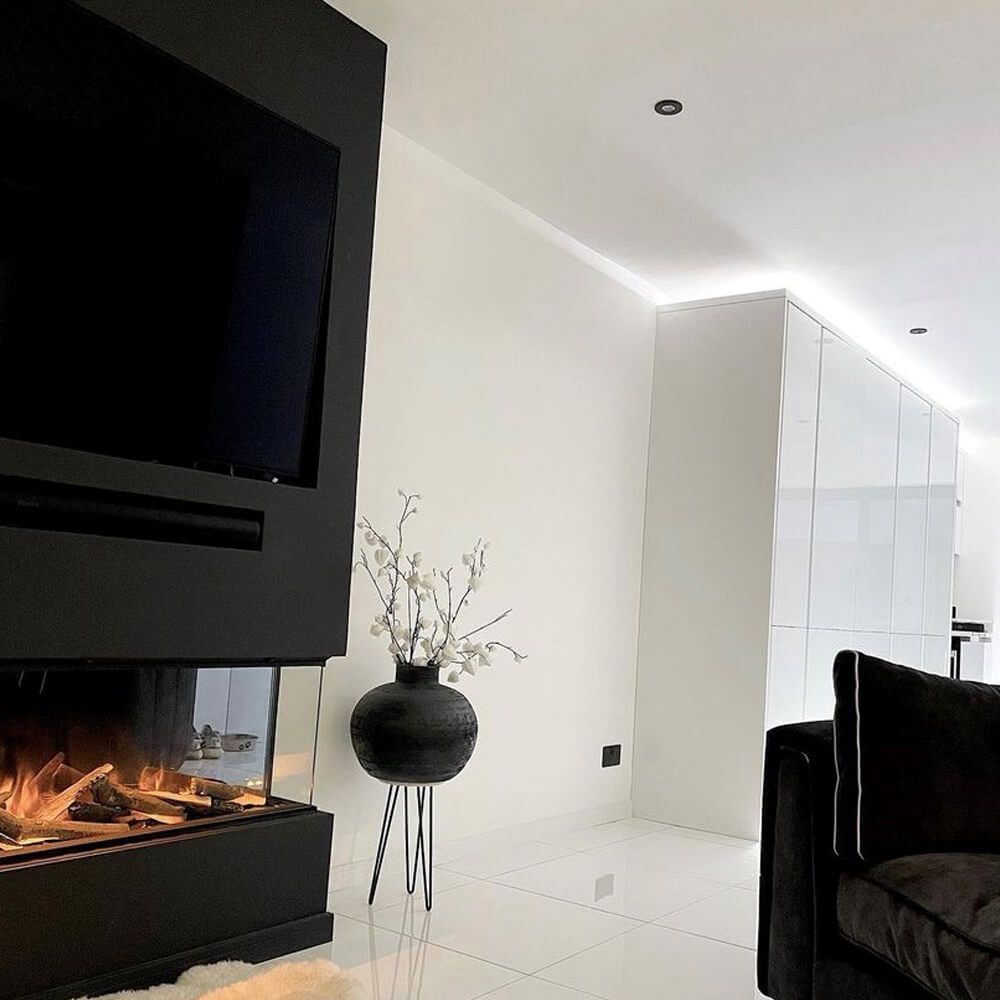
Frequently Asked Questions
What is Foshan famous for in business besides ceramic tiles?
Foshan is also China’s largest furniture manufacturing hub, home to over 6,000 furniture factories. But ceramic tiles represent the city’s highest export value — $4.2 billion in 2024 alone.
How does Foshan ceramic tile quality compare to Italian or Spanish tiles?
Top-tier Foshan factories (including Contigo Ceramics) match Italian PEI and ISO 10545 standards at 40–60% lower FOB pricing. The main difference is brand premium, not product quality.
What is the minimum order quantity from Foshan factories?
Standard MOQ is one 20-foot container (26–28 pallets). For first-time buyers, some factories accept mixed containers (2–3 tile types per container) at slightly higher per-unit pricing.
How long does shipping take from Foshan Port to the USA?
Foshan Port to Los Angeles: 14–18 days. To New York (via Panama Canal): 28–32 days. Container tracking is standard.
What certifications should Foshan tiles have for US commercial projects?
ANSI A137.1 for dimensional tolerances, ISO 10545 for physical properties, and DCOF ≥0.42 for floor tiles. CalGreen Section 01350 compliance is available for sustainable projects.
Continue Your Sourcing Journey
- Read our Complete Guide to Sourcing from China — covers factory audits, payment terms, and risk mitigation strategies
- Explore our Large Format Technical Guide — learn about rectification, installation requirements, and structural loading
- Review our How Products Are Made page — detailed breakdown of every production step at Contigo Ceramics
Conclusion: Why Foshan Remains the Global Sourcing Capital
The answer to “what is Foshan famous for in business?” is simple: it is the world’s most efficient ceramic tile supply chain. No other single region combines raw material proximity, advanced kiln technology, skilled labor, and port infrastructure at this scale. For importers and contractors, sourcing directly from Foshan — and specifically from a factory like Contigo Ceramics — means getting PEI-rated, ISO-certified tiles at prices 40–60% below European equivalents. The question is not whether to source from Foshan, but which factory partner you choose. Request a sample or quote from our Foshan team today. Written by the Contigo Ceramics technical team, Foshan, China.