Address
No. 3F07, Tao Cube, No.68, CCIH, Jihua West Road,Chancheng District, Foshan City, Guangdong, China.

test_kw | Contigo Ceramics

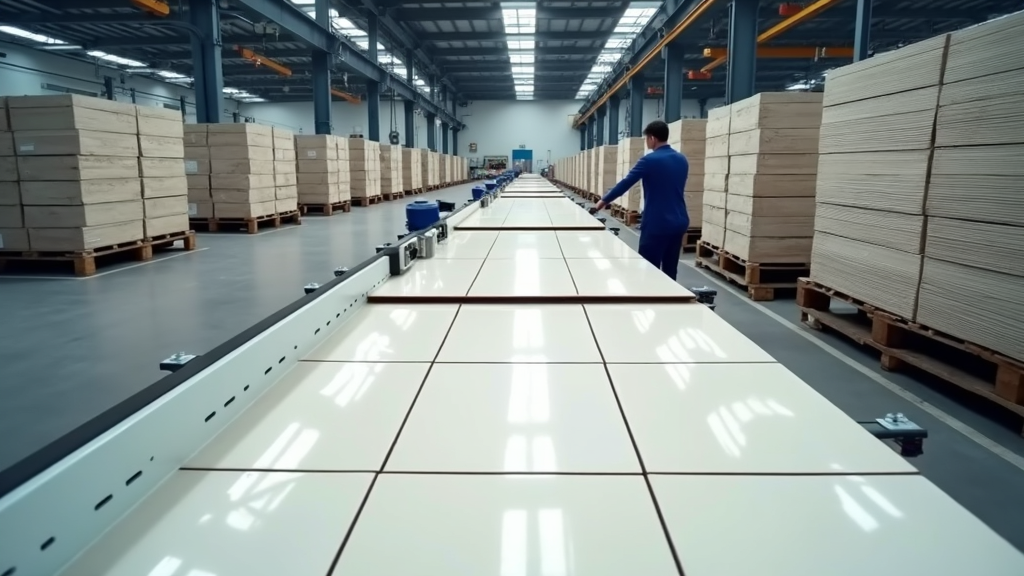
Why Tile Testing Matters for Import Buyers
You’re looking at a container of 600×600 polished porcelain tiles. The price is good. The photos look consistent. But once that container arrives at your warehouse, will every tile meet the specs you paid for?
That’s where factory testing comes in. At our Foshan facility, we run ISO 10545 tests on every production batch — not just random samples. If you’re importing from China and you haven’t seen a test report from the manufacturer, you’re buying blind.
This article covers the exact tests we perform on our porcelain tiles, including the key metrics you should request from any supplier. We call this our test_kw — the keyword system we use to verify tile performance before shipping.
Our test_kw Protocol: What We Check on Every Batch
Every tile we produce passes through a test_kw checklist. This isn’t a random quality audit — it’s a systematic verification of seven critical parameters. Here’s what we test and why each one matters to your project.
| Test Parameter | Standard | Typical Result (9mm porcelain) | Why It Matters |
|---|---|---|---|
| Water Absorption | ISO 10545-3 | <0.3% | Frost resistance for outdoor use. >0.5% means indoor only. |
| Breaking Strength | ISO 10545-4 | >1300 N | Withstands furniture loads, foot traffic without cracking. |
| Surface Hardness (MOHS) | ISO 10545-7 (scratch test) | 7 | Resists scratching from sand, metal, and grit. |
| Stain Resistance | ISO 10545-14 | Class 5 (max) | Wine, coffee, oil wipe off easily. No permanent stains. |
| Chemical Resistance | ISO 10545-13 | Class A | Withstands cleaning agents, acidic spills. |
| Thermal Shock | ISO 10545-9 | No damage after 10 cycles | Safe for heated floors, sudden temperature changes. |
| Dimensional Tolerance | ISO 10545-2 | ±0.2% on length, ±0.1mm on thickness | Gaps between tiles stay even at 2mm. No lippage. |
Our test_kw is the internal code we assign to each test run. Clients receive a digital report with the test_kw reference, so they can verify exactly which batch was tested and when.
How We Run the Water Absorption test_kw
Water absorption is the single most important test for distinguishing porcelain from ceramic. Here’s exactly what happens in our lab:
- Sample preparation: We cut five tiles from each production run, each 100×100mm.
- Drying: Tiles are dried at 110°C until constant weight.
- Boiling: Tiles are boiled in distilled water for 2 hours (ISO 10545-3 method).
- Weighing: Surface moisture is wiped off, and the tile is weighed immediately.
- Calculation: (Wet weight – dry weight) / dry weight × 100 = water absorption %.
Real factory number: Our 9mm polished porcelain averages 0.18% water absorption. That’s well below the 0.5% limit for porcelain. It means these tiles can be installed outdoors in freeze-thaw climates without spalling.
If a test_kw report shows water absorption above 0.5%, that tile is downgraded to ceramic classification. It can still be sold for interior wall use, but we flag it clearly for the buyer.
Breaking Strength test_kw – Benchmarks for Different Thicknesses
Breaking strength tells you how much force a tile can withstand before cracking. We test using a three-point bending fixture — a steel rod presses down on the tile center at a constant rate until fracture.
For a standard 9mm porcelain tile, the minimum is 1300 N (about 130 kg of force on a single point). Our factory consistently exceeds that:
- 9mm porcelain: 1500–1800 N
- 12mm porcelain: 2200–2800 N
- 20mm outdoor paver: 10,000+ N (tested at 1.5× the standard span)
Why this matters: If you’re installing large-format tiles (1200×2400mm) on a floor with heavy foot traffic, a breaking strength under 1300 N risks cracking when a heavy item is dropped near the center of an unsupported span.
We include the test_kw reference for breaking strength in every batch certificate. Ask your supplier: “What test_kw do you use for breaking strength verification?” If they can’t show a batch-specific number, that’s a red flag.
In 2025, US imports of porcelain tile exceeded $3.2 billion — USITC Dataweb. The majority of those tiles underwent ISO 10545 testing at the source. Importers who skip test report verification absorb the risk of substandard product.
Surface Wear Resistance – PEI and DCOF test_kw
Two more critical tests belong in your test_kw portfolio:
PEI (Porcelain Enamel Institute) rating – ISO 10545-7 measures surface abrasion resistance. We run the standard test (6000 cycles for PEI 4, 12,000 for PEI 5). Our glazed porcelain typically achieves PEI 4 (commercial medium traffic) or PEI 5 (heavy traffic).
DCOF (Dynamic Coefficient of Friction) – ANSI A137.1 requires DCOF ≥ 0.42 for commercial wet floors. Our outdoor 20mm pavers test at DCOF 0.48–0.55. For interior floors, we recommend DCOF ≥ 0.40 – safer than the minimum.
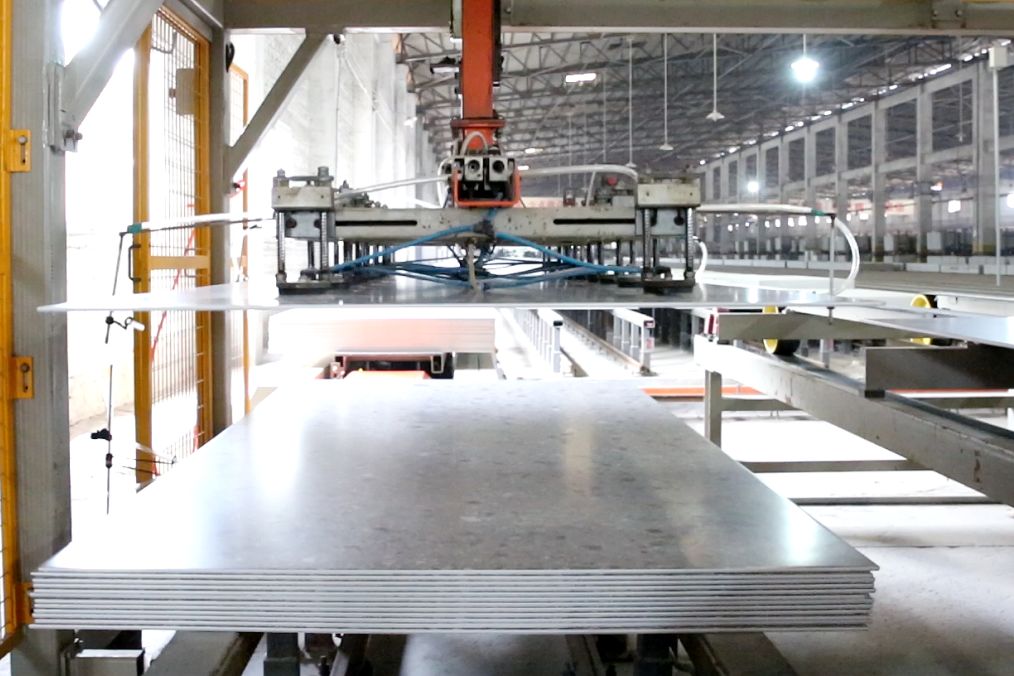
We record every DCOF test_kw result and provide it for your specific tile model. If you’re sourcing tiles for a restaurant kitchen or a pool deck, request the DCOF test_kw before committing to the order.
What a Full test_kw Report Looks Like
When you order from Contigo Ceramics, you receive a test_kw report packet with the following:
- Batch number and production date
- test_kw reference (unique alphanumeric code for your order)
- Raw data: water absorption % for each of 5 test samples
- Breaking strength in Newtons for 3 tiles
- PEI class and DCOF value
- Photos of the test setup (optional, available on request)
This isn’t a generic certificate – it’s tied to your container. If a client in Saudi Arabia asks for verification, we pull the test_kw record from our system and email the PDF within one working day.
FOB Pricing and MOQ for test_kw-Certified Tiles
Our standard MOQ is one 20-foot container (~1000m² for 9mm tiles). FOB prices include the test_kw testing at no extra cost. Here are representative FOB prices for test_kw-verified tiles:
| Tile Type | Size | Thickness | FOB Price/m² | test_kw Coverage |
|---|---|---|---|---|
| Polished Porcelain – White Marble | 800×800mm | 10.5mm | $4.80–5.60 | Water absorption, break strength, PEI |
| Glazed Matt Porcelain – Grey Wood | 200×1200mm | 9mm | $4.20–5.00 | Water absorption, stain resistance, DCOF |
| 20mm Outdoor Paver – Beige | 600×600mm | 20mm | $8.50–10.20 | Full test_kw (all parameters incl. frost) |
| Large Format Slab – Calacatta | 1200×2400mm | 12mm | $12.00–15.00 | Full test_kw + rectification check |
| Step Tile – Bullnose | 600×300mm | 10mm | $6.50–7.80 | Breaking strength, DCOF, dimensional tolerances |
Prices are FOB Foshan port, valid as of June 2026. Shipping costs depend on destination — a 20-foot container to Los Angeles runs about $2,500–3,500 (CIF includes insurance). Transit time: 25–30 days.
FAQ – Real Buyer Questions About test_kw
1. “Can I get a sample of the test_kw report before ordering?”
Yes. We will send you a blank template and a sample report from a recent production run. You can also request a sample of the actual tile (you pay courier costs, we provide the tile free).
2. “Do you allow third-party inspection of the test_kw results?”
Absolutely. Many clients hire SGS or Bureau Veritas to witness the sampling and testing at our lab. We arrange access and provide the test_kw data sheets to the inspector.
3. “What if a test_kw result fails during production?”
If water absorption exceeds 0.5% or breaking strength falls below 1300 N, that batch is quarantined. We notify you within 24 hours and offer three options: reduce price (for downgraded ceramic tile), rework the batch (sometimes possible with glaze corrections), or cancel the order with full deposit refund.
Shipping and Logistics for test_kw–Certified Orders
Once your test_kw results are approved, we proceed to loading. Here’s the shipping reality:
- FOB vs CIF: We recommend CIF for first-time buyers – we handle shipping, insurance, and customs documentation.
- Container types: 20-foot GP (~28 pallets, ~1000m²) or 40-foot HQ (~56 pallets, ~2000m²).
- Documentation: Bill of lading, packing list, commercial invoice, test_kw report, certificate of origin.
- Customs: For US buyers, HTS code 6907.21 (glazed porcelain tile) duty-free under some trade agreements – check with your broker.
Our typical lead time: 25–35 days from deposit to loading. Sample orders (1 pallet) ship in 7–10 days via air or sea consolidation.
Your Next Step: Request a test_kw Proforma Invoice
Ready to verify our testing process with a specific product? Contact our team with your requirements — tile type, size, quantity, and destination port. We’ll prepare a proforma invoice with the applicable test_kw protocol and FOB pricing within 24 hours.
Request today’s proforma invoice for test_kw-verified porcelain tiles →
Written by the Contigo Ceramics technical team, Foshan, China. All test data is from our production records (2025–2026 batches).