Address
No. 3F07, Tao Cube, No.68, CCIH, Jihua West Road,Chancheng District, Foshan City, Guangdong, China.

sintered stone tiles vs other material tiles | Contigo Ceramics

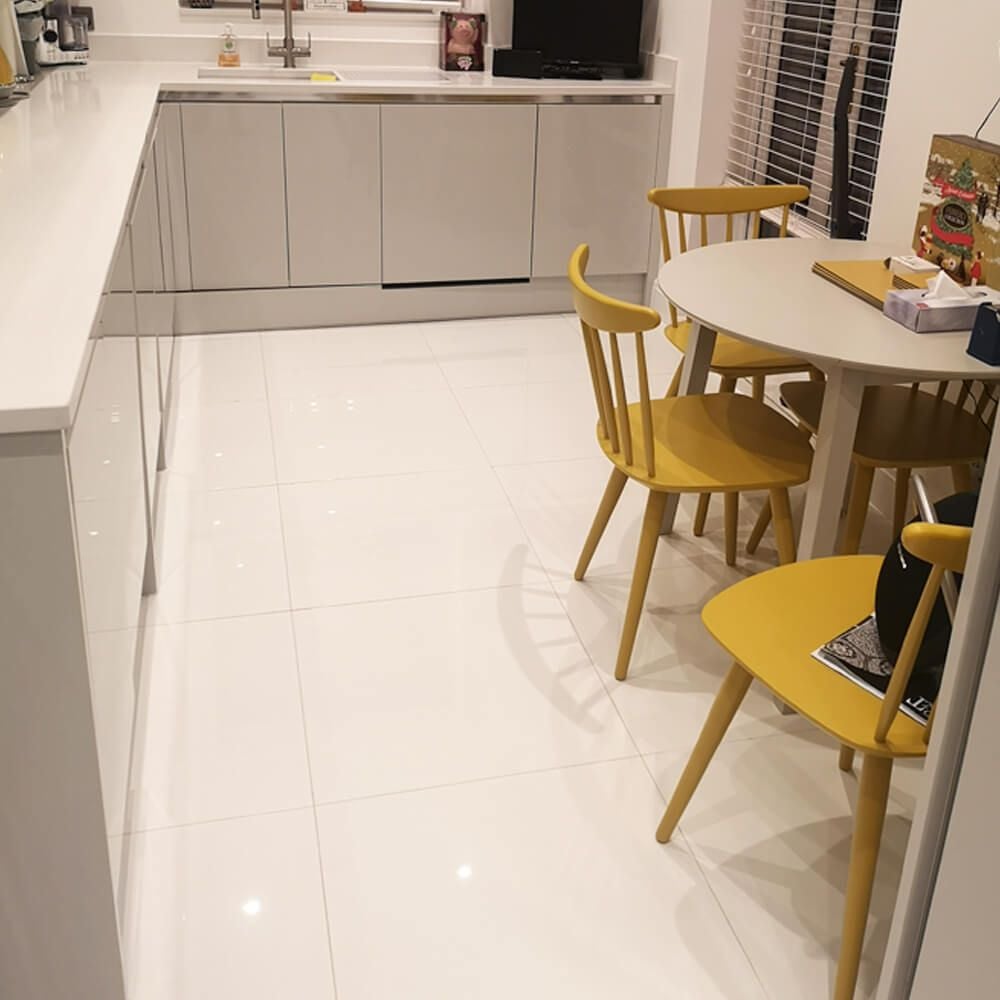
Introduction: Sintered Stone vs Other Material Tiles – What’s the Real Difference?
If you’re researching tile for a kitchen countertop, feature wall, or high-traffic floor, you’ve likely come across the term “sintered stone.” It’s marketed as an ultra-durable, ultra-thin, high-performance surface. But how does it actually compare to more familiar options like porcelain, ceramic, or natural stone? And more importantly, which material gives you the best value for your project?
In this article, we’ll compare sintered stone tiles against porcelain, ceramic, and natural stone on the factors that matter most: price, durability, appearance, maintenance, and best use cases. As a factory-direct manufacturer of premium porcelain tile and large-format slabs, we’ll also explain why porcelain — especially large-format porcelain slabs — is often a smarter choice than sintered stone for most residential and commercial applications.
Sintered Stone vs Other Material Tiles: At a Glance
Before we dive deeper, here’s a quick comparison table that highlights the key differences across five critical dimensions.
| Dimension | Sintered Stone | Porcelain Slab | Ceramic Tile | Natural Marble |
|---|---|---|---|---|
| Price per sqm | $$$$ – Very high (manufacturing + brand markup) | $$ – Factory-direct cost, 1/3 to 1/2 of sintered stone | $ – Budget-friendly | $$$$$ – High material + installation cost |
| Durability | Excellent – Hard, scratch & heat resistant | Excellent – Mohs 6–7, heat-proof, stain-proof | Good – Moderate scratch resistance, less impact strength | Poor – Scratches, etches, stains easily |
| Appearance | Natural stone look, consistent veining | High-definition digital inkjet, 1:1 marble replication | Varied – Can mimic stone but at lower resolution | Unique natural veining, but color variation can be unpredictable |
| Maintenance | Low – Non-porous, no sealing needed | Low – Non-porous, no sealing, easy wipe-clean | Moderate – Glazed options low-maintenance, unglazed requires sealant | High – Requires annual sealing, acidic spills cause etching |
| Best use case | Kitchen countertops, outdoor cladding, high-end commercial | Kitchen countertops, flooring, wall cladding, outdoor (20mm) | Walls, low-traffic floors, backsplashes | Low-traffic feature walls, luxury bathrooms (with care) |
Cost: Is Sintered Stone Worth the Premium?
Sintered stone is manufactured by compressing raw minerals under extreme heat and pressure — a process that requires specialized equipment and high energy consumption. That drives up the price significantly. A typical sintered stone slab can cost $80–150 per square meter before installation, and because the market is dominated by a few large brands, you’re also paying for marketing and distribution markups.
Porcelain slabs, on the other hand, are produced on a much larger scale using well-established roller-kiln technology. At Contigo Ceramics, we manufacture porcelain slabs — including large-format sizes up to 1600×3200mm — at our own factories in Foshan and Zhaoqing. Because we sell factory-direct, you can get a premium marble-look porcelain slab for roughly half the price of an equivalent sintered stone surface. And for budget-conscious projects, high-quality ceramic tile delivers a similar look for even less.
Factory fact: We produce about 200,000 m² of tile per day across our five production lines — that’s the kind of scale that keeps costs competitive without sacrificing quality.
Durability & Performance: Which Material Handles Real Life?
Scratch and Impact Resistance
Both sintered stone and porcelain slab score well on the Mohs hardness scale (sintered stone ~7, porcelain ~6–7). In everyday use — dropping a knife, dragging a pan — both materials resist scratching. Ceramic tile is softer and can chip more easily if a heavy object is dropped. Natural marble is the weakest here: it scratches from sand grit and even from sliding a ceramic plate across the surface.
Heat and Stain Resistance
Sintered stone is often promoted as “oven-proof” — you can place a hot pan directly on it. Good porcelain slabs also handle heat beautifully: our 12mm large-format slabs are tested for kitchen countertop use and can take direct contact with hot cookware without damage. Neither material requires trivets. Ceramic tile can handle heat but may crack under sudden thermal shock. Marble is vulnerable: heat can cause discoloration, and acidic spills (lemon, vinegar, wine) etch the surface permanently.
Thickness and Weight Considerations
Sintered stone is typically 6–12mm thick. Porcelain slabs come in 6mm (lightweight cladding), 9mm (flooring), 12mm (countertops), and 20mm (outdoor paving). The 12mm thickness provides the same structural integrity as sintered stone but at a lower weight than natural stone. Because we control the body composition in our own factory, we can optimize thickness for each application — something many sintered stone brands cannot offer.
Appearance: Can You Tell the Difference?
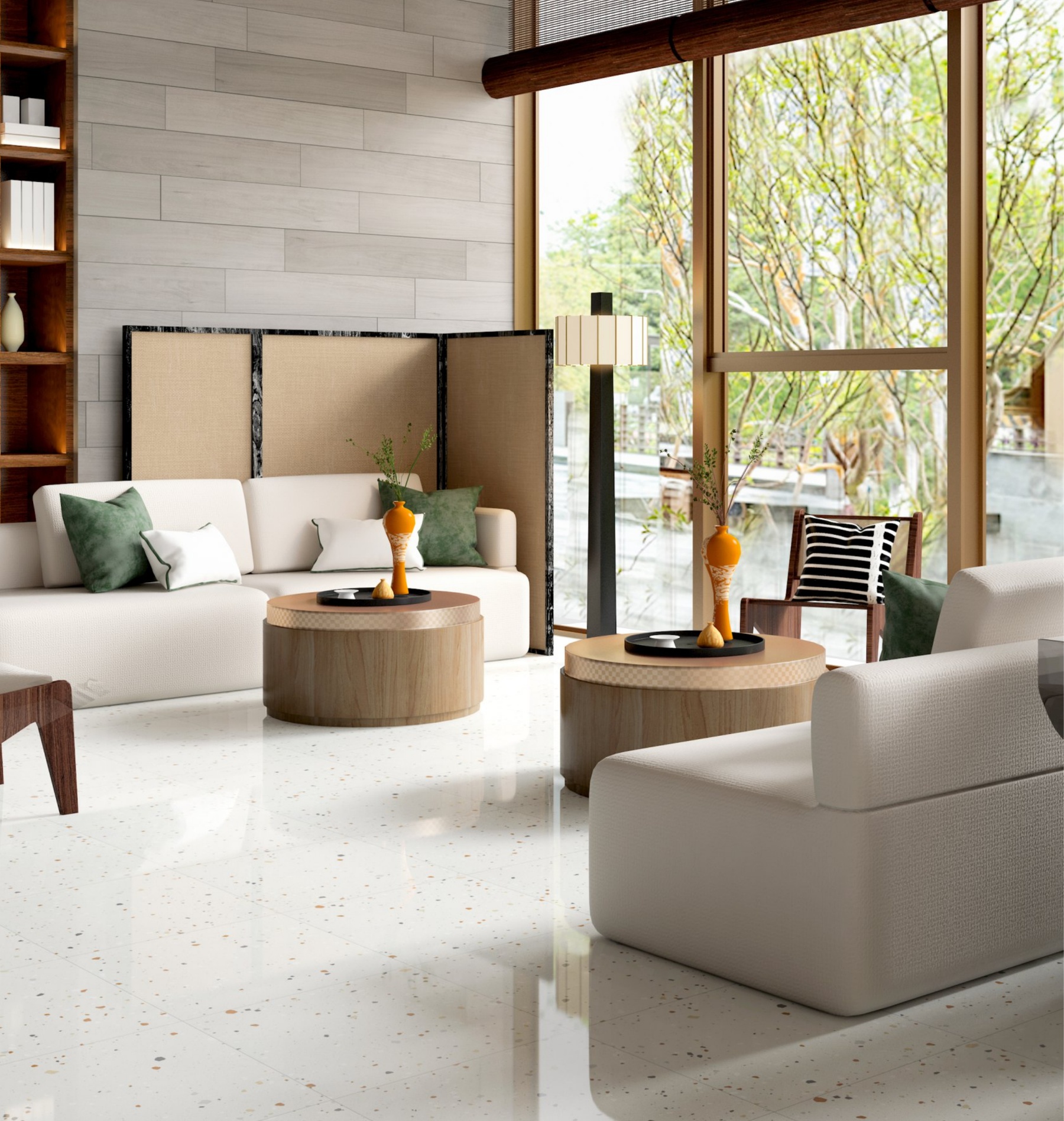
One of the main selling points of sintered stone is its ability to replicate natural stone. But here’s the truth: premium porcelain slabs do the same, often at a level indistinguishable to the naked eye. We use 3600 dpi digital inkjet printing to capture every vein and crystal from photographs of real marble blocks. The pattern is fired under a high-gloss frit glaze, resulting in a surface that mirrors natural stone perfectly — without the price tag or maintenance headaches.
Moreover, large-format porcelain slabs (such as our 1600×3200mm size) allow for continuous vein patterns. The marble veins flow seamlessly across the entire slab surface, just like a real slab of Carrara or Calacatta marble. Sintered stone offers similar uninterrupted veining, but at a much higher cost. For most projects — kitchen islands, feature walls, bathroom vanities — porcelain delivers the same visual impact.
Maintenance & Longevity: Who Wins Over Time?
Both sintered stone and glazed porcelain are non-porous, meaning they will never need sealing. Spills wipe away easily, and neither material will stain from red wine, coffee, or oil. Ceramic tile with a glazed finish is also low-maintenance, but unglazed or matte finishes may require occasional sealing. Natural marble is high-maintenance: it must be sealed annually, and even then, acidic liquids can etch the finish permanently.
From a longevity perspective, porcelain slab installed correctly will last decades — we’ve seen installations from the 1990s that still look new. Sintered stone is relatively new to the market (widespread use only in the last decade), so long-term data is less established. Both are strong, but we’ll stand by our fired-at-over-1200°C porcelain body any day.
Which One Is Right for Your Project?
To help you decide, follow this simple decision flow:
- Choose sintered stone if:
– Your project requires the absolute thinnest possible slab (6mm or less) for a weight-sensitive application.
– You have a generous budget and want the cachet of a “new” engineered material.
– You need high thermal shock resistance for an outdoor kitchen in extreme climates. - Choose porcelain slab if:
– You want the same durability and appearance as sintered stone but at 40–50% less cost.
– You value factory-direct pricing and the ability to customize size, color, and finish.
– Your project includes kitchen countertops, large-format flooring, or outdoor paving (20mm). - Choose ceramic tile if:
– Your budget is tight and the application is low-traffic (walls, backsplash, guest bathroom). - Choose natural stone only if:
– You insist on a genuine natural material and are willing to accept higher maintenance and cost.
Frequently Asked Questions
Is sintered stone stronger than porcelain?
In controlled tests, both materials have similar hardness and flexural strength. Porcelain with a fully vitrified body (less than 0.5% water absorption) is extremely durable and performs equally in everyday use. The main difference is price, not performance.
Can I use porcelain slabs for outdoor kitchen countertops instead of sintered stone?
Yes. Our 12mm and 20mm porcelain slabs are fully frost-resistant and UV-stable. They handle heat, rain, and sun as well as sintered stone, and at a lower cost. Just ensure proper support and installation for outdoor use.
How do I get samples of your porcelain slabs to compare with sintered stone?
We offer sample shipments within about 3 business days. The courier fee is paid by the buyer, but the samples themselves are provided at cost. Contact us through our contact page or reach out directly via WhatsApp at +86 18688806310.
Does Contigo Ceramics produce sintered stone?
We specialize in porcelain and ceramic tile — not sintered stone. However, we produce large-format porcelain slabs that directly compete with sintered stone in performance and aesthetics, often at a substantially lower price due to our factory-direct model. If you’re comparing materials, we encourage you to evaluate our porcelain slabs as a cost-effective alternative.
Conclusion: The Smart Choice for Value-Conscious Projects
For most homeowners, designers, and contractors, porcelain slab offers the best balance of beauty, durability, and affordability — outperforming ceramic and natural stone while matching sintered stone’s capabilities at a fraction of the cost. If your priority is a material that looks like high-end stone, handles daily abuse, and doesn’t break the budget, factory-direct porcelain from Contigo Ceramics is the answer.
Written by the Contigo Ceramics design team, Foshan, China.