Address
No. 3F07, Tao Cube, No.68, CCIH, Jihua West Road,Chancheng District, Foshan City, Guangdong, China.

How to Place Your First Order for Sintered Stone Slab from China — Uzbekistan Buyer’s Complete Checklist

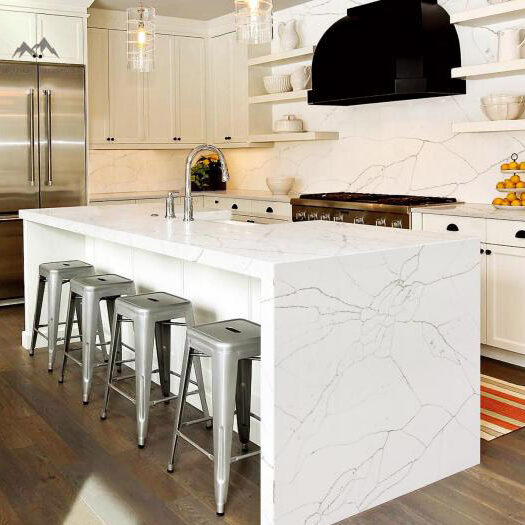
Fact: In 2023, Uzbekistan imported over $450 million worth of ceramic and stone products from China. If you are an importer, distributor, or project specifier in Tashkent, Samarkand, or the developing Silk Road corridors, sourcing sintered stone slab directly from a Foshan factory transforms your margin and quality control. But the first order process intimidates many buyers. This checklist eliminates guesswork.
1. What You Need to Have Ready Before Requesting a Quote
Polish your inquiry before contacting any supplier. A vague email saying “I want price for sintered stone” gets you a generic reply. For a precise sintered stone slab MOQ FOB price container quotation, prepare these five data points:
- Exact dimensions and thickness – Our standard slab is 3200x1600mm in 12mm thickness. Do you need 6mm for cladding? 20mm for countertop? China’s production lines can handle custom sizes (e.g., 2800x1400mm) but MOQ and lead time adjust. State your target thickness and width/length.
- Color and finish preference – Marble look, concrete, wood grain? Matte, polished, or structured? Bring a reference image or Pantone code. We produce over 200 designs; spec sheets with technical data are available on request.
- Quantity in square meters – One 20ft container loads approximately 1,000–1,100 m² of 12mm sintered stone slab (about 190–200 slabs, packed in vertical plywood crates). Smaller lots may be possible at higher per‑unit cost. Clarify your project size: a 500‑m² hotel lobby vs. a 5,000‑m² residential complex.
- Target price per square meter – Are you comparing FOB Foshan or CIF Alat port? Knowing your budget helps us recommend a series that meets your margin requirement. Realistic range today: $25–$45/m² FOB for standard designs, depending on surface finish and factory batch size.
- Delivery port and incoterm – For Uzbekistan, most buyers prefer CIF to Baku (Azerbaijan) or directly to Tashkent by rail via Khorgos dry port. Alternatively, FOB Huangpu lets you arrange your own forwarder. Note that rail transit from Khorgos takes 15–20 days; sea + rail via Alat can be 30–35 days.
Once you submit these details, a good factory (like Contigo Ceramics) responds within 24 hours with a proforma invoice and technical data sheet referencing ISO 10545 and TCNA/ANSI A137.1 testing.
2. How to Read and Compare Proforma Invoices – Real Example
A professional proforma invoice (PI) is your contract before final payment. Here is a real (anonymised) example for a 20ft container of sintered stone slab:
| Item | Description |
|---|---|
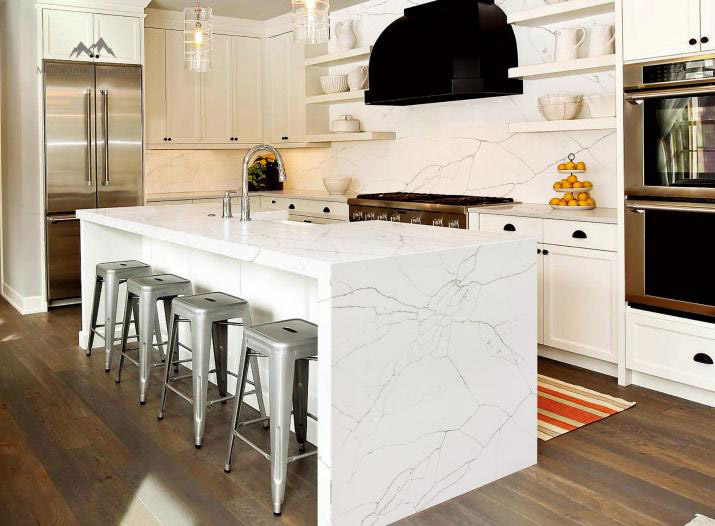
| Product | Sintered Stone Slab, Calacatta White, Polished, 3200x1600x12mm |
| Quantity | 200 slabs (5.12 m² each) = 1,024 m² |
| Unit Price | USD 32.50/m² FOB Huangpu |
| Total Amount | USD 33,280.00 |
| Payment Terms | 30% deposit by T/T, 70% balance before shipment |
| Delivery Time | 25–30 days after deposit |
| Validity | 15 days from issue date |
What to check:
- Slab dimensions and thickness – Verify that the total loaded m² matches your order. Some suppliers quote a lower m² by using smaller slabs. Our standard is 5.12 m² per slab; confirm that in the PI.
- FOB vs CIF breakdown – If the PI says “FOB”, the ocean freight, insurance, and inland transport in Uzbekistan are NOT included. If “CIF to Baku”, the supplier covers ocean freight and insurance to the destination port. Never confuse the two.
- Packaging and palletizing – Sintered stone slabs require steel‑banded plywood crates with foam cushioning. The PI should state “Export plywood crates, fumigated with IPPC mark.”
- Certification references – The PI should mention that the product meets ISO 10545 (tiles) and TCNA/ANSI A137.1 (slab testing). Ask for the test report PDF.
Compare at least three PI quotes from different factories. Beware of any PI that does not list slab dimensions or uses ambiguous terms like “standard size.”
3. Payment Structure: 30% Deposit by T/T, 70% Before Shipment – Why This Protects Both Sides
After 20+ years in the industry, we still see buyers lose deposits to fly‑by‑night operators. The standard T/T split is 30% upfront, 70% upon production completion and before container loading. Why does it work?
- 30% deposit – covers the raw material procurement (clay, quartz, pigment) and kiln scheduling. Without a deposit, no factory will commit production capacity. This also signals genuine buyer intent.
- 70% before shipment – The balance is paid after you receive photos/video of your finished slabs, plus a draft packing list and bill of lading copy. The factory holds the goods until payment clears. This minimises credit risk for them and ensures you only pay for what you can inspect.
For first-time buyers, some factories also accept a 50/50 split or a small letter of credit (L/C at sight) for amounts above USD 50,000. However, T/T remains the fastest and cheapest method for small‑ to mid‑sized orders. Avoid paying 100% upfront – that is a red flag.
4. MOQ Explained: One 20ft Container = ~1,000m² – Is That Right for Your Project?
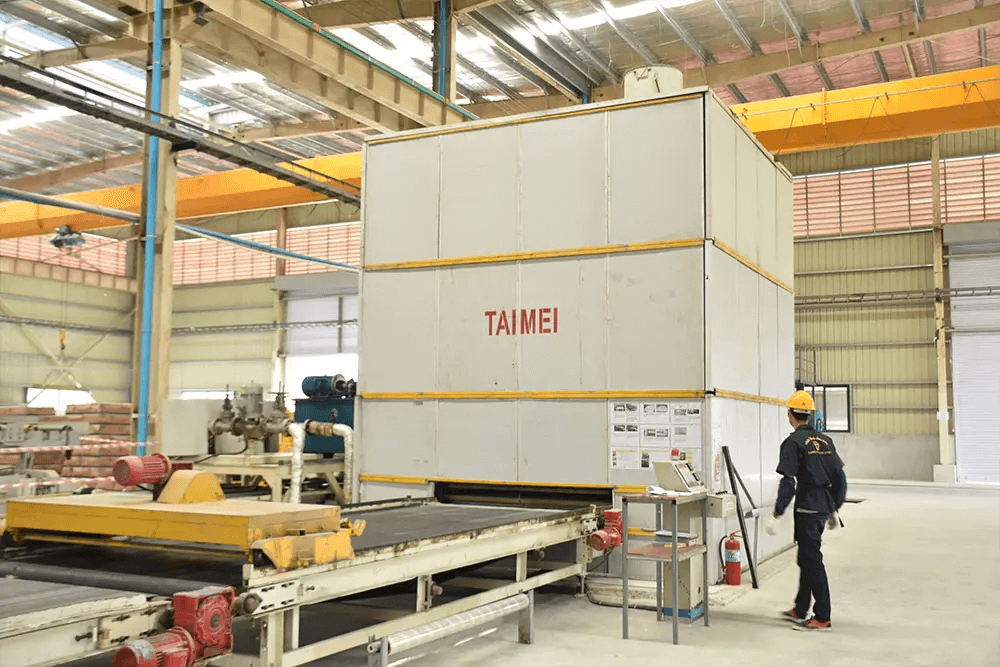
The sintered stone slab MOQ for most direct factory suppliers is one full 20ft container. Why not less? Container shipping economics: a 20ft container costs roughly the same freight as a 15‑ton mixed load. Splitting a container doubles logistics hassle and per‑unit shipping cost. For Contigo Ceramics, we can pack approximately 1,000–1,100 m² of 12mm sintered stone slab into a single 20GP container. If you order 6mm thickness, the m² increases to ~1,600 m² per container.
Is 1,000 m² too much for your project? Consider these scenarios:
- Hotel renovation (500 m²) – You can still order a full container and sell the balance to other contractors. Many Uzbek buyers pool orders with a partner.
- Distributor stocking – One container covers several colours; you can split among 2–3 designs within the same container (minimum 50 slabs per design).
- Large development (>3,000 m²) – Order 3–4 containers consecutively. Pay only one deposit for the first container and net‑30 payment for the rest after a successful first shipment.
If your project is truly small (under 300 m²), consider buying from a local stockist or partnering with a larger importer. Direct factory purchase for very small quantities is rarely cost‑effective.
5. Shipping to Uzbekistan: FOB vs CIF, Insurance, Customs Broker Selection
Uzbekistan is a land‑locked country, so your shipping route depends on your location. Two common options:
FOB Huangpu
You arrange and pay for ocean freight to a Black Sea port (e.g., Poti, Georgia) or to Baku (Azerbaijan), then rail to Tashkent. You control the carrier and insurance. We load the container at our factory, haul it to the port, and provide the bill of lading. Your forwarder takes over from there.
CIF to Alat (Baku) or Poti
We handle ocean freight and basic insurance. You arrange rail from Baku to Tashkent (approx. 10 days). CIF is simpler for first‑time buyers – you only need a local customs broker for the rail segment.
Insurance tip: Always insure the cargo at 110% of the invoice value. The factory’s basic insurance covers only the FOB portion. For full transit (including rail inside Uzbekistan), buy an additional inland policy. Typical premium: 0.3–0.5% of cargo value.
Customs broker in Uzbekistan: Choose a licensed broker in Tashkent who regularly handles ceramic stone imports. They will require: original bill of lading, commercial invoice, packing list, certificate of origin, fumigation certificate, and ISO test report. Prepare these documents before the container leaves Foshan to avoid demurrage costs.
6. Pre-shipment Inspection: What to Check Before the Container Leaves Foshan
You have two options: hire an independent third‑party inspector (e.g., Bureau Veritas, SGS) or request live video verification from our QC team. We recommend third‑party inspection for orders above USD 30,000. Check these five critical points:
- Slab dimensions and calibration – Measure length, width, thickness at four corners. Tolerance: ±0.5 mm for thickness, ±1 mm for length/width. Rectification (calibration) must be within 0.2%.
- Surface quality – No scratches, pinholes, chipped corners, or colour variation across slabs. Compare the first and last slab of the batch.
- Gloss and shade – For polished slabs, gloss meter reading should be ≥85 gloss units. For matte, ≤15. Check under natural light.
- Packing – Each slab should be interleaved with foam sheets. Plywood crates must be steel‑banded and have IPPC fumigation stamps. No cracked wood.
- Loading plan – Confirm that slabs are loaded vertically in the container with proper blocking and bracing. Horizontal stacking risks breakage.
If any defects exceed allowable limits (per ISO 10545‑2), request a replacement or discount before the 70% balance is paid. Once the container sails, damage claims become much harder.
7. FAQ: Payment Terms, Shipping Time, Customs Clearance for Uzbekistan
What payment terms can I expect?
Standard is 30% T/T deposit, 70% before shipment. For repeat buyers, we offer net‑30 after two successful orders. L/C at sight is possible for amounts >USD 50,000 but adds bank charges (~1–2%).
How long does shipping take from Foshan to Uzbekistan?
Production takes 25–35 days. Ocean + rail via Baku: 30–40 days. Direct rail via Khorgos: 25–30 days. Total door‑to‑door average: 55–65 days. Always add 5–7 days for customs clearance in Tashkent.
What documents are required for Uzbek customs?
- Commercial invoice (original)
- Packing list (with HS code 6802.21.000 for sintered stone)
- Bill of lading (original or telex release)
- Certificate of origin (Form A or China‑Uzbekistan FTA if applicable)
- Fumigation certificate (IPPC mark)
- ISO 10545 test report (to prove quality for project approval)
- Supplier’s commercial registration copy
Uzbekistan exempts import duties for some construction materials under national development programs. Check with your customs broker for current tariff codes and exemptions.
Can I order samples before the full container?
Yes. We provide small samples (300x300mm) for evaluation. Shipping cost (around USD 50) is deductable from your first container order. Contact us to request sample slabs with your preferred colour.
8. CTA: Request a Proforma Invoice with Today’s Pricing
You now have the checklist. The next step is simple – send your specifications and quantity to our team. We will provide a detailed proforma invoice within 24 hours, along with colour catalogues, technical datasheets, and a sample request form. No commitment, no hidden charges.
With over 20 years of export experience from Foshan, Contigo Ceramics is your trusted partner for sintered stone slab procurement. Explore our large-format collection or outdoor-rated sintered stone for landscape projects. For polished finishes, see our polished porcelain tile range that complements the slab line.
References: ISO 10545 series | Tile Council of North America – test methods for ceramic and stone slabs.