Address
No. 3F07, Tao Cube, No.68, CCIH, Jihua West Road,Chancheng District, Foshan City, Guangdong, China.

How to Verify a Sintered Stone Slab Supplier in China — Audit Checklist for Philippines Importers

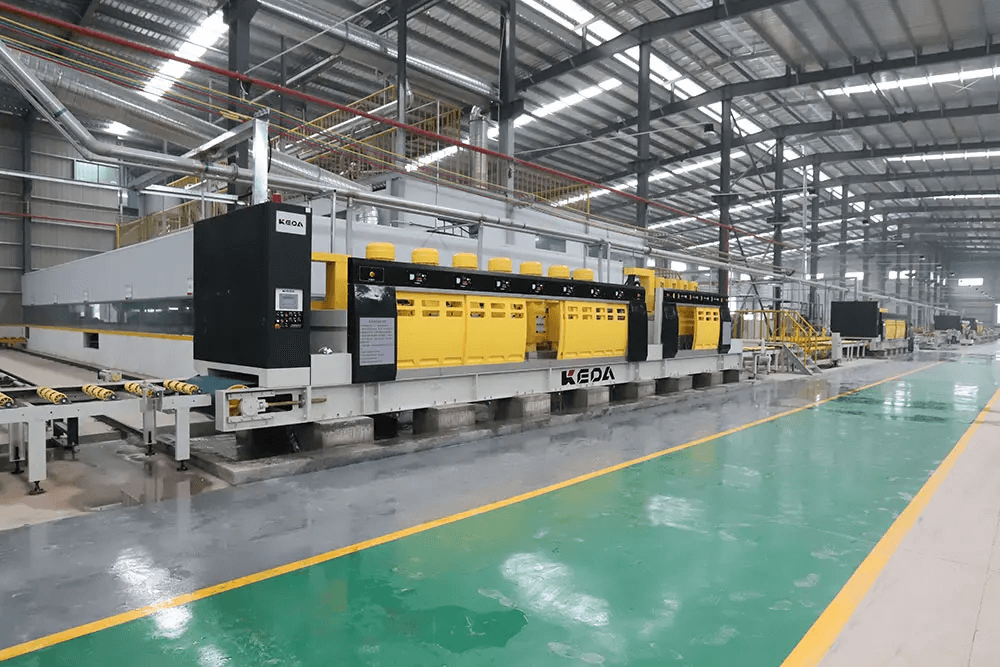
You’ve found a promising price on sintered stone slabs from a Chinese factory. The WhatsApp messages are fast, the photos look good, and the MOQ seems doable. But you know the risks: a 20-foot container could arrive with chipped edges, inconsistent shading, or worse — tiles that don’t match the sample you held. For Philippines importers where shipping costs eat margins, one bad batch can break a quarter.
At Contigo Ceramics, we’ve been producing porcelain and sintered stone slabs in Foshan since 1999 — and we’ve seen importers lose half a million pesos on unverified suppliers. This guide gives you a step‑by‑step audit checklist to separate real factories from trading companies posing as manufacturers. Whether you’re a Manila distributor or a Cebu project specifier, use this before you wire a single yuan.
1. Why Verifying a Chinese Sintered Stone Slab Supplier Matters — Real Risks of Buying Sight‑Unseen
The Philippines imported over ₱3.2 billion in ceramic and tile products from China in 2023. Sintered stone slabs — with their 3200×1600mm or larger formats — are especially risky because of shipping damage, calibration issues, and hidden composition flaws. Common problems importers face:
- Thickness variation: A 6mm slab might come in at 5.3mm, causing lippage in large‑format installations.
- Pigment inconsistency: Two production batches from the same supplier can look like different marbles.
- Fake certifications: ISO 9001 or CE marking printed on a brochure but never actually audited.
- Trading company fees: Markups of 20‑40% over factory‑direct pricing — with zero quality control.
A proper factory audit — done via video tour, document verification, and third‑party inspection — can save you from all of these. And it doesn’t require a flight to Guangzhou.
2. Sintered Stone Slab Supplier Audit Checklist — Table of 10 Critical Items
Use this checklist as your due diligence template. Every item should be completed before you sign a proforma invoice.
| # | Verification Item | How to Check | Why It Matters |
|---|---|---|---|
| 1 | Business License (营业执照) | Request scanned copy; verify on China’s National Enterprise Credit Information System (NECIS) | Confirms legal entity, registered capital, and business scope includes “ceramic tile manufacturing” |
| 2 | Export License & Customs Code | Ask for export customs registration number; check validity with your freight forwarder | Without it, shipments can be delayed or seized at Huangpu port |
| 3 | Live Video Factory Tour (WeChat) | Schedule a real‑time walk‑through — kiln area, pressing line, quality lab, and warehouse | Only legitimate factories can show all stages without cutting away |
| 4 | Physical Sample & Comparison | Order A4‑size samples; test for water absorption (≤0.5%), stain resistance, and flatness | Sintered stone must meet ISO 10545‑3 (water absorption) and ISO 10545‑2 (dimensions) |
| 5 | ISO 10545 & ANSI A137.1 Certifications | Request PDF; verify cert number on iso.org. For ANSI, cross‑check with tcnatile.com (ANSI A137.1 standard) | Ensures products meet international quality/ performance standards |
| 6 | Reference Clients in Philippines or Neighboring Markets | Ask for 3‑5 B2B client references; contact them directly | Proven track record in the Philippines means fewer logistics surprises |
| 7 | Production Capacity & Kiln Type | Ask: number of kilns, daily output (m²), max slab size (e.g., 3200×1600mm, 3mm‑12mm thickness) | Real factories list exact machine specs; traders usually give vague answers |
| 8 | MOQ & Payment Terms | Contigo Ceramics: 1×20ft container (~1,000m²), FOB Foshan/Huangpu. 30% deposit, 70% before shipment | If a “factory” demands 100% upfront or has MOQ below 500m², it’s likely a trader |
| 9 | Third‑Party Inspection Report (SGS/BV/TÜV) | Request recent report for your product type; verify report number with inspection body | Independent QC catches defects before container leaves factory |
| 10 | Shipping & Lead Time | Check: production lead (25‑35 days), transit to Manila (15‑35 days), container type (Open Top vs Flat Rack for big slabs) | Logistics mismanagement causes costly delays |
3. How to Do a Video Factory Tour via WeChat — What to Look For
A recorded video can be staged. A live tour via WeChat video call is your best audit tool. Here’s exactly what to request and what to observe.
3.1 The Kiln Area
Ask the supplier to walk to where the kiln is running. Listen for continuous mechanical noise — a real kiln sounds like a large gas burner, not silent. Look for the kiln control panel showing temperature zones (firing zone should be around 1200°C for sintered stone). If the camera stays focused on a static “showroom,” push for the production floor.
3.2 Pressing Line
See the hydraulic press in action. Sintered stone requires a press of at least 15,000 tons. Ask to see the mould plates and the green body (unfired slab) coming out. A trading company can’t simulate this.
3.3 Quality Lab
Request a quick stop in the QC lab. Look for a digital caliper for thickness measurement, a water absorption tester (boiling method), and a stain test area. Ask to see the current batch’s QC logbook.
3.4 Warehouse Inventory
Have the camera scan the warehouse. Genuine factories have dozens of pallets of finished goods with batch numbers, materials (e.g., “Grey Emperador 6mm”), and date stamps. Empty aisles with only a few boxes = red flag.
4. Certification Guide: ISO 10545, CE Marking, and How to Verify They’re Real
Fake certificates are rampant. A supplier might show you a PDF with the ISO 9001 logo, but it may be copied from another company. Do these checks:
- ISO 10545 test methods — These are performance standards for ceramic tiles (water absorption, modulus of rupture, frost resistance, etc.). A legitimate factory will have a test report from an accredited lab like SGS or Intertek. Verify: go to iso.org and search the certificate number or contact the lab directly.
- CE marking — Sintered stone slabs for European projects need a Declaration of Performance (DoP) under EN 14411. Check the Notified Body number (e.g., NB 0672 for CSI). If the document has no NB number, it’s a fake.
- ANSI A137.1 — This US standard is commonly referenced for porcelain tile quality. Contigo Ceramics meets ANSI A137.1 requirements. To verify, check with tcnatile.com — do not try to visit ansi.org (it blocks foreign IPs).
Always ask for the certification body’s name and report number. Then send an email or call the certification body to confirm.
5. Third‑Party Inspection: SGS Bureau Veritas TÜV — Cost, Process, and What They Check
No audit is complete without an independent inspection. For a sintered stone slab shipment, the cost is typically USD 400‑700 per container, depending on quantity and location.
5.1 The Inspection Process
- Pre‑shipment inspection (PSI) — 2‑3 days before loading. Inspector checks random samples against your order: dimensions, thickness, flatness, colour, chipping, water absorption.
- Loading supervision — Inspector watches container stuffing, ensures proper packaging (wooden crates with foam padding for large slabs).
- Report — You get a pass/fail with photos. A failed report allows you to halt shipment.
5.2 What They Check
- Visual defects (cracks, pinholes, glaze irregularities)
- Dimensional tolerance (±0.5mm for length/width, ±0.2mm for thickness)
- Water absorption (boiling test — must be ≤0.5% for sintered stone)
- Modulus of rupture (bending strength — typically ≥35 MPa)
Tip: Ask your supplier if they accept third‑party inspection from a firm of your choice. If they resist, walk away.
6. Red Flags: 5 Warning Signs of a Trading Company Posing as a Factory
- Too many product categories. A real sintered stone factory produces only 2‑3 material types (porcelain, quartz, sintered stone). If they offer everything from ceramic tiles to kitchen countertops, they’re likely a broker.
- Reluctance to show the production line live. “Our kiln is down for maintenance” or “Our camera is broken” — both are ancient tricks.
- No minimum order quantity below one container. True factories have set MOQs based on kiln runs (usually one 20ft container). A “factory” that accepts 200m² orders is sourcing from multiple small kilns and blending.
- Bank account outside China. Payment to a Hong Kong or Singapore account is a classic flag. All legitimate Foshan factories use Chinese domestic bank accounts in RMB or USD.
- No physical address you can verify on Baidu Maps. Ask for the exact factory location and check it on Baidu Maps (Google Maps is blocked in China). If it shows an apartment building, it’s not a factory.
7. FAQ — Supplier Verification for Philippines Importers
Q: Can I rely solely on Alibaba verification badges?
A: No. Alibaba’s “Gold Supplier” only verifies business registration, not production capability. Use our checklist above to go deeper.
Q: How do I verify an ISO certificate without paying for a database?
A: Visit iso.org and use the “Search for Certified Organizations” tool (free). Alternatively, email the certification body directly.
Q: What is the typical lead time from Foshan to Manila?
A: Production 25‑35 days, ocean transit 15‑35 days (depending on direct vs transshipment). Total ~40‑70 days door‑to‑port. Contigo Ceramics always sends an ETD within 24 hours of order confirmation.
Q: Should I hire my own inspector or rely on the factory’s QC?
A: Always hire a third party (SGS, Bureau Veritas, TÜV) for the first few orders. Once trust is built, you can reduce frequency.
8. CTA — Take the Next Step
Don’t risk your Philippines business on an unverified supplier. At Contigo Ceramics, we welcome live video tours, third‑party inspections, and sample requests. Our sintered stone slabs are manufactured in our own Foshan kilns, certified to ISO 10545 and ANSI A137.1, and shipped FOB Huangpu exactly as specified.
Ready to verify our factory? Contact us now to schedule a WeChat video tour or book an SGS inspection. We’ll show you everything — the kiln, the QC lab, the warehouse. No tricks, just tangible quality.
Explore our product lines:
- Large‑format sintered stone slabs — up to 3200×1600mm
- Polished porcelain tiles — ideal for commercial flooring
- Outdoor‑grade tiles — slip‑resistant, frost‑proof
Your first container deserves a factory you can trust.