Address
No. 3F07, Tao Cube, No.68, CCIH, Jihua West Road,Chancheng District, Foshan City, Guangdong, China.

How to Place Your First Order for Sintered Stone Slab from China: Netherlands Buyer’s Checklist

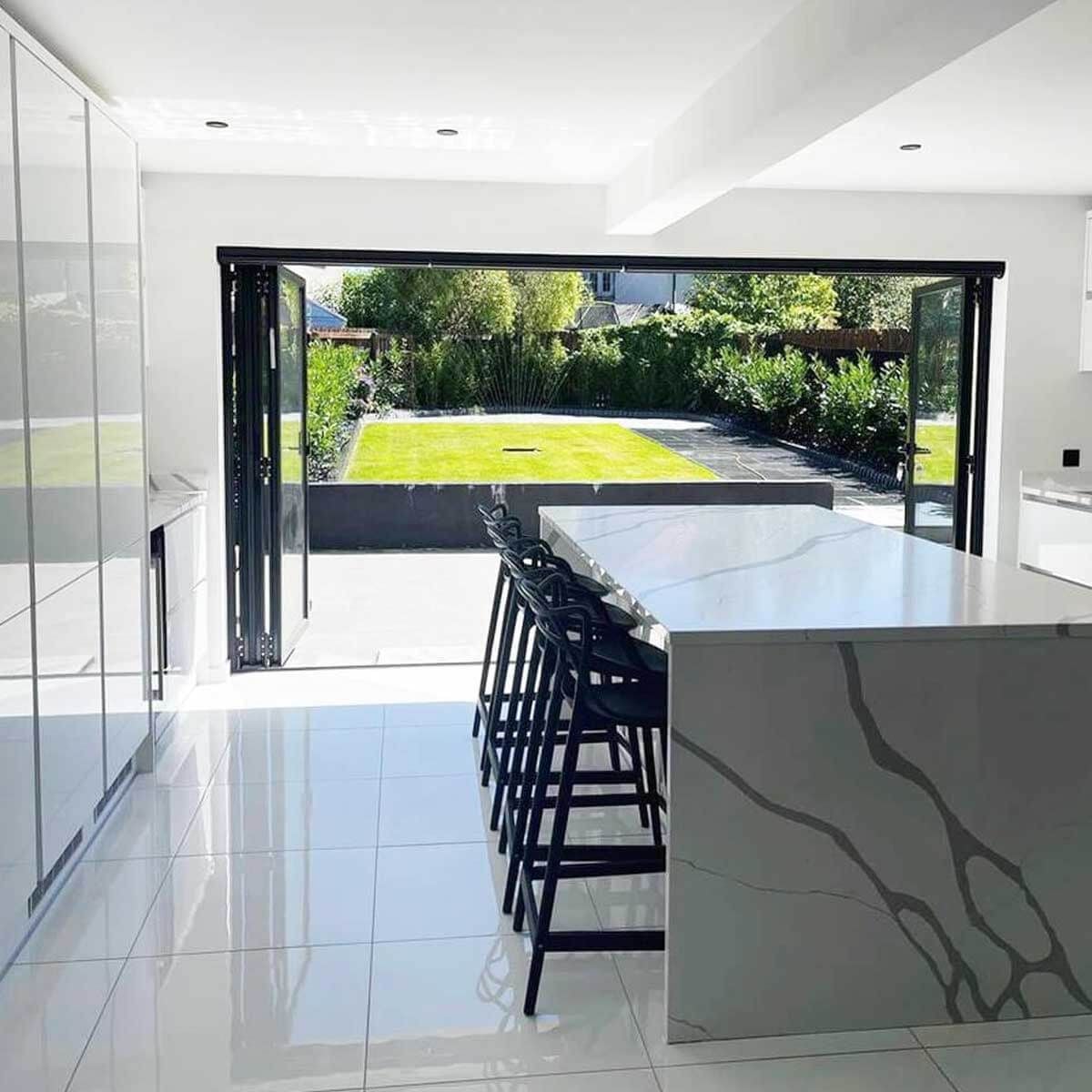
If you’re a Netherlands‑based importer, distributor, or project specifier ready to order sintered stone slab from China, you need a clear, step‑by‑step process—not marketing fluff. This checklist covers everything from preparing your quote request to clearing customs in Rotterdam. We’ll walk through the numbers, the documents, and the logistics that actually matter when you’re buying factory‑direct from Foshan.
1. What You Need to Have Ready Before Requesting a Quote
Every week, we receive quote requests from European buyers that are missing critical specs. To get an accurate FOB price per square metre and a correct MOQ calculation, you must provide:
- Exact dimensions and thickness: Sintered stone slabs typically come in 1200x2400mm, 1200x2700mm, or 1600x3200mm. Thicknesses: 3mm (for backsplashes, facades), 6mm, 12mm, 20mm. State your preferred size. For Netherlands projects, 1200x2400x6mm is common for kitchen countertops, while 1200x2700x12mm is preferred for flooring.
- Finish and colour: Matte, polished, or textured? We offer over 40 colours and vein patterns, including Calacatta, Statuario, concrete, and wood‑look. Provide a reference photo or RAL code if possible.
- Quantity in square metres: The MOQ is one 20‑foot container, which holds roughly 1,000 m² of standard 1200x2400mm slabs. If you want a 40‑footer (about 2,200 m²), that affects FOB price per m².
- Target price range: If you have a budget (e.g., €25–€35 per m² FOB), tell us. We can suggest a suitable grade. Our base price for 6mm white sintered stone is around €20–€28 FOB depending on quantity and finish. Premium colours like dark Calacatta run higher.
- Delivery port: Rotterdam is the primary gateway. Specify if you’ll use a bonded warehouse or direct clearance.
Once we have these, we issue a proforma invoice within 24 hours.
2. How to Read and Compare Proforma Invoices (Real Example for Sintered Stone Slab)
A proforma invoice (PI) from Contigo Ceramics is not just a price list. It’s a binding offer with all terms. Here’s what to look for:
- Product description: Should include grade (A or AAA), surface treatment, edge finishing (e.g., rectified, bullnose). Example: “Sintered Stone Slab, 1200x2400x6mm, AA grade, Matte finish, Calacatta Gold.”
- Unit price and total: Expressed as “USD per m² FOB Foshan” or “CIF Rotterdam”. For a 20‑footer (1,000 m²), if the unit price is $28/m² FOB, the total is $28,000.
- Payment terms: 30% deposit by T/T, 70% before shipment. Some factories ask 50/50. We prefer 30/70 because it balances your cash flow and our production risk.
- Delivery date: “25–35 days after deposit” is standard. We note the week of expected completion.
- Validity period: Usually 10–15 days. Prices fluctuate with raw material costs (feldspar, quartz, resin).
- Container details: Number of slabs per crate, total crates, gross weight, and a packing list attached.
Comparison tip: Don’t compare FOB from one supplier with CIF from another. Ask every candidate to quote FOB Foshan and then add your own freight quote. Also check if the price includes wooden crating (most do; some charge extra).
3. Payment Structure: 30% Deposit by T/T, 70% Before Shipment — Why This Protects Both Sides
In the sintered stone industry, 30/70 is the standard. Here’s how it works in practice:
- 30% deposit: Covers raw material procurement and first production runs. We don’t start cutting slabs without it. This protects you because if we fail to produce, we refund the deposit (check the PI’s “force majeure” clause).
- 70% before shipment: Once the slabs are packed and the container is ready, we send you digital photos and a loading list. You pay the balance. Only after we receive it do we release the BL (Bill of Lading) documents.
- Alternative for trusted buyers: If you’ve worked with us before, we may agree to 30% deposit and 70% after loading but before vessel departure. New buyers must use 30/70.
Never pay 100% upfront. Never accept a letter of credit (L/C) unless you have a large bank credit line; the paperwork for L/C is cumbersome for small quantities.
4. MOQ Explained: One 20ft Container = ~1,000 m² — Is That Right for Your Project?
A standard 20‑footer for sintered stone slabs holds approximately 1,000 m² when using 1200x2400x6mm slabs. But here are the real variables:
- Slab thickness: 12mm slabs are heavier; a 20‑footer may hold only 800–850 m² due to weight limits (max 28 tons gross). 20mm slabs reduce count further.
- Large slabs: 1600×3200mm slabs take more crate space. A 20‑footer might hold 700–750 m². We calculate exactly based on your chosen size.
- Mixed sizes: You can combine different colours in one container, but each slab pack must be uniform. We can split a container into 2–3 colour groups.
Is 1,000 m² right for you? If you’re a Netherlands distributor, that’s a typical first test order. For a single hotel project, 1,000 m² may cover two floors of guest bathrooms and kitchen counters. For a residential developer, it’s enough for 10–15 villas. If you need less, consider buying from a local stockist—but the price per m² will be 40–60% higher than FOB.
5. Shipping to Netherlands: FOB vs CIF, Insurance, Customs Broker Selection
Most first‑time buyers from the Netherlands use CIF Rotterdam because it simplifies logistics. But we recommend you start with FOB Foshan for better control:
- FOB (Free on Board): We handle export customs, trucking to Foshan or Huangpu port, and loading. You pay the ocean freight and insurance. We provide you with the shipping weight and dimensions to get quotes from freight forwarders.
- CIF (Cost, Insurance, Freight): We arrange shipping to Rotterdam and include insurance (typically 110% of invoice value). The price includes the freight cost, which is often higher than what you could negotiate directly. Also, if there’s a delay, you lose control of the container.
- Customs broker: For clearance in Rotterdam, hire a broker who specialises in ceramic/stone imports. They need HS code 6810.99.00 (articles of stone) or 6908.90.91 (glazed ceramic). Sintered stone often falls under 6802.23.00 (granite, other stone) if it’s over 60% quartz. Clarify with a Dutch chamber of commerce.
Insurance tip: Ocean cargo insurance is cheap—0.3–0.5% of invoice value. Never skip it. Container theft and water damage happen. Add “warehouse to warehouse” coverage.
6. Pre‑shipment Inspection: What to Check Before the Container Leaves Foshan
We encourage every buyer to hire a third‑party inspection agency (SGS, Bureau Veritas, or TÜV). If you can’t, we send you a video walk‑around. Here’s your checklist:
- Visual defects: Cracks, chips, colour variation across slabs. Use a 2‑metre distance in natural light.
- Thickness tolerance: Should be ±0.5 mm. Measure at four corners with a caliper.
- Flatness: Place a straightedge diagonally. Gap should be less than 0.3 mm.
- Rectification: If you ordered rectified edges, check that the width deviation is under 0.2 mm.
- Packaging: Crates must be strong, with corner protectors and steel straps. For sintered stone, slabs should be separated by foam or paper. If any crate is damaged, photograph it and note on the delivery receipt.
- Marking: Each crate should have the lot number, colour code, and quantity. Match it to the packing list.
Our factory is ISO 10545‑certified (test methods for ceramic tiles) and our sintered stone meets TCNA/ANSI A137.1 standards for dimensional quality. But always inspect—it’s your cargo.
7. FAQ: Payment Terms, Shipping Time, Customs Clearance for Netherlands
What are the payment terms for first order?
30% T/T deposit, 70% T/T before shipment. No exceptions for first‑time buyers. We can discuss L/C for orders over $100,000.
How long does production and shipping take?
Production: 25–35 days after deposit received. Ocean transit from Huangpu to Rotterdam: 30–45 days depending on the shipping line (MSC, Maersk, CMA). Total lead time: 60–80 days. Plan your inventory accordingly.
What customs documents are needed for Netherlands clearance?
Commercial invoice, packing list, bill of lading, certificate of origin (China), and possibly a CE declaration if the slabs are used in construction subject to the Construction Products Regulation. We provide a material data sheet showing fire rating (A1) and slip resistance (R10/R11).
Can I combine sintered stone with other tiles in one container?
Yes, but the MOQ per SKU is 200 m² per size. We can mix different colours or even include large‑format porcelain tiles (1200x2400mm) in the same container. Just specify in your order.
8. Ready to Place Your Order? Request a Proforma Invoice with Today’s Pricing
Use the checklist above to prepare your specs, then contact our export team. We’ll send you a proforma invoice showing FOB Foshan or CIF Rotterdam, exact MOQ, and delivery schedule. No hidden fees. No back‑and‑forth on grades—we sell only AA‑grade sintered stone with full compliance to ISO 10545 and ANSI A137.1.
Compare our pricing with local Netherlands stockists: Our factory‑direct price is €20–€35/m² FOB, while Dutch distributors charge €50–€70/m². You keep the margin.
Fill out the form on our contact page, and we’ll respond within 12 business hours with a personalised PI. For urgent inquiries, mention your target delivery month and container type (20GP or 40HQ).
We also offer polished porcelain tiles and outdoor‑grade tiles that can be shipped together to reduce your freight cost per cubic metre.