Address
No. 3F07, Tao Cube, No.68, CCIH, Jihua West Road,Chancheng District, Foshan City, Guangdong, China.

porcelain slabs verona quartz surfaces stone slabs | Contigo Ceramics

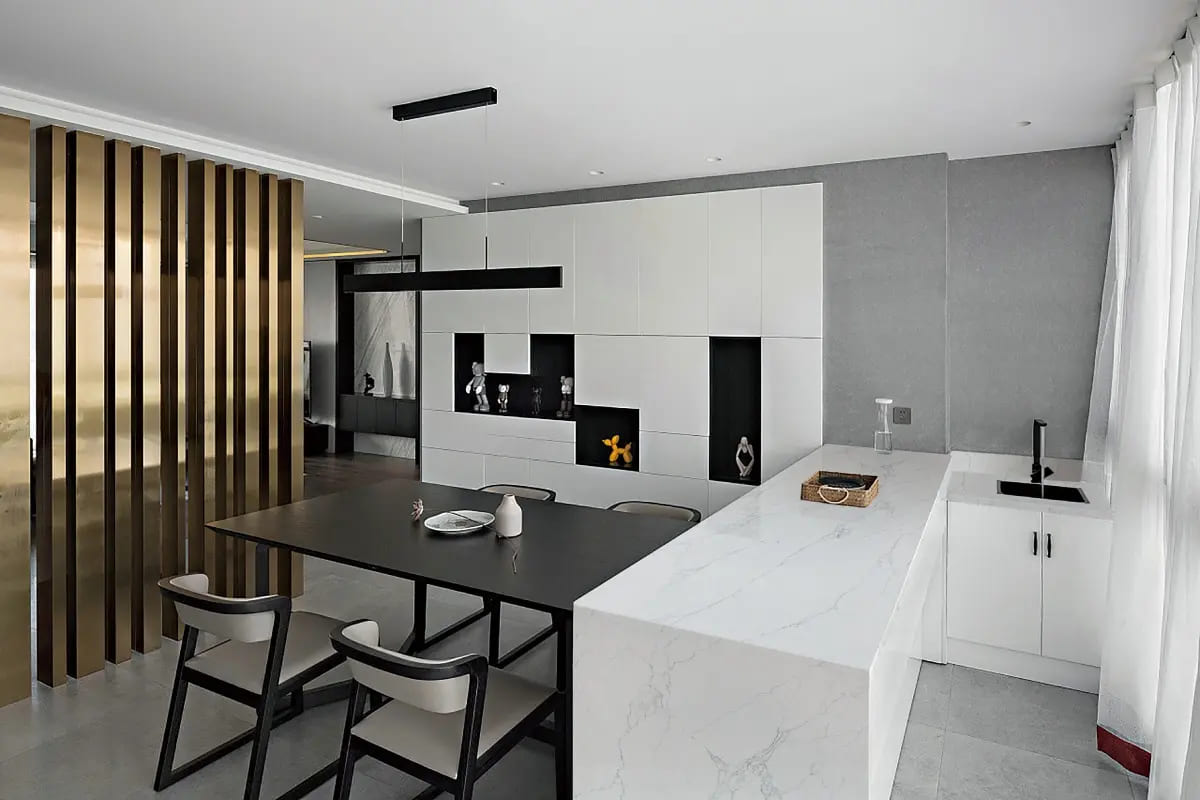
When selecting premium materials for countertops, flooring, or wall cladding, architects and contractors often face a complex decision between porcelain slabs, Verona marble-look options, quartz surfaces, and natural stone slabs. Each material offers distinct advantages, but understanding their differences in durability, maintenance, and cost is critical for long-term project success. At Contigo Ceramics, our factory-direct model eliminates middlemen, providing international buyers with consistent quality and competitive FOB pricing on large-format porcelain that rivals the aesthetics of natural stone.
This guide provides a detailed comparison of these surface materials, focusing on the popular Verona aesthetic and the performance characteristics that matter most in commercial and residential applications. Whether you are sourcing for a high-end hotel in Los Angeles or a residential development in Europe, understanding the technical nuances will inform a better purchasing decision.
Key Takeaways
- Durability wins: Porcelain slabs offer superior scratch, stain, and thermal resistance compared to both quartz surfaces and natural stone slabs.
- Maintenance matters: Porcelain requires no sealing, while natural stone and some quartz surfaces need periodic maintenance.
- Verona aesthetic available: Advanced digital printing allows porcelain to perfectly replicate the veining and texture of Verona marble and other luxury stones.
- Factory-direct value: Sourcing porcelain slabs direct from a Chinese factory like Contigo Ceramics reduces costs by 30-50% versus distributor pricing.
- Consistency is key: Engineered porcelain offers uniform color and pattern across batches, unlike natural stone slabs which vary.
- Project suitability: Outdoor applications favor porcelain; stone and quartz are better for certain indoor uses but have limitations.
Understanding the Verona Aesthetic in Modern Design
The Verona marble look, characterized by subtle cream and grey veining on a white or warm background, has become a cornerstone of luxury design. Historically achieved only with quarried marble from Italy, this aesthetic is now widely reproduced in engineered materials. The challenge for specifiers is selecting a substrate that delivers the visual appeal of Verona stone without the maintenance headaches.
Porcelain slabs Verona quartz surfaces stone slabs each offer a version of this look, but the underlying material properties differ significantly. Quartz surfaces use resins and pigments to mimic veining, while natural stone slabs are cut directly from the earth. Porcelain, however, is a clay-based product fired at extremely high temperatures, allowing for deep, realistic digital patterns that penetrate the full body of the tile.
Porcelain Slabs vs. Quartz Surfaces vs. Stone Slabs: A Technical Comparison
To make an informed choice, it is essential to evaluate these materials across key performance criteria. Below we break down the critical differences based on ISO 10545 and ANSI A108 standards, which apply to ceramic and porcelain tile installations.
Durability and Hardness
Porcelain slabs exhibit a surface hardness of 7-8 on the Mohs scale, making them highly resistant to scratching from knives, dropped utensils, and daily wear. Quartz surfaces typically rate 6-7, while marble (a common Verona stone) is softer at 3-5. For high-traffic commercial kitchens or busy family homes, porcelain offers the best long-term resilience. At our Foshan facility, we test every batch using the ASTM C648 breaking strength standard, ensuring consistency across production.
Stain and Chemical Resistance
One of the primary advantages of porcelain slabs over natural stone is their impervious nature. Porcelain has a water absorption rate of less than 0.5%, meaning it will not absorb wine, coffee, or oils. Quartz surfaces are also non-porous but can be damaged by extreme heat or harsh solvents. Natural stone, including Verona marble, is porous and requires annual sealing to prevent staining. This sealing adds ongoing maintenance costs that are often overlooked in initial budgeting.
Thermal and UV Resistance
If your project involves outdoor kitchens, pool surrounds, or exterior cladding, material selection becomes critical. Porcelain slabs can withstand freezing temperatures, UV exposure, and temperatures exceeding 1200°C during their manufacturing process. Quartz surfaces will yellow and degrade under direct sunlight, while natural stone can crack in freeze-thaw cycles. For the Los Angeles market or any region with sun exposure, porcelain is the clear winner.
“According to EN 14411 standards, porcelain tiles are classified as Group B1a and B1b, confirming their suitability for both indoor and outdoor applications where freeze-thaw resistance is required.”
Customization and Consistency
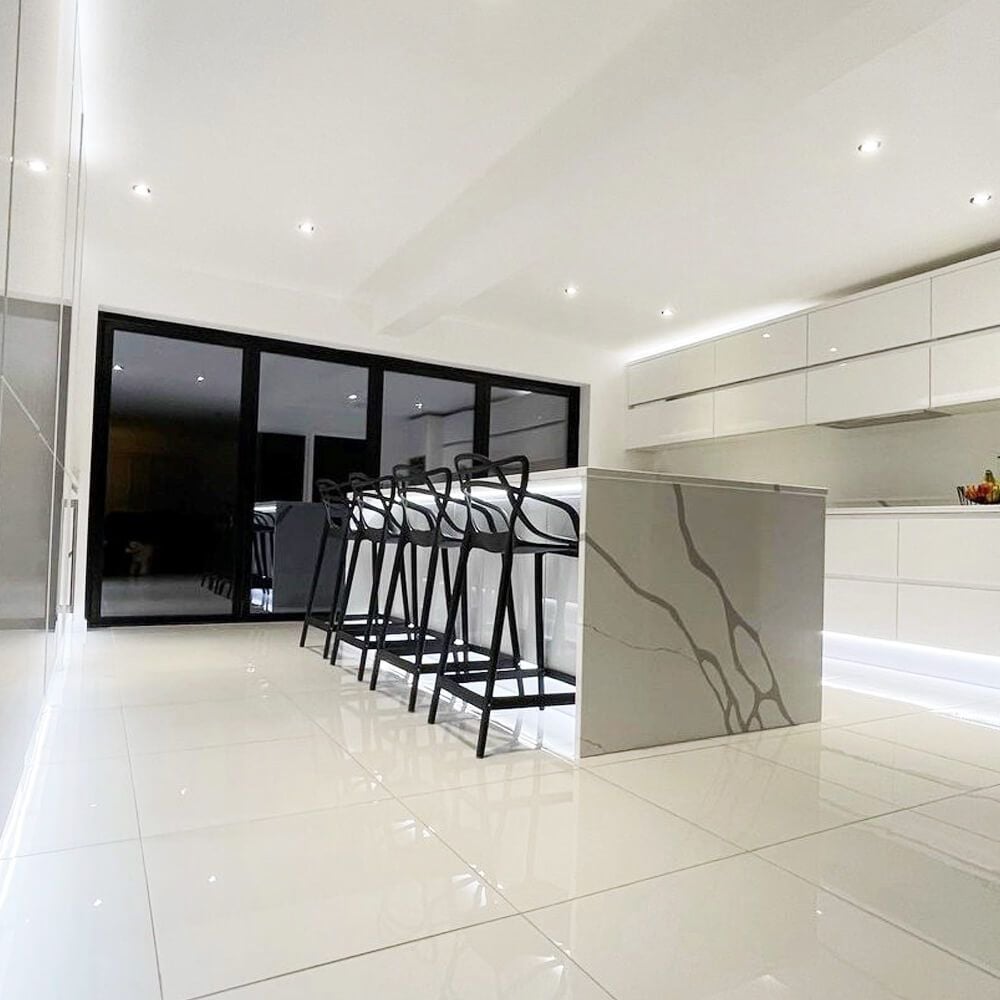
Natural stone slabs are unique—no two pieces are identical, which can be desirable but also creates challenges when matching multiple slabs for large installations. Porcelain slabs from Contigo Ceramics offer batch-to-batch color consistency thanks to calibrated digital printing. We can match specific Verona, Calacatta, or Statuario references across hundreds of slabs, ensuring a uniform look for large-scale commercial projects.
Sourcing Porcelain Slabs for the Verona Look: Factory-Direct Advantages
For volume buyers—contractors, importers, and architects—the supply chain is as important as the product itself. Traditional distributors add markups of 30-50% or more. By sourcing porcelain slabs Verona quartz surfaces stone slabs directly from a Chinese factory, you cut these costs while gaining direct control over quality.
Contigo Ceramics offers FOB pricing with flexible MOQ options starting from single container loads. We support factory audits for international buyers, allowing you to verify production capabilities firsthand. Our large-format slabs measure up to 3200x1600mm, reducing grout lines and creating the seamless surfaces that the Verona aesthetic demands.
Why Choose Porcelain Over Quartz for the Verona Look
Quartz surfaces are popular for countertops, but they have inherent limitations. They cannot be used outdoors, are prone to heat damage from hot pans, and their resin content can yellow over time. For a true, long-lasting Verona finish, porcelain slabs provide superior thermal performance and UV stability. Additionally, porcelain maintains its color intensity even after years of exposure to sunlight, making it ideal for both indoor and semi-outdoor applications.
Meeting International Standards
Every slab we produce undergoes rigorous quality checks against ISO 10545 test methods, including dimensional tolerance, surface quality, and breaking strength. Our polished porcelain tiles achieve a gloss level of 70-90 GU, comparable to high-end marble while being significantly more durable. We also adhere to ANSI A137.1 standards for tile grading, ensuring that our products meet North American and European expectations.
Frequently Asked Questions
How do porcelain slabs compare to natural stone slabs for a Verona finish?
Porcelain slabs Verona marble-look tiles offer the same elegant veining as natural stone but with superior durability. Natural stone requires sealing, is prone to etching from acids, and varies from slab to slab. Porcelain provides consistent color, is stain-resistant, and requires no ongoing maintenance.
Can porcelain slabs be used for both countertops and flooring?
Yes. Porcelain slabs are versatile enough for a wide range of applications, including kitchen countertops, bathroom vanities, flooring, and wall cladding. Their hardness and low water absorption make them suitable for both horizontal and vertical installations. For outdoor use, we recommend our 20mm outdoor collection.
Is it cheaper to source porcelain slabs factory-direct from China?
Absolutely. By bypassing distributors and importing porcelain slabs Verona quartz surfaces stone slabs directly, you save 30-50% on material costs. Contigo Ceramics offers competitive FOB pricing and flexible MOQ options, making it cost-effective for both small and large projects. Contact us for a full price list.
Are porcelain slabs UV resistant and suitable for outdoor use?
Yes. Unlike quartz surfaces, porcelain slabs are UV stable and will not yellow or degrade under sunlight. They are also highly resistant to freeze-thaw cycles, making them ideal for outdoor kitchens, pool surrounds, and exterior cladding in any climate.
What sizes are available for the Verona marble-look porcelain slabs?
Contigo Ceramics offers large-format porcelain slabs measuring up to 3200x1600mm with thicknesses from 6mm to 20mm. The Verona collection is available in polished, matt, and textured finishes, allowing for extensive design flexibility.
External Reference: ISO 10545 ceramic tile standards
Conclusion: Making the Right Choice for Your Project
When comparing porcelain slabs Verona quartz surfaces stone slabs, the data clearly supports porcelain as the most versatile, durable, and cost-effective option for both residential and commercial applications. Its ability to replicate luxury stone aesthetics without the maintenance burden, combined with factory-direct sourcing from Contigo Ceramics, delivers unmatched value for international buyers.
Whether you are an architect specifying materials for a Los Angeles high-rise or a contractor sourcing for multiple projects, we invite you to request a quote or browse our large format slab collection. Our team is ready to provide samples, pricing, and technical documentation to support your next project.
Written by the Contigo Ceramics technical team, Foshan, China. With over a decade of experience manufacturing and exporting premium porcelain, we are committed to helping professionals make informed material choices. Visit our polished porcelain tile range to see the Verona collection and other marble-look designs.
Explore our outdoor rated porcelain slabs for exterior applications that demand the highest durability.