Address
No. 3F07, Tao Cube, No.68, CCIH, Jihua West Road,Chancheng District, Foshan City, Guangdong, China.

Importing Porcelain Floor Tile to Saudi Arabia: Regulations, Tariffs & Market Trends 2026

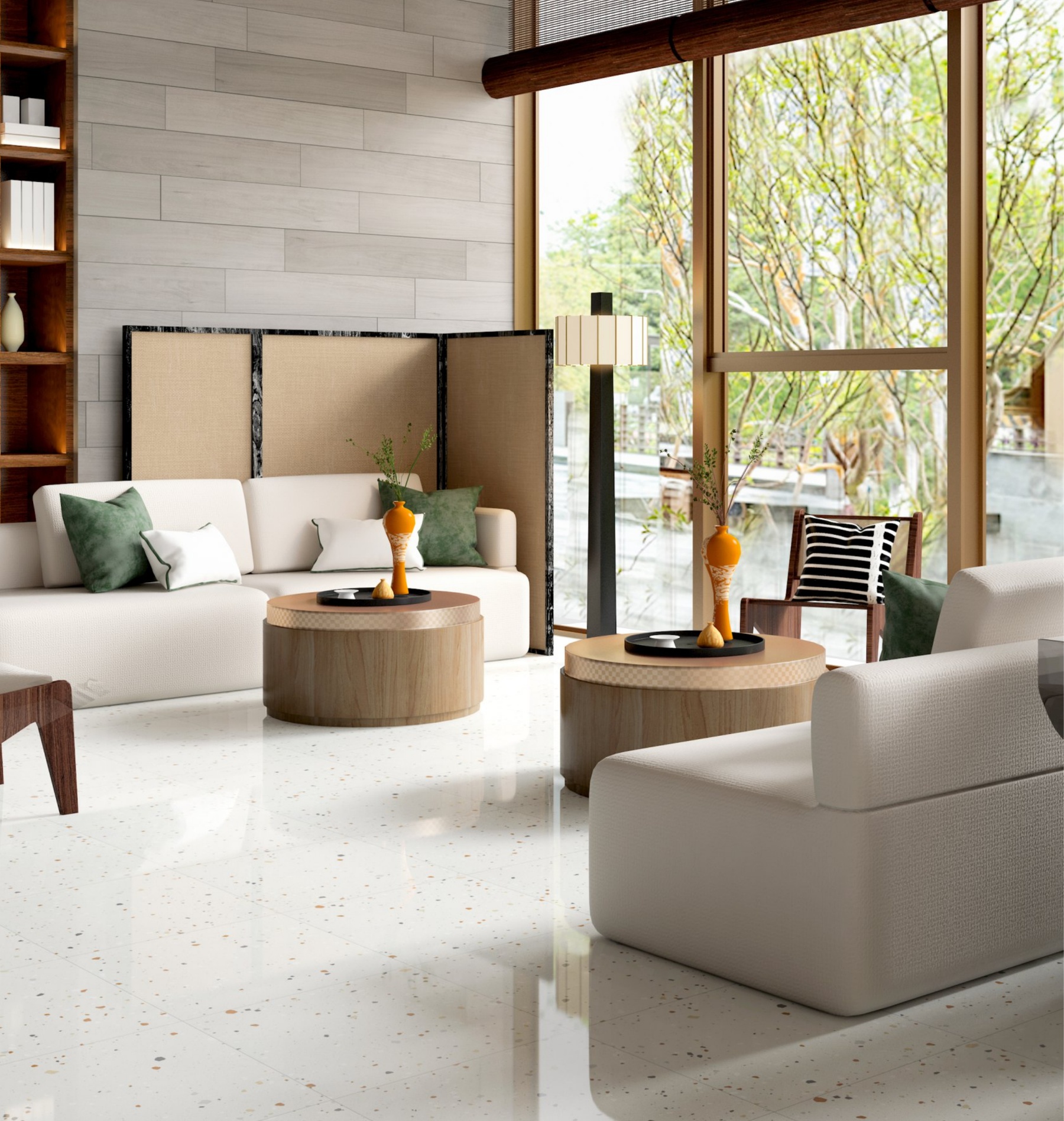
Market Intelligence Brief for Importers and Distributors
As Saudi Arabia accelerates its Vision 2030, the demand for high-quality construction materials continues to surge. Porcelain floor tiles, in particular, are in high demand for residential, commercial, and infrastructure projects. This briefing provides importers with the essential regulations, tariffs, certifications, and market trends you need to navigate the Saudi market efficiently—and how sourcing factory-direct from Contigo Ceramics can give you a competitive edge.
1. Saudi Arabia Tile Import Market Overview
The Saudi ceramic tile market is projected to grow at a CAGR of 7.2% from 2024 to 2030, driven by mega-projects like NEOM, the Red Sea Project, and Riyadh’s residential expansion. In 2025, the country imported over 85 million square meters of ceramic and porcelain tiles, with China accounting for approximately 40% of total import volume. Key importers are looking for cost-efficient, high-durability porcelain floor tiles that meet strict local standards.
Key data point: Saudi Arabia’s construction spending is expected to exceed SAR 220 billion annually by 2026, with flooring materials representing a significant share. This makes the Kingdom one of the most active import markets for porcelain tiles globally.
2. Import Regulations
HS Codes and Duty Rates
Importers must correctly classify porcelain floor tiles under the Harmonized System (HS) codes. The primary codes for glazed porcelain tiles used in flooring are HS 6908.21 (tiles of a water absorption coefficient not exceeding 0.5% by weight) and HS 6908.90 (other). Duty rates for these codes into Saudi Arabia are standardized under the Gulf Cooperation Council (GCC) Common Customs Tariff at 5% ad valorem. Additionally, Value Added Tax (VAT) is levied at 15%. Total landed cost calculations must include these taxes.
| HS Code | Product Description | Duty Rate (GCC) | VAT |
|---|---|---|---|
| 6908.21 | Glazed ceramic flags and paving, hearth or wall tiles (water absorption ≤ 0.5%) | 5% | 15% |
| 6908.90 | Other glazed ceramic flags and paving, hearth or wall tiles (water absorption > 0.5%) | 5% | 15% |
Note: All ceramic tile imports must also comply with Saudi Standards.
Required Certifications
To clear customs in Saudi Arabia, porcelain floor tiles must be accompanied by a SASO Certificate of Conformity (CoC), issued by an approved body. This certifies that the tiles meet the relevant Saudi Standards Organization (SASO) specifications, which align with ISO 10545 testing for dimensions, water absorption, breaking strength, and slip resistance. Additionally, the product must be registered in the SABER platform (Saudi Product Safety Program) before shipment.
Contigo Ceramics’ factory in Foshan regularly tests its products in accordance with ISO 10545 and complies with GCC standards, making the SASO certification process smoother for our partners.
3. Certification Requirements: SASO, CE, and ANSI
SASO (Saudi Standards, Metrology and Quality Organization) is the mandatory certification for all construction materials, including porcelain tiles. Importers must obtain a Conformity Certificate by proving that their tiles pass physical and chemical tests (e.g., PEI abrasion resistance, MOHS hardness, stain resistance).
CE marking is not mandatory for Saudi Arabia but can be used to demonstrate compliance with European standards, which are often accepted as equivalent. However, most buyers still require the SASO CoC for customs clearance.
ANSI A137.1 (American National Standard) is a voluntary specification used to classify tiles by quality (Grade 1, 2, 3). While not a Saudi legal requirement, possessing an ANSI-compliant product can enhance credibility with specifiers. Note: Contigo’s tiles are tested per ISO 10545 and meet ANSI A137.1 Grade 1 standards (available upon request).
SONCAP is not applicable to Saudi Arabia; it is a Nigerian regulation.
4. Shipping and Logistics
Typical Transit Time and Ports
From Foshan (Huangpu or Yantian) to Saudi Arabia, the main ports are Dammam (for the eastern province and Riyadh) and Jeddah (western region). Transit time from South China to Dammam averages 20–25 days; to Jeddah, 18–23 days. For Riyadh, inland trucking from Dammam adds 2–3 days.
Documentation Requirements
- Bill of Lading (or Airway Bill if air freight)
- Commercial Invoice (stating HS code, value, and country of origin)
- Packing List (detailed per container)
- Certificate of Origin (formatted for Saudi customs)
- SASO Certificate of Conformity (issued via SABER)
- Fumigation Certificate (if wooden packaging is used)
Contigo Ceramics handles all export documentation from our Foshan facility, ensuring compliance with Saudi import rules.
5. Market Trends: What Is Selling Right Now
The Saudi market shows strong demand for the following porcelain floor tile categories:
- Large-format tiles (1200×2400 mm, 1200×1800 mm): Preferred for hotels, malls, and luxury residences. They reduce grout lines and create seamless floors. View our large-format collection.
- Marble-look polished porcelain: Popular in commercial lobbies and high-end villas. Saudi buyers favor light beige, grey, and white veined patterns. Explore polished porcelain options.
- Outdoor-rated porcelain tiles: With extreme heat, outdoor spaces require tiles with low water absorption (≤0.3%) and high slip resistance (R10 or R11). Check our outdoor tile series.
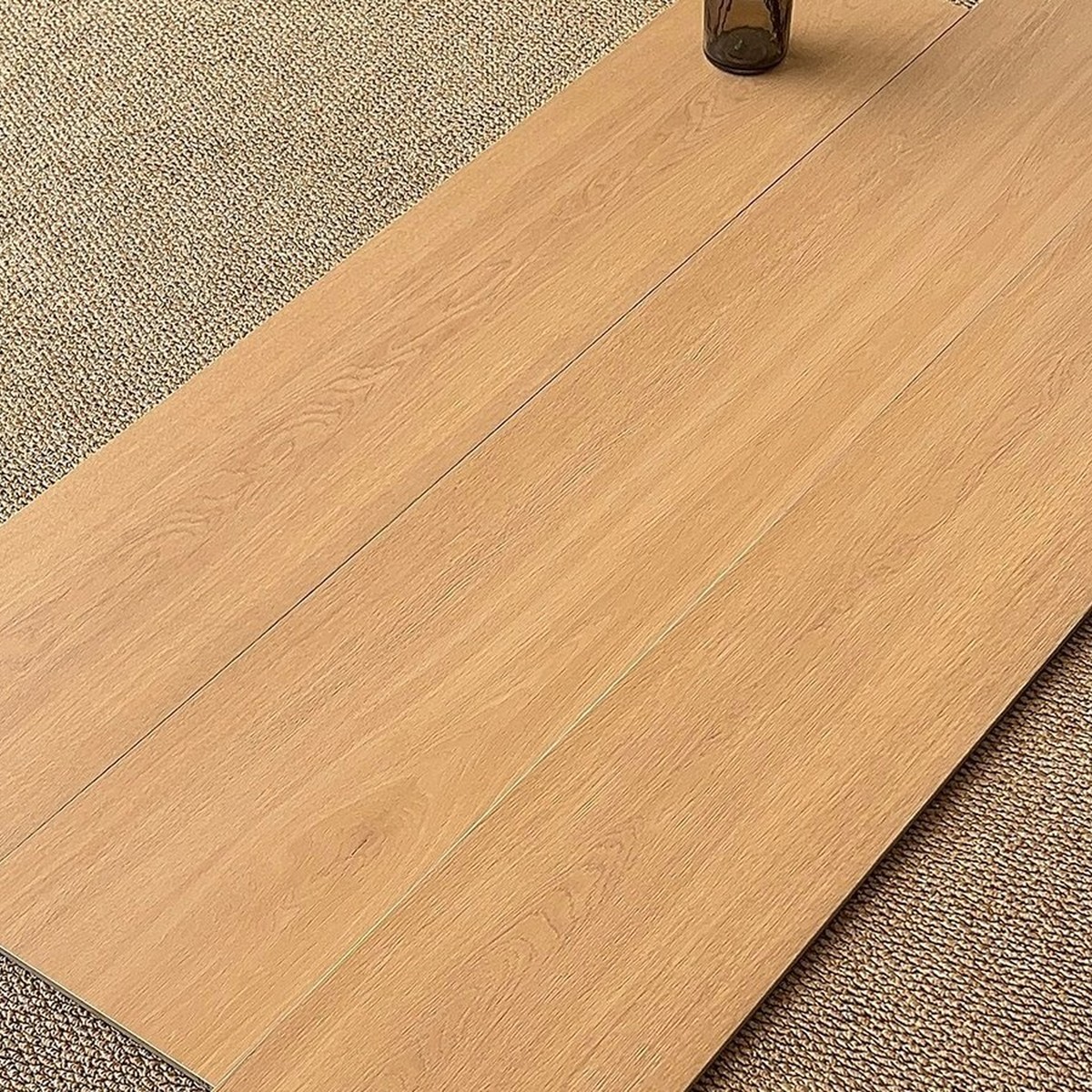
- Wood-look glazed porcelain: A growing trend in residential projects for a natural aesthetic without maintenance issues. See glazed wood-plank tiles.
Importers should focus on tiles with PEI 4 or 5 for heavy traffic areas and MOHS hardness above 6 for durability in Saudi’s sandy environment.
6. How Factory-Direct Sourcing Changes the Competitive Landscape
Traditional supply chains involve multiple intermediaries—traders, agents, and regional distributors—each adding 10–20% margin. Sourcing factory-direct from a vertically integrated manufacturer like Contigo Ceramics eliminates these layers.
- Price advantage: FOB Foshan/Huangpu pricing is transparent and competitive. MOQ is just one 20ft container (~1,000 m²), making it accessible even for new importers.
- Quality control: Our own kilns and ISO 10545 testing ensure consistent product quality that meets SASO requirements.
- Customization: We can adjust sizes, finishes, and packaging (e.g., carton weight, palletization) to suit your logistical needs in Saudi Arabia.
- Speed: Production lead time is 25–35 days; you can plan just-in-time deliveries.
Importers who work directly with Contigo can undercut competitors while maintaining margins, or offer better prices to win large projects.
7. Frequently Asked Questions
Q: What is the minimum order quantity for importing from Contigo to Saudi Arabia?
A: The MOQ is one 20ft container, which typically holds approximately 1,000 m² of porcelain floor tile (depending on tile size and thickness). We can combine multiple products within the same container.
Q: How do I obtain a SASO Certificate for Contigo tiles?
A: Contigo provides all test reports based on ISO 10545. You can engage a SASO-approved certification body (e.g., Bureau Veritas, SGS, Intertek) to perform the assessment and issue the CoC via the SABER platform. Our team will assist with product technical data.
Q: What payment terms do you offer for Saudi importers?
A: Typical terms are 30% deposit, 70% against bill of lading (after production). For established importers with a credit history, we can discuss more flexible arrangements.
Q: How long does shipping take from Foshan to Jeddah?
A: Sea transit is approximately 18–23 days to Jeddah Islamic Port. Including production lead time (25–35 days), total lead time from order confirmation to arrival is about 7–9 weeks.
External Reference: ISO 10545 ceramic tile standards
8. Get Market-Specific FOB Pricing for Saudi Arabia
Ready to evaluate your profit margins for the Saudi market? Contact our export team for a detailed quotation including FOB Foshan/Huangpu pricing, container loading suggestions, and SASO documentation support. We serve importers, distributors, and project specifiers with tailored solutions.