Address
No. 3F07, Tao Cube, No.68, CCIH, Jihua West Road,Chancheng District, Foshan City, Guangdong, China.

How to Verify a Porcelain Floor Tile Supplier in China – Audit Checklist for Canadian Importers

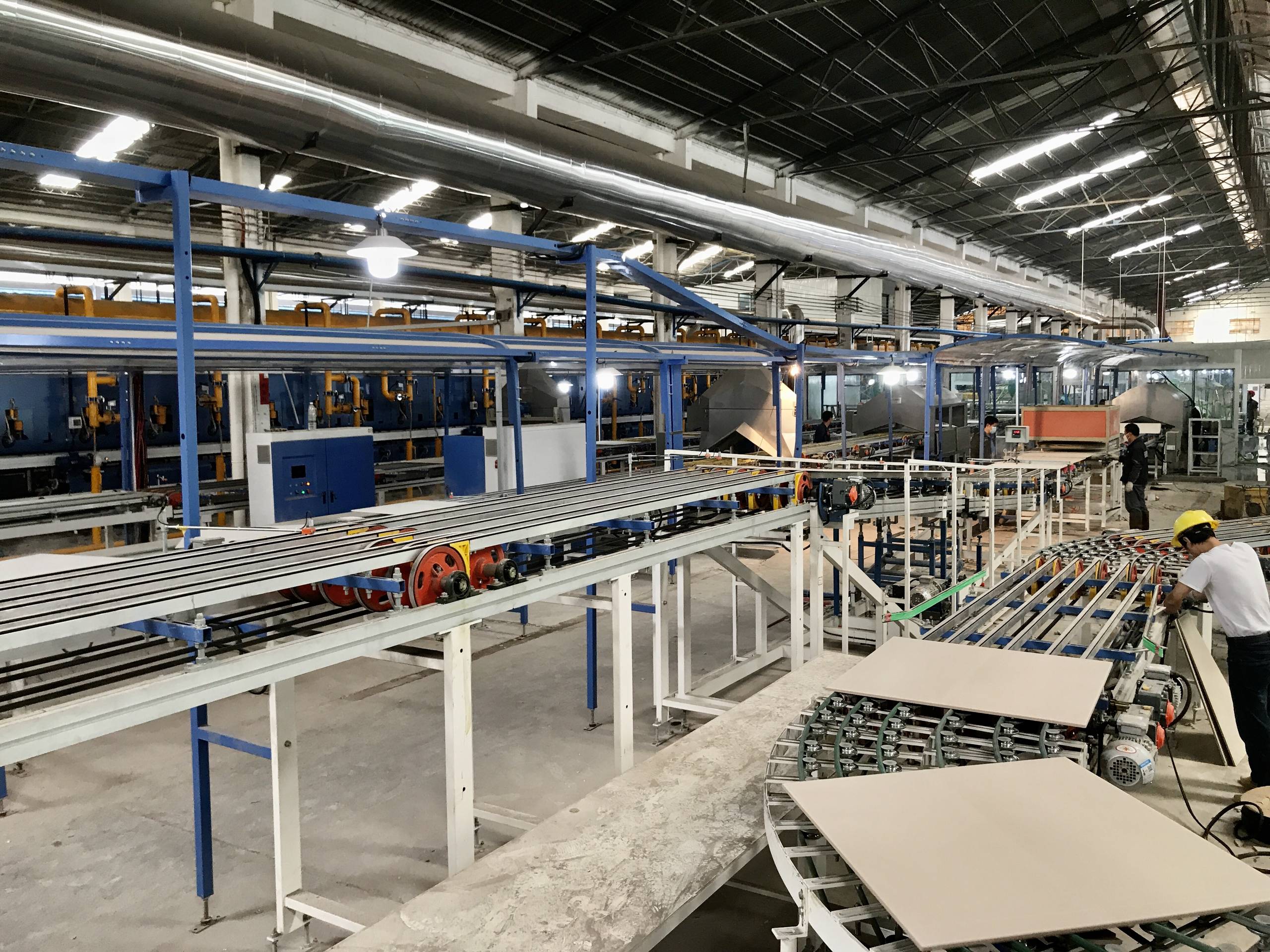
Buying porcelain floor tiles sight-unseen from China can save 30–50% compared to North American distributors, but the risk of receiving substandard goods, delayed shipments, or dealing with a trading company that has no manufacturing capability is real. As a Canadian importer, you need a systematic supplier verification process that goes beyond a glossy website and a low price.
At Contigo Ceramics, a Foshan-based factory with over 20 years in the porcelain tile business, we regularly host auditors from Canada, the U.S., and Europe. This guide compiles the audit steps our own clients use—and the red flags that uncover fake factories. Whether you are sourcing large-format porcelain slabs or glazed floor tiles, this checklist will help you make an informed procurement decision.
1. Why Verifying a Chinese Porcelain Floor Tile Supplier Matters
Canadian building codes (CSA A363, NBCC) and performance standards (ANSI A137.1, ISO 10545) demand consistent tile dimensions, water absorption below 0.5% for porcelain, and high breaking strength. Without a proper audit, importers have ended up with tiles that crack during installation, have shade variation beyond acceptable limits, or arrive with moisture content high enough to cause efflorescence in a Toronto winter.
Common risks include:
- Receiving grade-B tiles from a different factory after the sample was grade-A
- Hidden costs: samples shipped without certification documents, then production tiles fail third-party testing
- Trading companies that add a 10–20% margin while providing no quality control
A thorough factory audit—backed by documentation and a physical visit (or live video tour)—isolates these risks before you commit a single container.
2. Factory Audit Checklist Table
Use this 10-point checklist when evaluating any Chinese porcelain tile factory. Each item must be verified through documentation, video, or physical inspection.
| Checklist Item | What to Look For | Evidence Required |
|---|---|---|
| 1. Business License | Registered in Foshan/Guangdong; scope includes “ceramic tile production” not just “sales” | PDF of license with unified social credit code |
| 2. Export License | Valid with customs code for porcelain tiles (HS 6908.90); no restrictions on the destination country | Copy of export permit, previous Bill of Lading |
| 3. ISO 10545 Test Reports | For water absorption, breaking strength, chemical resistance, and modulus of rupture | Original reports from SGS, TÜV, or CNAS-accredited lab—not a self-declared certificate |
| 4. ANSI A137.1 Compliance (if required) | Test results for coefficient of friction, thermal shock, and warpage | TCNA or Intertek test report; note: we use TCNA (tcnatile.com) as reference |
| 5. Sample Quality | Request 6 random full-size tiles (not miniatures). Measure length/width, thickness, and weigh each | Photo with digital caliper, weight variance < 3% per the manufacturing tolerance |
| 6. Raw Material Warehouse | Stock of imported or local kaolin, feldspar, silica, and pigments—should see at least 30-day reserve | Video walkthrough of material storage area |
| 7. Kiln & Production Line | Continuous roller kiln (≥250 m length for porcelain), digital inkjet printers, and automatic press | Live video showing kiln panel temperature (1,220–1,250 °C for full vitrification) |
| 8. Reference Clients | At least 3 Canadian or similar-market clients with contactable references | Purchase order, shipping documents, and permission to call |
| 9. MOQ & Container Capacity | Minimum one 20 ft container (~1,000 m² for 600x600 mm tiles). Factory should produce >10,000 m² per day | Production schedule and photos of warehouse with finished goods |
| 10. Third-Party Inspection Availability | Factory permits external agencies (SGS, Bureau Veritas, TÜV) for pre-shipment inspection | Written agreement in the sales contract |
3. How to Do a Video Factory Tour via WeChat
WeChat is the standard communication tool for Chinese tile factories. A live video call can reveal what a website never shows. Follow these steps to verify a factory remotely:
3.1 Request a Live Walkthrough
Ask for a video call to specific areas in order: warehouse → production floor → raw material yard → quality control lab. Do not accept pre-recorded clips—they can be from another factory.
3.2 What to Look For
- Production noise: You should hear hydraulic presses (800–1,400 ton) and roller kiln burners. Silence or office background is a red flag.
- Kiln panel: Ask the technician to show the temperature readout. Fully vitrified porcelain requires sintering at >1,200 °C for at least 45 minutes. If the temperature is below 1,180 °C, the tile is not true porcelain.
- Warehouse stock: Look for pallets with the same tile code and consistent batch numbers. A trading company may show a small sample room, not a real warehouse.
- Quality lab: Must have a water absorption testing device, a breaking strength tester, and a spectrophotometer for color consistency. Ask to see a test being run.
3.3 Equipment Verification
Popular genuine manufacturers use SACMI or System presses, SRS printing machines, and Chinese-tier kilns like Zhongli or Pengxiang. If the tour shows no brand names on the equipment, ask for the serial number—then cross-check with the manufacturer.
4. Certification Guide: How to Verify Real ISO 10545 and CE Marks
Many Chinese factories display certificates that are expired or self-issued. Here's how to authenticate them:
4.1 ISO 10545
The test method series (parts 1–16) covers mechanical, thermal, and chemical properties. A genuine ISO 10545 certificate must come from an accredited testing lab. Check the lab's scope on IAF or ILAC databases. Contigo Ceramics holds CNAS-accredited reports for all 16 parts, updated annually.
4.2 CE Marking (EN 14411)
CE marking for porcelain tiles requires a Declaration of Performance (DoP) and a “Notified Body” number (e.g., 0370 for Germany). If the factory only provides a CE logo without a DoP document or a notified body number, it is likely self-declared and not valid for most Canadian projects that require European classification.
4.3 ANSI A137.1
Although ANSI standards are not mandatory in Canada, many specifiers request them. TCNA (Tile Council of North America) administers the program. Verify the certification number directly on the TCNA website. Note: Do not rely on the ansi.org domain—it blocks international access (403 error). Only TCNA provides public verification.
5. Third-Party Inspection: SGS, Bureau Veritas, TÜV
A third-party inspection before shipment is the most reliable safeguard. The cost typically ranges from $400 to $1,200 per container for an SGS or BV inspector, depending on the number of tiles tested.
5.1 Inspection Process
- Sample selection: The inspector randomly selects pallets from the shipment lot (e.g., 10% of the total boxes).
- Dimensional checks: Length, width, thickness, and squareness per ISO 10545-2.
- Surface quality: Visual inspection for cracks, chips, glaze defects, and shade variation using the AATCC 5-step grey scale.
- Water absorption: Boiling test (ISO 10545-3) or vacuum method. Acceptable < 0.5% for porcelain.
- Packing & marking: Check carton strength, labels, and pallet strapping for export.
5.2 When to Schedule
Include the inspection clause in the sales contract with a clear trigger: “Pre-shipment inspection by SGS or equivalent after 80% production completion, to be coordinated at least 5 working days prior to container loading.” If the factory refuses or delays, consider it a major warning.
6. Red Flags: 5 Warning Signs of a Trading Company Posing as a Factory
- Only one product line: Real factories produce dozens of SKUs. A trading company may show only a few popular designs.
- No production video: They refuse a live tour or offer only edited footage. A genuine manufacturer has nothing to hide.
- Payment to a personal account: Factory payments go to a corporate bank account with the same name as the business license. Personal accounts suggest a middleman.
- Vague logistics: Cannot clearly explain FOB pricing at Foshan/Huangpu port, container loading time (25–35 days typical), or transit duration (15–35 days to Vancouver).
- No in-house quality control: All quality reports come from the “client’s lab” or a generic third party without a specific test date. A real factory has a quality department with daily records.
7. FAQ – Supplier Verification
Q1: How can I confirm a factory is real without visiting China?
Conduct a live WeChat video tour using the checklist above. Also request a sample shipment (paid, but refundable on order). Combine with a third-party inspection from SGS or Bureau Veritas. Many Canadian importers never visit but still verify through documentation and video evidence.
Q2: What is the minimum order quantity for a Canadian importer?
At Contigo Ceramics, the MOQ is one 20 ft container (approx. 1,000 m² for 600×600 mm tiles). Larger containers (40 ft) reduce per‑square-meter FOB cost. FOB Foshan/Huangpu port includes all loading costs; ensure the quote specifies the port.
Q3: Can I verify ISO 10545 reports myself?
Yes. All genuine test reports have a report number and the lab’s accreditation code. Go to the lab’s website (SGS, TÜV, or CNAS) and use the verification portal to check the report number. If it appears as “not found,” it’s likely a fake.
Q4: Is a factory audit required for every order?
After you have verified the factory with a first full audit, a pre‑shipment inspection per container is sufficient—unless you change the tile type or the supplier changes ownership. Annual re‑audits are recommended for long-term partnerships.
External Reference: ISO 10545 ceramic tile standards
8. Next Steps: Start Your Supplier Verification with Contigo Ceramics
At Contigo Ceramics, we welcome transparent verification. Our factory in Foshan has been producing polished porcelain floor tiles, outdoor rated tiles, and large-format slabs for Canadian importers since 1999. We provide:
- Live WeChat tour of our 50,000 m² facility
- Full ISO 10545 / ANSI A137.1 test reports (CNAS accredited)
- FOB Foshan/Huangpu pricing with one-container MOQ
- Direct scheduling of SGS or Bureau Veritas pre‑shipment inspection
Ready to verify your next supplier? Contact us to arrange a video factory tour or to request a third-party inspection quote. No obligation, just real documentation.