Address
No. 3F07, Tao Cube, No.68, CCIH, Jihua West Road,Chancheng District, Foshan City, Guangdong, China.

How to Verify a Marble Look Porcelain Tile Supplier in China — Audit Checklist for Mexico Importers

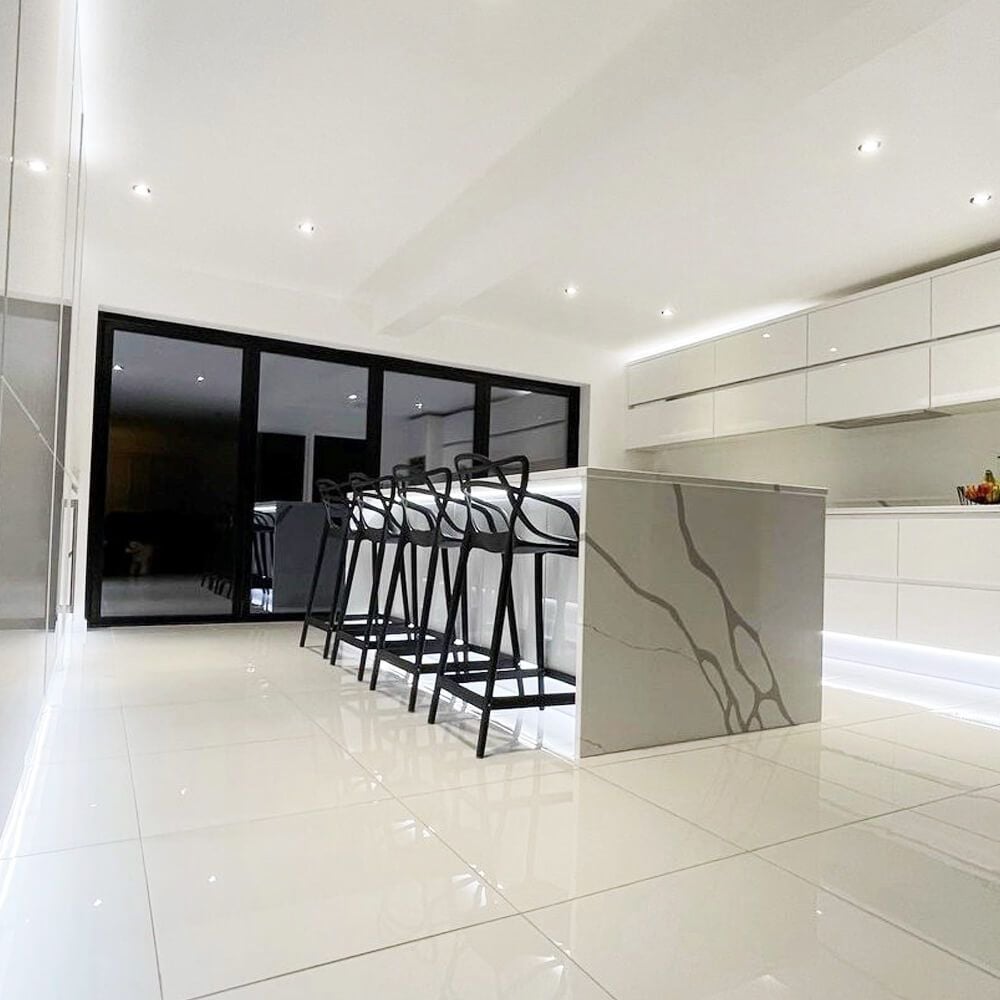
Why Verifying a Chinese Marble Look Porcelain Tile Supplier Matters — Real Risks of Buying Sight-Unseen
Mexico’s construction market has seen a steady increase in demand for marble look porcelain tile, driven by its durability, low maintenance, and aesthetic appeal. Many importers turn to Chinese suppliers, particularly those in the Foshan cluster, for competitive FOB pricing and scale. However, buying sight-unseen carries serious risks: inconsistent color runs, thickness variations, low breaking strength, and even counterfeit certificates. A factory that looks legitimate on Alibaba may be a trading company with no kiln of its own. For a Mexico importer, a single rejected container at the port of Manzanillo can wipe out months of margin.
Contigo Ceramics, with over 20 years of continuous production in our own Foshan kiln, has witnessed first-hand the difference between genuine factories and shell operations. This guide gives you a systematic audit checklist — from business licenses to third-party inspection protocols — so you can confidently evaluate any marble look porcelain tile factory in China before placing your first order.
Factory Audit Checklist Table: 8 Key Verification Items
Use this table as your go-to checklist when vetting a potential supplier. For each item, request supporting documents or live evidence before committing to a container.
| # | Verification Item | What to Request / Look For |
|---|---|---|
| 1 | Business License (营业执照) | Full legal name, registered address in China, valid stamp. Cross-check with government database (National Enterprise Credit Information Publicity System). |
| 2 | Export License (进出口权) | Must show export qualification code. Without it, the supplier cannot legally export from China. |
| 3 | Factory Video Tour (WeChat Live or Recorded) | See the kiln, spray dryer, press line, and finished goods warehouse. Real factories have continuous production noise and dust. |
| 4 | ISO 10545 Test Reports | Valid report (within 3 years) from a recognized lab such as SGS, BV, or TÜV. Check for water absorption ≤0.5% (porcelain). |
| 5 | ANSI A137.1 Compliance (optional for US, but useful for Mexico specifiers) | Many Mexico projects follow US standards. Request proof of testing per ANSI A137.1 – do not rely only on ISO. |
| 6 | Reference Clients & Export Records | Ask for contact of at least 2 importers in Latin America. Verify recent container shipments (bill of lading or customs declaration redacted). |
| 7 | Sample Quality — Physical Inspection | Request 3–5 full-size tiles (not small swatches). Check flatness, edge sharpness, rectification tolerance (±0.5 mm max for premium). |
| 8 | MOQ & Lead Time Commitment | Reputable factories will quote MOQ one 20ft container (~1,000 m² for large-format tiles). Lead time 25–35 days. Transit to Mexico 15–35 days via Huangpu or Foshan port. |
How to Do a Video Factory Tour via WeChat — What to Look For
A prerecorded video can be faked. Insist on a live WeChat video call during their production hours (China daytime, evening Mexico). Here’s what to focus on:
- Kiln operation: Ask to see the kiln panel showing temperature (1200–1250°C for porcelain). A cold kiln = no production.
- Spray dryer and press: The heart of tile making. Look for dust, noise, and raw material feeding — signs of real manufacturing.
- Warehouse stock: Request a walk through the finished goods warehouse. Count the pallets of your desired marble look porcelain tile color and size. If they claim high stock but show empty aisles, beware.
- Loading area: See how tiles are packed (export-grade plywood crates with steel strapping). A genuine factory will have a dedicated loading dock.
If the supplier hesitates or offers only a “virtual tour” of an office, they are likely a trading company. At Contigo Ceramics, we provide live video tours directly from our production floor — no appointment needed via WeChat during business hours.
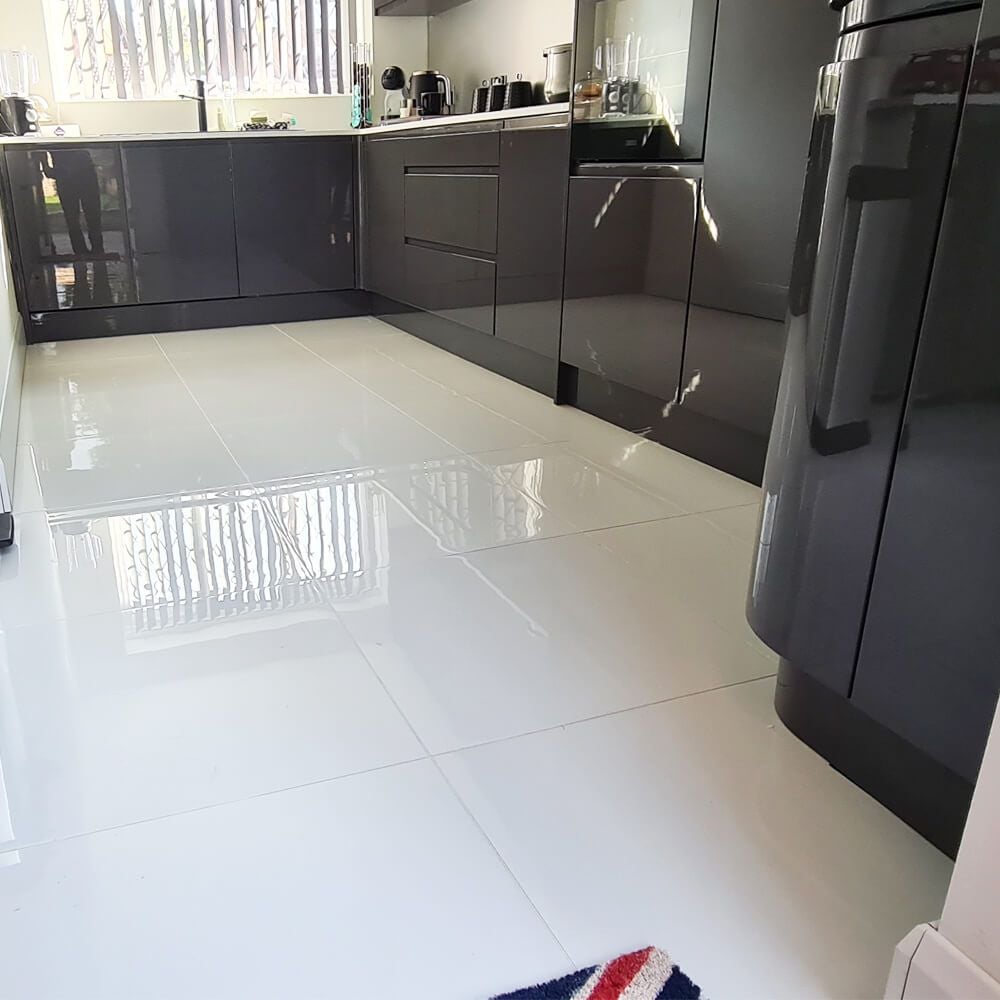
Certification Guide: ISO 10545, CE Marking, Country-Specific Certs — How to Verify They’re Real
ISO 10545 — The Core Porcelain Tile Standard
ISO 10545 covers all critical physical and chemical properties: water absorption, modulus of rupture, abrasion resistance, linear thermal expansion, and stain resistance. Insist on seeing a test report issued by an accredited third-party lab (SGS China, TÜV Rheinland, or Bureau Veritas). Look for the lab’s accreditation mark (e.g., CNAS). Verify the report number on the lab’s website. If the supplier only gives you a PDF without a traceable number, consider it a red flag.
For porcelain tile, water absorption must be ≤0.5% (group BIa per ISO 10545-3). Any higher value indicates a glazed stoneware, not true porcelain.
CE Marking (Mandatory for Europe, Recommended for Export Quality)
CE marking under EN 14411:2016 is often used by Chinese factories to prove conformity. Check that the certificate covers the specific product family (e.g., “group BIa, glazed porcelain tiles”). The CE number can be verified on the Notified Body database (e.g., NB 1234). Beware of generic certificates that list hundreds of products without specific test data.
Mexican Standards (NMX) & US/Canada References
While Mexico does not mandate a specific certification for ceramic tiles, many professional specifiers reference ANSI A137.1 or TCNA (Tile Council of North America) Handbook. Contigo Ceramics tests our tiles per ANSI A137.1 for compliance with US and Canadian standards, which are commonly accepted in Mexico for large projects. We provide a conformity statement upon request. (Note: ANSI’s website blocks some international IPs; instead, visit TCNA for relevant references.)
Third-Party Inspection: SGS / Bureau Veritas / TÜV — Cost, Process, What They Check
Never rely solely on supplier-provided QC reports. For your first container (and ideally every container), hire a third-party inspection company. Typical costs for a full container load (FCL) inspection in Foshan/Guangdong are USD 400–700, depending on the scope.
- Pre-Production Inspection (PPI): 15–20% of production run — confirms the right clay body, correct mold, and initial color.
- During Production Inspection (DUPRO): While tiles are being pressed and glazed — checks for surface defects, thickness uniformity, and gloss level consistency.
- Final Random Inspection (FRI): At least 2% of the finished lot. Inspectors follow ISO 2859 (AQL: 4.0 for major defects, 6.5 for minor). They check for chipping, shade variation, warpage, rectification, and packaging.
Reputable factories welcome third-party inspections. If a supplier refuses or only allows their own in-house QC to sign off, walk away. At Contigo Ceramics, we coordinate inspections with SGS or Bureau Veritas at the client’s expense and provide full access to our production lines.
Red Flags: 5 Warning Signs of a Trading Company Posing as a Factory
- No Kiln in the Video — A real tile factory has a kiln line at least 200 meters long. If the tour shows only a showroom or packing area, they are not manufacturing.
- Generic Certificates from Unknown Labs — Be cautious of “certificates” issued by labs without online verification databases. Real ISO 10545 reports are traceable.
- MOQ Below One 20ft Container — A genuine factory has a minimum investment per firing. If they offer 100 m² for a test order, they likely buy from multiple factories and ship from a shared warehouse.
- Vague Pricing with “Extra Costs” — Watch for hidden charges for wooden crates, fumigation, or export documentation. Reliable factories quote FOB Foshan or Huangpu inclusive of standard packing.
- Refusal to Share Client References in Latin America — If they have shipped to Mexico before, they should be able to provide at least one contact (with permission). A blank history is a major risk.
FAQ — Supplier Verification for Mexico Importers
Q: How long should it take to get sample tiles from a Chinese factory?
Reputable factories can send samples within 5–7 days by courier (DHL/FedEx) from Foshan to Mexico. Expect to pay for freight only. The samples should be full-size tiles (e.g., 600x1200mm or 800x2400mm), not small cut pieces.
Q: Can I visit the factory in person if I am in Mexico?
Yes, if you plan to travel to Guangdong, we welcome factory visits. However, for most Mexico importers, a video tour plus third-party inspection is more practical and cost-effective. Contigo Ceramics offers scheduled video calls and on-site independent inspections.
Q: What is the typical payment term for first-time buyers from Mexico?
Standard terms are 30% deposit and 70% against copy of bill of lading. Some suppliers may ask for 100% letter of credit for new customers. We avoid complicated L/C terms and work with T/T for Mexico clients after due diligence.
Q: How do I confirm that the marble look porcelain tile is consistent between sample and mass production?
Keep a sealed sample from your pre-order. During final inspection, the third-party agent can compare the production tiles to that reference sample using a spectrophotometer for color deviation (ΔE ≤ 1.5 is acceptable).
External Reference: ISO 10545 ceramic tile standards
Ready to Source from a Verified Marble Look Porcelain Tile Factory?
At Contigo Ceramics, we have been manufacturing in Foshan since 1999. Our marble look porcelain tile range includes Carrara, Calacatta, Emperador, and Nero Marquina in polished, glazed, and large-format options up to 1200x2400mm. We are ISO 10545 and TCNA/ANSI A137.1 compliant, with an MOQ of one 20ft container and FOB pricing from Huangpu port — exactly what Mexico importers need.
Skip the risk of trading companies. Contact our export team to schedule a live factory video tour via WeChat or to arrange an independent inspection by SGS or Bureau Veritas. We supply directly — no middlemen.
Internal links: Explore our large format tiles, polished porcelain tiles, outdoor porcelain tiles, and glazed tile collections. For full product range, visit all tile categories.