Address
No. 3F07, Tao Cube, No.68, CCIH, Jihua West Road,Chancheng District, Foshan City, Guangdong, China.

How to Verify a Marble Look Porcelain Tile Supplier in China — Audit Checklist for Kenya Importers

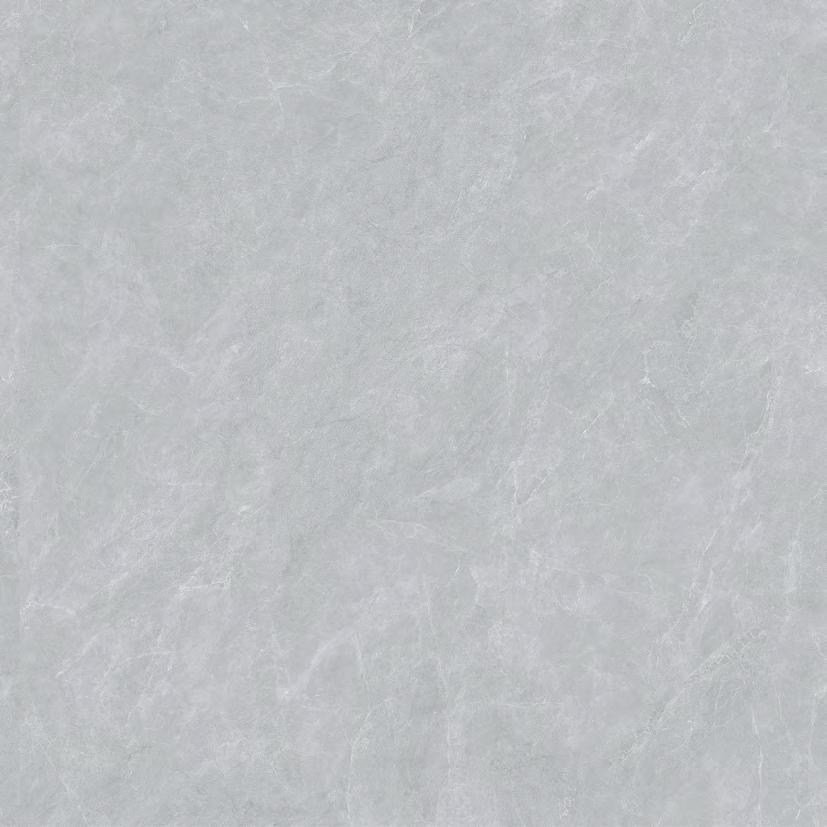
Kenya’s construction sector is expanding rapidly. Marble look porcelain tile—with its high-definition inkjet patterns, low water absorption, and through-body durability—has become the preferred specification for hotels, office towers, and residential developments from Nairobi to Mombasa. The challenge? Vetting suppliers from 8,000 kilometres away without stepping into a single factory yard.
A 2019 survey by the China Ceramics Industrial Association estimated that over 40% of small-scale ceramics exporters in Foshan operate as trading companies rather than genuine manufacturers. These intermediaries source tiles from multiple factories, mark up prices, and offer zero quality control. For a Kenya importer, a bad deal means receiving mixed shades, inconsistent rectification, or—worst case—containers held up at Mombasa port by KEBs due to missing certification.
This guide gives you a repeatable, factory-level audit checklist to verify a marble look porcelain tile supplier in China before you commit a single dollar. We have been manufacturing in Foshan since 1999 and own our own kiln lines. The process below is exactly what we encourage every Kenya importer to follow—because a transparent factory has nothing to hide.
1. Why Verifying a Chinese Marble Look Porcelain Tile Supplier Matters
Buying sight-unseen carries real, quantifiable risk. A 60,000-square-metre hotel project in Nairobi requires colour consistency across every carton. A single batch from a subgrade sub-contractor can show shade deviation (ΔE > 2.0) that ruins an entire floor installation. Beyond aesthetics, there are compliance risks: tiles that fail water absorption tests (above 0.5%) or lack correct PEI ratings void flooring warranties and create liability for the specifier.
Marble look porcelain tile also demands higher manufacturing precision than standard solid-colour tile. The synchronised inkjet print heads, press tonnage (minimum 7,200 tonnes for large-format slabs), and polishing line calibration all affect pattern repeatability. Only a factory audit—on-site or via video—can verify these parameters.
2. Factory Audit Checklist for Kenya Importers
Use the table below as your structured verification tool. Each item must be checked before you proceed to sample ordering or pro-forma invoicing.
| No. | Verification Item | What to Check | Why It Matters |
|---|---|---|---|
| 1 | Business License (营业执照) | Scope must include “ceramics manufacturing” (陶瓷制造). Cross-check with China’s National Enterprise Credit Information Publicity System. | Trading companies frequently register under “wholesale” or “import/export” but not manufacturing. |
| 2 | Export License | Verify the supplier holds an official customs registration number (海关编码). Request a scanned copy. | Without it, your goods cannot clear Chinese customs for FOB loading at Huangpu or Foshan ports. |
| 3 | Factory Video Tour (WeChat) | Request a live walk-through showing kiln, press, polishing line, and finished goods warehouse. See Section 3 below. | Prevents the “borrowed factory” trick where traders use someone else’s premises for photos. |
| 4 | Sample Quality & Consistency | Request 3–5 full-size tiles (at least 600×600mm or 800×800mm). Measure length, width, thickness, and squareness to ANSI A137.1 tolerances. | Marble look patterns require print registration accuracy. Any deviation >0.5mm means installation problems. |
| 5 | ISO 10545 Certification | Request the certificate. Verify the issuing body (e.g., SGS, TÜV, or BSI) and the certificate number on the registrar’s database. See Section 4. | ISO 10545 covers water absorption, breaking strength, abrasion resistance, and chemical resistance. Without it, you cannot guarantee tile performance in a commercial specification. |
| 6 | CE Marking (if required for your project) | Check for CE marking under harmonized standard EN 14411. Confirm the Notified Body (NB number) is valid. | Many African re-export markets (e.g., Tanzania, Uganda) require CE compliance for imported building materials. |
| 7 | Reference Clients & Export History | Ask for at least three African or Middle Eastern client references. Call one. | A factory that has never shipped to Kenya may not understand Mombasa port documentation or KEBs pre-shipment requirements. |
| 8 | Production Equipment Specs | Record kiln length (m), press tonnage (t), and digital printer brand (e.g., System, Kerajet, Sacmi). | Press tonnage below 7,200t cannot reliably produce large-format marble look slabs. Short kilns lead to uneven firing. |
| 9 | Warehouse Inventory | Check stock levels for your chosen marble look colour and size. Ask for photos of specific pallets marked with production date. | No stock = they will manufacture after your order, risking colour variance across production runs. |
| 10 | FOB Quotation Breakdown | Request itemised pricing: ex-works, inland freight to Huangpu, port handling, and documentation fees. | Hidden charges (inspection fees, container sealing) can add 3–5% to your FOB cost. |
3. How to Conduct a Video Factory Tour via WeChat
WeChat (微信) is the standard business communication tool in China’s tile industry. A live video tour eliminates the risk of photo fakery. Follow this protocol:
Before the call
Ask for a specific appointment time (8:00–11:00 CST is ideal when production is running). Request the tour to include five zones: raw material batching, ball mill and spray dryer, pressing and glazing line, kiln entry and exit, and finished goods warehouse.
During the call
- Listen for production noise. An operational kiln produces a low, continuous hum from combustion fans and roller vibration. Glazing lines have spray guns and conveyor sounds. Silence means the line is stopped—ask why.
- Ask to see the kiln panel. Request a close view of the temperature control console. Kiln firing in the 1,180–1,230°C range confirms vitrification. A cold kiln (below 1,000°C) indicates the factory is shut down or does not own the equipment.
- Inspect the warehouse. Look for dust-covered pallets (old stock) versus freshly shrink-wrapped tiles with recent production stickers. A genuine manufacturer carries inventory of common marble look designs like Calacatta or Statuario in multiple sizes.
- Count the forklifts and workers. A factory with only one forklift and a handful of workers likely has limited capacity.
After the call
Save the video recording. Compare it with any promotional videos the supplier has sent. Inconsistencies in floor colour, lighting, or equipment layout are red flags.
4. Certification Guide: How to Verify Real ISO 10545 and CE Certificates
Fake certification is a persistent problem. According to a 2022 market surveillance report by the EU’s RAPEX system, 12% of ceramic tile imports from China had invalid or forged CE documentation. Here is how to verify:
ISO 10545 (Ceramic Tiles — Test Methods)
ISO 10545 is a test method standard, not a product standard. A genuine ISO 10545 certificate will list the specific test parts conducted (e.g., ISO 10545-3 for water absorption, ISO 10545-4 for breaking strength, ISO 10545-7 for surface abrasion resistance). The certificate should show:
- Issuing body: SGS, TÜV Rheinland, Bureau Veritas, or an accredited laboratory.
- Certificate number: Traceable on the registrar’s website.
- Product category: “Porcelain tiles” with a tested water absorption value ≤ 0.5%.
To verify, go to the issuer’s online certificate portal (e.g., iso.org for the standard reference, or the testing lab’s site) and enter the certificate number. If the result says “not found,” the certificate is invalid.
CE Marking (EN 14411)
CE marking for ceramic tiles follows European standard EN 14411, which references ISO 10545 tests. The CE Declaration of Performance (DoP) must include the Notified Body number (e.g., 0123, 0769). Cross-check the NB registration at the European Commission’s NANDO database. Many Kenyan importers re-export to East African Community countries that require CE compliance—do not skip this step.
TCNA / ANSI A137.1 (North American Standard)
If your project specifies TCNA or ANSI A137.1, request the test report showing compliance with the porcelain tile classification (water absorption ≤ 0.5%, breaking strength ≥ 1,305 N for 8mm thickness). Contigo Ceramics holds TCNA/ANSI A137.1 certification and can provide the verified report on request.
5. Third-Party Inspection: SGS, Bureau Veritas, TÜV
For high-value projects (e.g., 3,000+ m² per SKU), commission a third-party inspection before shipment. Here is the process:
Cost
Expect to pay USD 400–800 per inspection day, plus travel costs if the inspector is not in Foshan. Most inspectors based in Guangdong (the province containing Foshan) charge no travel for a single-day visit. A standard inspection for one container covers 2–3 hours on-site.
Process
- Assign an inspector from SGS, Bureau Veritas, or TÜV Rheinland. Provide the factory address, PO number, and quality specifications (size tolerance, shade range, packing).
- On-site inspection: The inspector will randomly select cartons from the finished goods warehouse using an AQL (Acceptable Quality Level) sampling plan, typically AQL 2.5 for major defects and 4.0 for minor defects. They check dimensions, surface defects, rectification accuracy, and packaging integrity.
- Report issued: Within 24–48 hours you receive a PDF report with pass/fail status and photos of any defects. If the inspection fails (defect rate above the AQL threshold), the supplier must re-sort and re-inspect before shipping.
What they check
- Dimensions (length, width, thickness, straightness, squareness)
- Surface quality (cracks, pinholes, glaze defects, pattern registration)
- Shade variation within a box and across cartons
- Modulus of rupture (breaking strength) — tested on-site if equipment is available
- Water absorption (requires lab testing; off-site unless the factory has an in-house lab)
We recommend mandating inspection for every first order. After two to three consistent passes, you can move to a reduced inspection frequency.
6. Red Flags: 5 Warning Signs of a Trading Company Posing as a Factory
- They refuse a live video call. Any legitimate factory in Foshan has nothing to hide. A supplier who offers only still photos, pre-recorded videos, or “technical issues” is almost certainly a trading company.
- Business license shows “trading” or “wholesale.” In China, a manufacturer’s license explicitly states “production” or “manufacturing.” If the scope reads “ceramic tile wholesale” or “import and export,” walk away.
- No kiln visible in any footage. The kiln is the heart of a tile factory—it is large, hot, and impossible to hide. If every photo and video avoids showing the kiln, that is because there is no kiln.
- Prices are 15–20% lower than market. A trading company can offer rock-bottom prices because they have no production overhead. A genuine factory’s price includes firing cost, glaze material, labour, and depreciation. If the quote feels too good to be true, it is.
- Certificates have generic or mismatched details. Look for small discrepancies: a certificate issued to “Foshan XYZ Ceramics Trading Co.” instead of “Foshan XYZ Ceramics Co., Ltd.” or a test report that lists sizes (300×300mm) the supplier does not actually produce.
7. Frequently Asked Questions
How can I verify a supplier’s ISO 10545 certificate is real without going to China?
Request the certificate PDF and look for the issuing body’s logo (e.g., SGS, TÜV). Visit that body’s online certificate verification portal, enter the certificate number and factory name. If the portal returns “no record found,” the certificate is forged. Legitimate certificates also include a test report number traceable to the specific batch of tiles tested.
What is the minimum order quantity for marble look porcelain tile from a factory?
A genuine manufacturer’s MOQ is one 20-foot container, which holds approximately 1,000 square metres of standard 600×600mm or 800×800mm tile. For large-format slabs (900×1800mm, 1200×2400mm), a 20-foot container holds roughly 700–800 m² depending on packing. Contigo Ceramics requires one-container MOQ for all first-time orders, with mixed sizes allowed within the same container.
How much does a third-party inspection cost, and who pays?
A standard pre-shipment inspection by SGS or Bureau Veritas costs USD 400–800 per day. Typically the buyer pays the inspection company directly. The factory should cover the cost of re-sorting and re-inspection if the first inspection fails. We recommend incorporating this into your initial PO terms.
How long does production and shipping take from Foshan to Mombasa?
Production takes 25–35 calendar days from confirmed order and deposit. Ocean transit from Huangpu or Foshan ports to Mombasa (via transshipment in Singapore or Port Klang) takes approximately 15–35 days depending on carrier and routing. Total lead time: 40–70 days. Plan your project timeline accordingly and factor in KEBs cargo clearance time (typically 5–10 days after arrival).
External Reference: ISO 10545 ceramic tile standards
8. Start Your Supplier Verification Today
Verifying a marble look porcelain tile factory in China is not optional—it is the single most important step in protecting your investment, your project timeline, and your reputation as a supplier in the Kenyan market. The audit checklist, video tour protocol, and certification verification methods above are the same tools used by experienced importers who ship thousands of containers every year.
At Contigo Ceramics, we have been manufacturing in Foshan since 1999. We own our kilns, maintain ISO 10545 and TCNA/ANSI A137.1 certification, and welcome live WeChat video tours for every serious Kenya enquirer. Our FOB pricing is ex-Foshan or Huangpu port, and we ship one-container MOQ worldwide.
Ready to verify your supplier? Contact us to schedule a live factory video tour or to arrange a third-party inspection via SGS or Bureau Veritas. We will provide full documentation, reference client contacts, and a transparent walk-through of our production line—no excuses, no exceptions.
Explore our product range for your next project: