Address
No. 3F07, Tao Cube, No.68, CCIH, Jihua West Road,Chancheng District, Foshan City, Guangdong, China.

Indonesia Kitchen Countertop Slab Import Guide 2026: Tariffs, Regulations & Market Intelligence

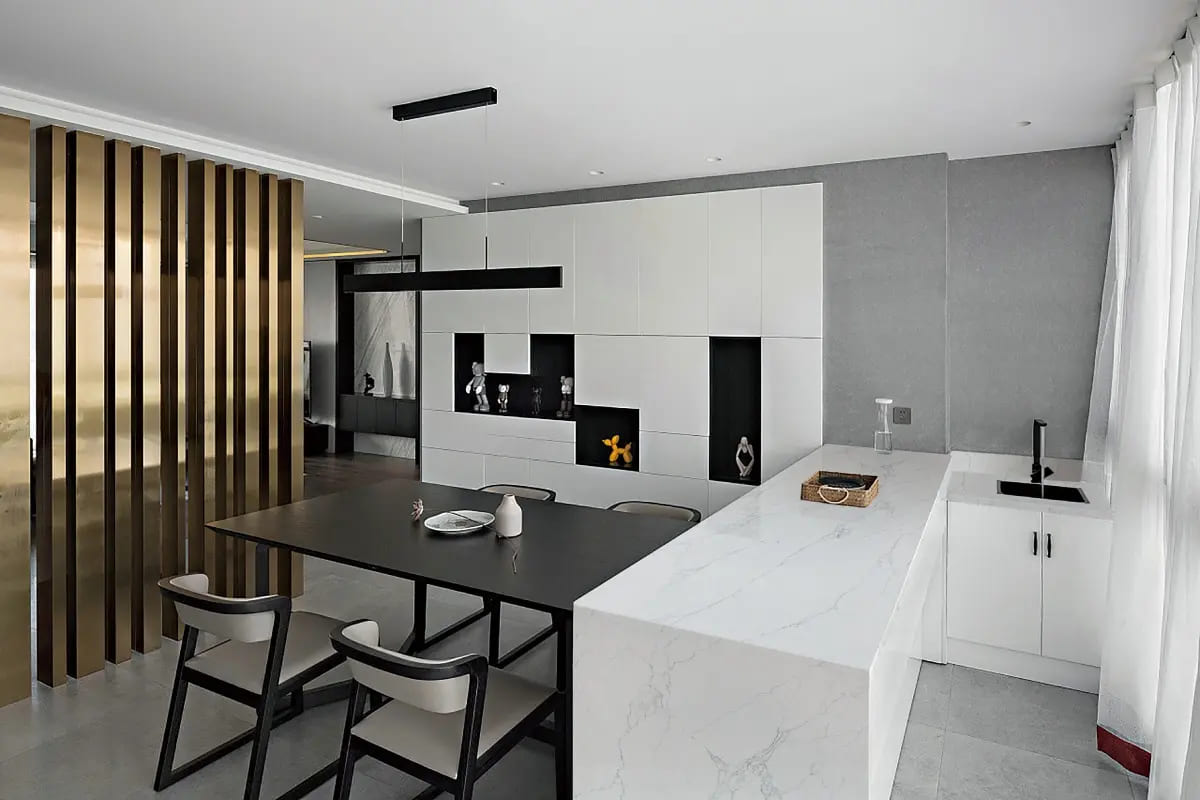
Indonesia is the largest economy in Southeast Asia, and its construction sector is expanding at an annual rate of 5-7%. For importers specializing in stone-look porcelain kitchen countertops, understanding the specific regulatory and tariff environment of Indonesia is critical to maintaining margins and ensuring smooth customs clearance. At Contigo Ceramics, we have supplied factory-direct porcelain slabs to Jakarta and Surabaya distribution networks since 2010. This market intelligence brief covers the exact HS codes, duty rates, certification pathways, and logistical requirements for importing kitchen countertop slabs to Indonesia in 2026, based on our hands-on experience with local customs brokers.
1. Indonesia Tile Import Market Overview — Size and Growth
Indonesia's ceramic tile consumption exceeded 450 million square meters in 2024, with imports accounting for approximately 12% of total supply. Kitchen countertop slab imports specifically represent a growing niche within this segment, driven by the rising preference for durable, low-maintenance materials over natural stone. The kitchen countertop slab market in Indonesia is projected to grow at a CAGR of 8% through 2026, fueled by:
- Urbanization: Jakarta, Surabaya, Bandung, and Medan remain the primary consumption hubs.
- Premium housing developments: Demand for porcelain slabs in luxury apartments and landed houses is rising, as they offer high impact resistance and stain protection compared to granite.
- Commercial projects: Hotels, restaurants, and co-working spaces increasingly specify large-format glazed porcelain countertops.
China remains the dominant source for imported ceramic tiles in Indonesia, supplying over 80% of all tile imports, due to competitive pricing, capacity, and logistics proximity. Importers who leverage factory-direct sourcing from Foshan can achieve 15-20% cost savings compared to purchasing through regional trading hubs like Singapore or Malaysia.
2. Import Regulations: HS Codes, Duty Rates, and Taxes
To import kitchen countertop slabs into Indonesia, you must correctly classify products under the Harmonized System (HS) code specific to porcelain articles. The relevant code for ceramic tile countertops is HS 6907.21.10.00 — "Flags and paving, hearth or wall tiles, of a water absorption coefficient by weight not exceeding 0.5 %: Unglazed: In the form of slabs with a surface area not exceeding 0.09 m²." However, for large-format slabs exceeding 0.09 m², use HS 6907.21.91.00.
| Component | Rate | Notes |
|---|---|---|
| Import Duty (BM) | 15-20% ad valorem | Standard Most Favored Nation (MFN) rate for HS 6907.21.91.00 |
| VAT (PPN) | 11% | Applied on CIF value + duty |
| Income Tax (PPh 22) | 2.5% | For importers with API (Angka Pengenal Importir) license |
| Total Tax Burden | ~30-35% of CIF value | Calculated on cost, insurance, and freight |
Importers must also engage a licensed surveyor (PT. Sucofindo or PT. Surveyor Indonesia) for pre-shipment inspection if the shipment value exceeds USD 1,500. This requirement applies to all commercial shipments under the Indonesia National Single Window (INSW) system.
3. Certification Requirements Specific to Indonesia
Indonesia does not currently mandate SNI (Standar Nasional Indonesia) certification for all ceramic tiles, but SNI 03-1798-1990 is referenced for floor and wall tile quality standards. However, for kitchen countertop slabs, the following certifications are recommended to ensure smooth market access and avoid detention at customs:
- SNI 8238:2017 — This standard covers ceramic tiles for internal use, including dimensional tolerance, surface quality, and mechanical resistance.
- ISO 10545 — International standard for ceramic tiles. Contigo Ceramics manufactures all slabs to ISO 10545:9-2018 (Mohs hardness >6) and ISO 10545:4-2019 (water absorption <0.5%). Compliance is verified through third-party lab reports from institutions like CISEC (China) or SGS.
- TCNA/ANSI A137.1 — While not mandatory in Indonesia, this certification (via tcnatile.com) is increasingly recognized by premium builders and specifiers as a mark of quality. Contigo Ceramics holds ANSI A137.1 certification for our polished porcelain slabs.
Practical tip: Provide your Indonesian buyer with a Certificate of Analysis (CoA) from a recognized independent lab. This reduces delays if the importer's API is flagged for "random inspection" by the Ministry of Trade.
4. Shipping and Logistics
Typical transit time from Foshan Huangpu port to Tanjung Priok (Jakarta) is 15-20 days for FCL (full container load). To Surabaya, add 2-3 days. Key shipping considerations:
- Main Ports: Tanjung Priok (Jakarta), Tanjung Perak (Surabaya), Belawan (Medan)
- Documentation Required: Commercial invoice, packing list, bill of lading, Certificate of Origin (used for ASEAN-China Free Trade Agreement preference, note that porcelain tiles are not typically eligible), and Import Declaration (PIB).
- Container Types: Standard 20ft GP or 40ft GP. For large-format slabs, consider 40ft OT (open top) to avoid breakage – add USD 150-200 per container.
Contigo Ceramics offers FOB Foshan or CIF Jakarta terms. MOQ is one 20ft container (~1,000m²), with production lead time of 25-35 days. We recommend placing orders 60-70 days before Indonesian construction deadlines to accommodate shipping and customs clearance.
5. Market Trends: What Kitchen Countertop Slab is Selling in Indonesia Right Now
Based on our recent orders from Indonesian importers (Q3 2024 - Q1 2025), these trends are dominant:
- Matte and soft gloss finishes: High-gloss is declining in Jakarta's luxury segment; matte slate and marble-look slabs are preferred.
- Large format (1200x2400mm and 1600x3200mm): Seamless look is highly valued. Our large-format porcelain slabs are the most requested SKU.
- Color preferences: Gray (60% of orders), beige (20%), white calacatta (15%), black (5%).
- Thickness: 12mm for kitchen countertops; 6mm for backsplashes.
- Stain resistance: Importers specifically request test reports for oil and coffee stain resistance — a standard requirement for the food-grade surface applications.
Our polished porcelain and glazed tile lines are performing well in this segment.
6. How Factory-Direct Sourcing Changes the Competitive Landscape
Indonesian importers typically buy through regional distributors (Singapore, Malaysia) or local agents who add 20-30% markup. Factory-direct procurement from Contigo Ceramics eliminates these middlemen, allowing you to:
- Reduce landed cost by 25-30% compared to buying from Singapore-based brokers.
- Customize packaging to match customs labeling requirements — for example, Indonesia requires the country of origin (Made in China) and HS code on each carton.
- Access OEM/private label — We can produce under your brand, which helps establish brand equity in the local market.
- Control quality better — Each container is pre-shipped inspected per ISO 10545 protocols, reducing the risk of non-conformance at customs.
Our outdoor porcelain slabs are also gaining traction for semi-outdoor kitchens in Bali villas.
7. FAQ: Importing Kitchen Countertop Slab to Indonesia
Q1: Do I need an API license to import ceramic tiles to Indonesia?
Yes, any entity importing commercial quantities of ceramic tiles must possess an Pengenal Importir (API-U or API-P) license. This is a prerequisite for customs clearance. We recommend working with a licensed customs broker in Jakarta to validate your API status before placing an order.
Q2: Can I import a small quantity for a single project?
Our minimum order is one 20ft container. For smaller projects, consider consolidating with other importers or using a third-party consolidator. Given the 11% VAT and 15-20% duty, small shipments are cost-inefficient.
Q3: How do I ensure my slab meets Indonesian standards?
Request a test report from our lab showing compliance with ISO 10545 and water absorption <0.5%. We also provide a Certificate of Origin (non-preferential) and packing list with HS code 6907.21.91.00. For additional confidence, engage a pre-shipment inspection company like SGS to issue a clean report of findings (CRF).
Q4: What is the typical total time from order to warehouse in Jakarta?
Production: 30 days average. Shipping (FOB): 15-20 days. Customs clearance and local delivery: 5-7 days. Total: 50-57 days. We recommend ordering 8 weeks prior to project deadlines.
8. Get Market-Specific FOB Pricing for Indonesia
Each Indonesian port has distinct documentation and logistics requirements. Contigo Ceramics provides FOB Foshan/Huangpu pricing with full documentation support for HS 6907.21.91.00 classification, ISO 10545 test reports, and packing list tailored to Indonesian customs. Whether you are importing 5 containers or 50 containers for your distribution network, contact our export team for a detailed quote. We can include CIF Jakarta or CIF Surabaya cost breakdown upon request.
Note: All referenced certification data and standards are current as of Q2 2025. Indonesian regulations are subject to change; consult a local trade consultant for the latest BEACUKAI updates.