Address
No. 3F07, Tao Cube, No.68, CCIH, Jihua West Road,Chancheng District, Foshan City, Guangdong, China.

how to import tiles from china | Contigo Ceramics

How to Import Tiles From China: A Complete Step-by-Step Guide
Importing porcelain tiles from China is a proven route to competitive pricing and consistent quality — if you know the process. This guide walks you through each stage, from identifying a factory direct supplier to clearing customs at your destination port. Estimated time from first contact to receiving goods: 3 to 5 months for first-time buyers, faster for repeat orders. Difficulty: moderate, but manageable with the right preparation.
What You’ll Need to Import Tiles From China
Before you start, gather the following tools, documents, and baseline knowledge. This table covers the essentials.
| Item | Description | Notes |
|---|---|---|
| Reliable factory contact | Direct manufacturer (not trading company) | Visit Foshan or arrange a video tour. At Contigo Ceramics, we welcome factory audits. |
| Sample tiles (10×10 cm or full size) | Check color, shade variation, and rectification | Free samples available; you pay courier (~$30–50). |
| MOQ understanding | One 20-ft container (≈1,000–1,200 m² of 9 mm tile) | 20 mm outdoor tile: ≈800 m² per container. |
| Payment method | T/T or irrevocable L/C at sight | 30% deposit, 70% before shipping. L/C for larger orders. |
| Shipping knowledge | FOB vs CIF incoterms | FOB: you control freight. CIF: seller arranges shipping and insurance. |
| Customs broker at destination | Licensed broker for HS code classification | Porcelain tile HS code: 6907.21. (4000-series in some countries). |
Step-by-Step Process: Importing Tiles From China
- Step 1: Research and Identify a Direct Factory Supplier
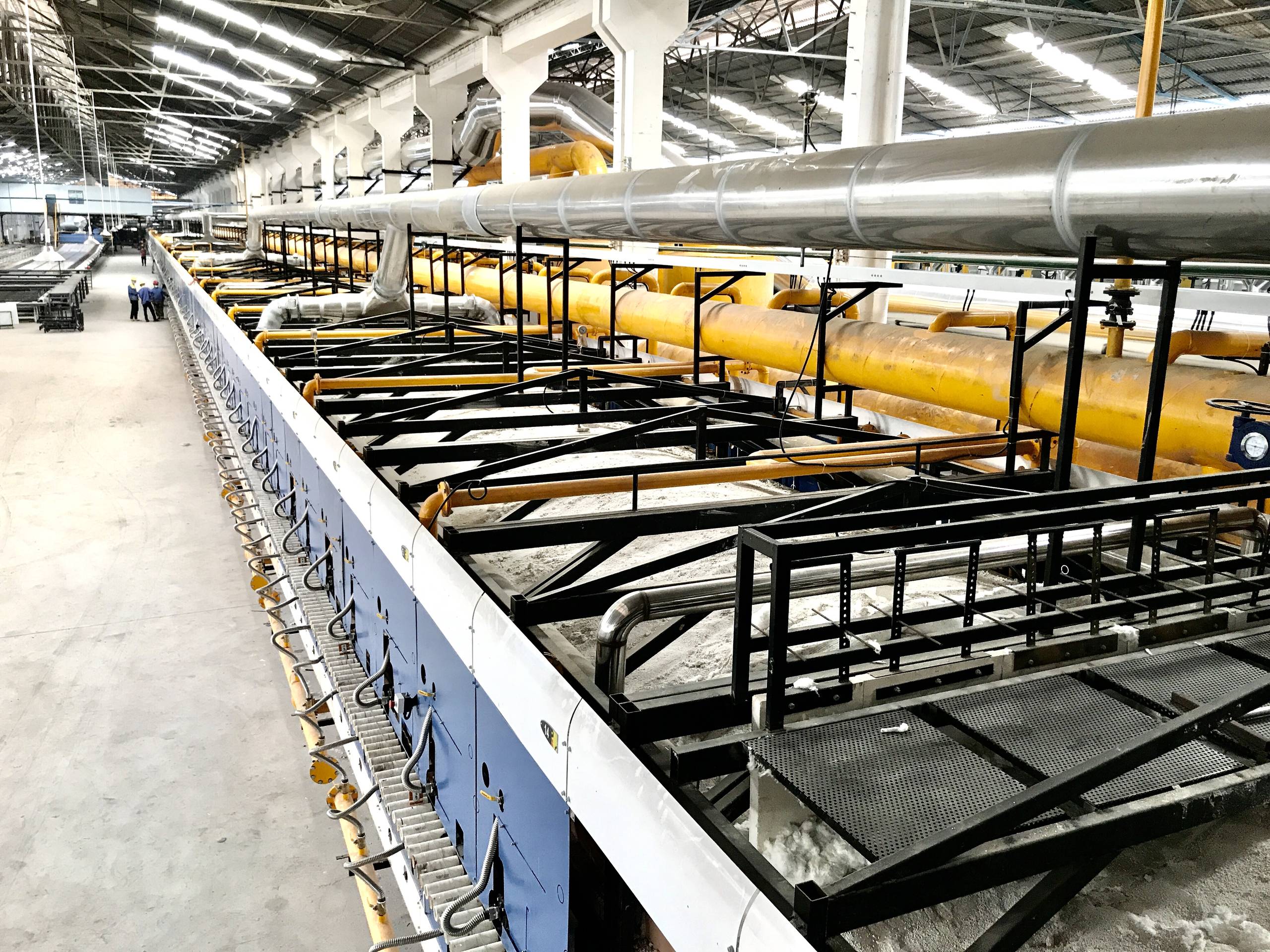
Start by searching for manufacturers in Foshan, China — the world’s largest porcelain tile production hub. Look for factories that operate roller kilns firing at 1200–1250°C, use hydraulic presses of 3600–7800 tons, and offer digital inkjet printing. These specs indicate consistent body density and color accuracy.
What to watch out for: Avoid trading companies that mark up prices 10–20%. Ask directly: “Are you the factory?” A legitimate manufacturer will invite you for a visit. At our Foshan facility, we show visitors the entire production line — from batching to final QC.
Result: A shortlist of 3–5 factories, each verified as direct manufacturers, not middlemen.
- Step 2: Request Samples and Test Quality
Once you have shortlisted factories, request free samples. For porcelain tiles, ask for 10×10 cm or 15×15 cm pieces. We at Contigo Ceramics send 5–10 sample pieces within 3 working days, along with a QC report. Test the samples against ISO 10545-3 (water absorption), ISO 10545-4 (breaking strength), and ISO 10545-12 (frost resistance).
One trick most importers miss: Instead of just looking at the surface, break a sample in half and examine the body cross-section — consistent color and density from face to back is a hallmark of high-quality full-body porcelain. You can do this in under 30 seconds with a hammer.
Result: Confirmed that the tile meets your project’s PEI rating and DCOF slip resistance requirements.
- Step 3: Get Accurate Pricing (FOB vs CIF)
Request a proforma invoice listing tile size (e.g., 600×600 mm, 800×800 mm, or 1200×2400 mm), surface finish (polished, matt, rustic), and quantity per container. The factory will quote FOB (Free on Board) — meaning the price includes the tiles, palletizing, and loading at Huangpu or Foshan port. Ocean freight is separate.
What to watch out for: Some factories quote low per-square-meter prices but add hidden costs for palletizing, shrink wrap, or wooden crating. Ask for a full breakdown. Our standard FOB quotes include all packaging.
Result: A clear FOB price per m². For example, polished 600×600 mm porcelain: $4.20–$5.80/m² FOB depending on quantity.
- Step 4: Place Order and Agree Payment Terms
Standard payment is 30% T/T deposit to start production, 70% before shipping or against copy of Bill of Lading. For repeat buyers, we can extend net terms. Irrevocable L/C at sight works for orders over $50,000.
What to watch out for: Never pay 100% upfront. The 70% balance is due only after you (or your freight forwarder) receive the draft B/L, confirming the goods are loaded.
Result: Production starts within 48 hours after deposit clearance.
- Step 5: Production and Quality Control
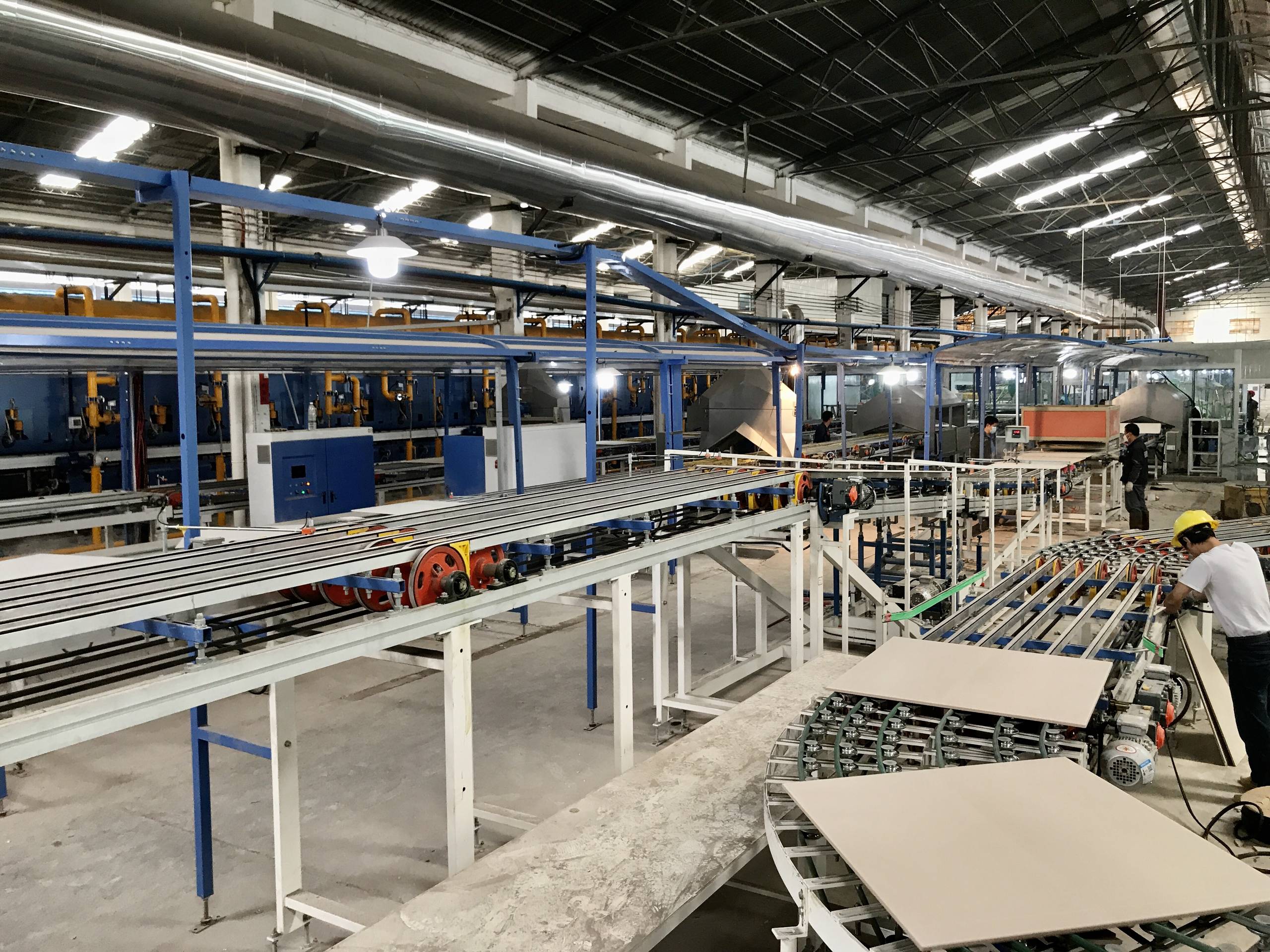
Lead time is 15–25 days for standard stock production; 25–35 days for custom colors or sizes. During production, the factory runs batch tests on water absorption, breaking strength, and shade consistency. We send a QC report with photos before shipment.
What to watch out for: Request the factory to hold the shipment until you approve the QC report. A reputable factory will never ship without your sign-off.
Result: You receive a QC certificate and a pre-shipment inspection video.
- Step 6: Shipping and Logistics
Arrange a freight forwarder to handle the container booking, customs clearance at departure, and ocean freight. Typical routes: Foshan to Los Angeles (25–30 days), Foshan to Rotterdam (30–35 days). We can recommend reliable forwarders, but you choose your own to control costs.
What to watch out for: Ensure the container is properly stuffed — ask for a loading list and photos of each pallet row. Improper loading leads to breakage.
Result: Container is on vessel with an ETD (estimated time of departure) confirmed.
- Step 7: Customs Clearance and Final Delivery
Work with a licensed customs broker in your country. Provide the commercial invoice, packing list, and Bill of Lading. Your broker will classify the tile under the correct HS code (typically 6907.21 for glazed porcelain). Duties vary by country — for example, US tariff rates on Chinese ceramic tiles were recently around 25–30% depending on the specific type. Confirm current rates with your broker.
Result: Goods released from customs and delivered to your warehouse or job site.
Key Fact: 20 mm outdoor porcelain tiles from our factory bear 2,000+ kg/m² load — rated for vehicle traffic without cracking. Always verify the rated breaking strength with your factory before ordering for driveway or commercial applications.
Expert Tips for First-Time Importers
Tip 1: Visit the factory in person or via video tour. Seeing the kiln, press line, and QC lab builds trust. We regularly host buyers from the US, Europe, and Southeast Asia at our Foshan facility. If travel isn’t possible, request a 10-minute video call walking through the production floor.
Tip 2: Use the “break test” trick on samples. As mentioned in Step 2, fracture a sample with a hammer. If the color and texture are uniform throughout, you have a dense, high-quality porcelain that won’t fade or absorb moisture over time. This is a 30-second test that tells you more than any glossy brochure.
Tip 3: Order a shade variation sample pack. Porcelain tiles for a large project should come from the same production run. Ask the factory to send 3–4 tiles from different positions along the roller kiln — any shade difference beyond ±0.5 in L*a*b* value means you need to order spare boxes for future matching.
Tip 4: Request a 10% overage in your container. For rectified tiles, edges can chip during cutting at your job site. Order an extra 10% of your total square footage to account for waste and future repairs. This is standard practice in the industry.
Frequently Asked Questions About Importing Tiles From China
- What is the minimum order quantity (MOQ) for factory-direct porcelain tiles?
Typically one 20-foot container, which holds about 1,000–1,200 square meters of 9 mm tile. For 20 mm outdoor pavers, it’s about 800 m² per container. Contigo Ceramics accepts one-container MOQ for standard sizes; custom runs may require two containers.
- How long does it take to receive tiles after placing an order?
Standard production takes 15–25 days, plus ocean transit (25–30 days to the US West Coast, 30–35 to Europe). Total time from deposit to door is approximately 45–60 days for most destinations. Busy season (September–December) adds 7–10 days.
- How do I ensure the tiles meet international quality standards?
Request ISO 10545 test reports for water absorption (≤0.5% for porcelain), breaking strength (≥1300 N for floor tiles), and frost resistance. At Contigo Ceramics, we test every batch in our QC lab and send the report before shipping. Also, ask for a DCOF slip resistance test if the tiles will be used in wet or commercial areas.
- Can I get free samples before placing a large order?
Yes — most direct manufacturers send free sample tiles (10×10 cm or 15×15 cm) within 3 business days. You pay the courier cost, typically $30–50. For large projects, we can send full-size sample boards or even provide a virtual mock-up using real product photos.
“The MOQ for factory-direct orders typically starts at one 20-foot container — about 1,000 m² of 9 mm tile. This is the most cost-effective way to import tiles from China when you cut out the middleman.” — Contigo Ceramics technical team, Foshan, China.
Conclusion: The Key to a Smooth Import Process
Importing tiles from China becomes straightforward when you work directly with a verified manufacturer, understand the quality testing process, and manage your logistics with a reliable forwarder. The steps outlined in this guide cover everything from factory selection to final delivery. The single most important factor is the supplier relationship — visit the factory (in person or virtually), test samples rigorously, and always communicate your specs clearly.
Ready to start your first container? Contact our team for a free sample pack and current FOB pricing. We’ll walk you through the entire process, from QC reports to loading photos.
Written by the Contigo Ceramics technical team, Foshan, China.
Related resources: Learn more about Foshan Porcelain Tile Factory — Direct Manufacturer in Nanzhuang or read our Complete Guide to Porcelain Tile Sourcing. For technical details on tile manufacturing, visit the How Porcelain Tiles Are Made page. See also our guide to Large Format & Porcelain Slab Technical Guide and Outdoor & 20mm Tile Complete Guide.