Address
No. 3F07, Tao Cube, No.68, CCIH, Jihua West Road,Chancheng District, Foshan City, Guangdong, China.

how much does living room tile cost per m2 | Contigo Ceramics

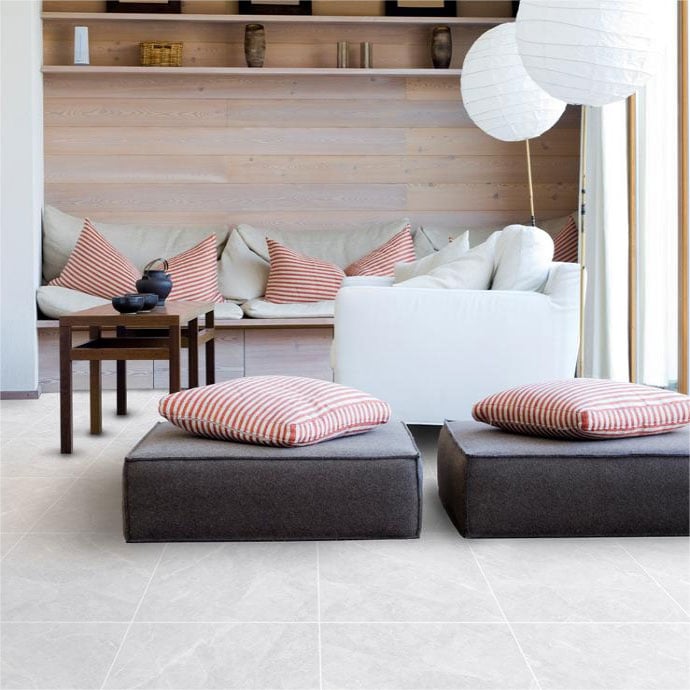
The Real Cost of Living Room Tile — And Why Most Homeowners Pay Too Much
If you are planning a living room renovation and searching for how much tile costs per square meter, you have probably seen wide ranges: $5/m² on the low end at a big-box store, or $35/m² for something “Italian” or “designer”. Most homeowners end up paying $15–$25/m² for decent quality tile from a local distributor or showroom.
Here is the truth that nobody in the tile industry wants you to know: that $20/m² tile costs the factory $4–$7/m² to produce. The difference is not quality—it is markup. Distributors add 150–250% to cover showroom rent, sales commissions, warehousing, and advertising. You are not paying for a better tile. You are paying for their overhead.
At Contigo Ceramics, we sell factory-direct from our facility in Foshan, China. We produce 50,000m² of tile per month. When you buy from us, you pay for the tile, the raw materials, and the manufacturing. You skip the expensive middleman entirely.
Living Room Tile Cost — Retail vs. Factory Direct
The biggest cost variable in your living room floor is the tile itself. Labor, grout, and subfloor prep are local market costs that remain roughly the same whether you buy retail or direct. The savings come entirely from how the tile is priced.
| Item | Retail / m² | Factory Direct | Save |
|---|---|---|---|
| Tile (800×800mm Porcelain) | $15 – $25 | $4.50 – $7.50 (FOB + Landed) | 60-70% |
| Grout & Adhesive | $5 – $10 | $5 – $10 (buy locally) | 0% |
| Labor (Standard Install) | $15 – $25 | $15 – $25 (local) | 0% |
| Trim / Baseboard | $3 – $8 | $1 – $3 (from factory) | 60% |
| Subfloor Prep (if needed) | $5 – $10 | $5 – $10 (local) | 0% |
| Total Project (60m² Room) | $2,880 – $4,560 | $1,710 – $2,730 | ~$1,000+ Saved |
As the table shows, the tile itself is where the massive savings live. A $20/m² retail tile becomes a $6/m² factory tile. On a 60m² living room, that is over $800 in savings on the product alone.
What Drives the Price of Living Room Tile?
Not all tile costs the same to produce. Understanding what adds cost helps you make an informed choice without overpaying for features you do not need.
Size and Format
Standard sizes like 600×600mm and 800×800mm are the cheapest to manufacture because they have high production yields. Larger formats (1200×600mm, 1200×2400mm slabs) are harder to press and fire without warping or defects. The factory reject rate is higher, and the price per m² goes up as a result. For most living rooms, 800×800mm offers the best balance of modern aesthetics and low cost.
Surface Finish
A polished porcelain tile requires 16–24 polishing heads running for extended cycles, using abrasives and electricity. This adds roughly $1–$2/m² to the factory cost. Matte or satin finishes skip that step entirely, keeping prices lower while offering better slip resistance (a real advantage for living rooms with kids or pets).
Inkjet Complexity
A basic solid-color tile costs less because it uses a simple glaze application. A realistic wood-look or marble-look tile requires advanced digital inkjet printers with 8, 12, or even 16 different print patterns (called “faces”). Premium inks with high-gloss frit cost 2–3× more than standard glaze. This adds $1–$3/m² at the factory level. It is a small premium for a look that is nearly indistinguishable from natural hardwood or stone.
Thickness
Standard indoor floor tile is 9–11mm thick. If you are installing tile directly over a concrete slab (common in modern homes), this is perfectly adequate. If you need 20mm outdoor pavers for a covered patio adjacent to your living room, expect the material cost to roughly double because it uses twice the raw material and is heavier to ship.
Three Living Room Tile Budgets: What You Get at Each Tier
Here is what your money actually buys at different price points when purchasing factory-direct from Foshan.
Budget ($4/m² – $8/m² FOB)
Best for: Rental properties, flip projects, or homeowners prioritizing function over flash.
You get a 600×600mm or 800×800mm polished porcelain tile in a standard neutral color (white, beige, or grey). The surface is uniform, durable, and easy to clean. This is a workhorse tile that looks clean and timeless. It is the exact same tile a distributor would sell for $15–$18/m².
Mid-Range ($8/m² – $15/m² FOB)
Best for: Family homes where aesthetics matter, and you want a specific design.
This tier opens up 800×800mm matte or satin finished tiles, large format 1200×600mm planks, and realistic wood-look tile or marble-look tile with multiple print faces. The color palette is more curated. You get the textured surface and high-definition inkjet printing that makes the tile look like a premium natural material.
Premium ($15/m² – $25+ /m² FOB)
Best for: Custom homes, open-plan living, where the tile is the centerpiece of the design.
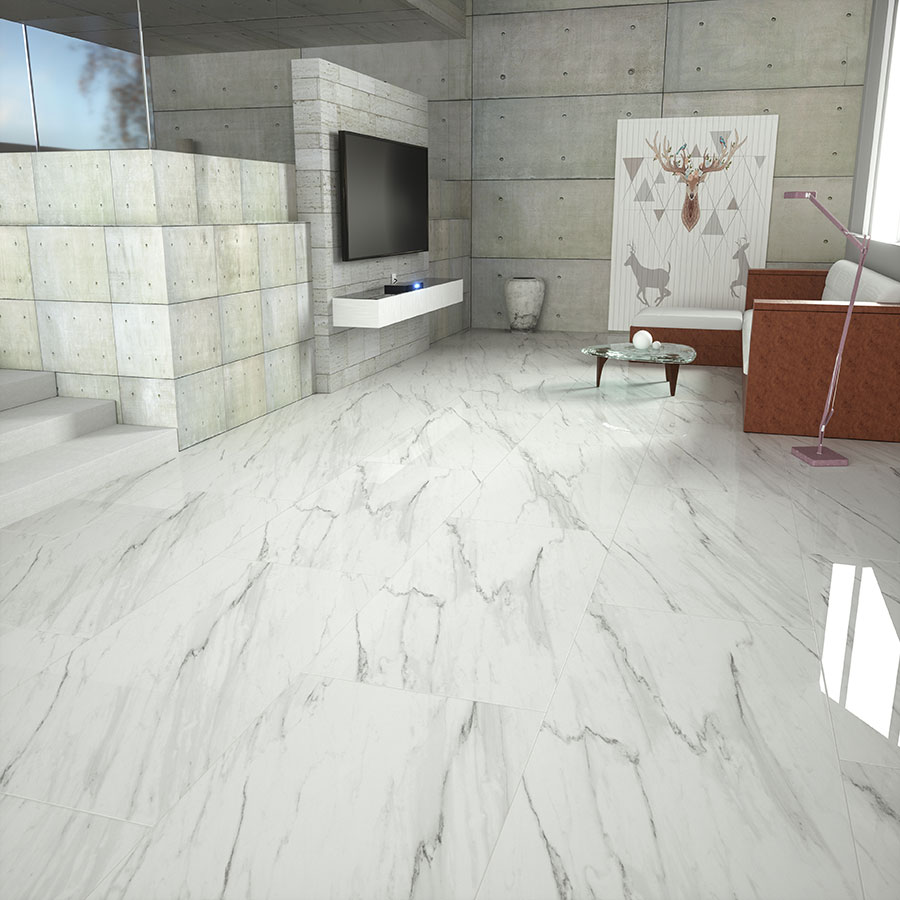
At this level, you are looking at large format slabs (1200×2400mm or larger) with bookmatching patterns. The marble veining or stone texture continues from slab to slab, creating a seamless luxury floor. Through-body color ensures the pattern runs through the entire thickness, which matters if you are doing exposed edges or stairs.
The Hidden Costs of Living Room Tile (And How to Avoid Them)
A budget is only as good as its hidden costs. Too many homeowners only budget for the tile itself and get blindsided by the extras.
Waste Factor (10–15%)
Always, always order extra. Tiles break during cutting. Corners chip. Patterns shift. If you run short and order a second batch later, the color may not match—even from the same factory. Order your full quantity (including waste) from the same production batch up front.
Subfloor Preparation
If your existing concrete slab is not perfectly level, you will need self-leveling compound ($5–$10/m² material cost plus labor). Skipping this is the number one reason tiles crack within two years. A level subfloor is non-negotiable.
Need factory-direct porcelain tile pricing?
Send your project details — sizes, quantity, and destination port — to [email protected]. Contigo Ceramics can provide catalog, FOB price list, packing details, and technical specifications for importers, distributors, contractors, and project buyers.
Prefer a faster response? 💬 Chat on WhatsApp — typically reply within hours during Foshan business hours.