Address
No. 3F07, Tao Cube, No.68, CCIH, Jihua West Road,Chancheng District, Foshan City, Guangdong, China.

can i import tiles from china? | Contigo Ceramics

Can I Import Tiles from China?
Yes, you can import tiles from China — and it is one of the most cost-effective ways to source high-quality porcelain, large-format, and outdoor tiles for commercial or residential projects. China produces over 60% of the world’s ceramic tiles, with the majority manufactured in Foshan, Guangdong province. Contigo Ceramics operates from this same hub, offering factory-direct pricing without intermediaries. Importing tiles from China involves understanding FOB (Free on Board) pricing, minimum order quantities (MOQ), shipping logistics, quality standards, and factory verification. This guide covers every step so you can import with confidence, with technical details you would get from a factory engineer, not a marketing brochure.
Key Takeaways
- Importing tiles from China is straightforward when you work with a verified factory that offers flexible MOQ and transparent FOB pricing.
- Foshan-based factories like Contigo Ceramics use advanced manufacturing: 7800T presses, 1250°C roller kilns, digital inkjet, and mechanical rectification.
- Always require ISO 10545 testing reports and ANSI A137.1 compliance to ensure tile quality meets your project specifications.
- Shipping options include LCL (Less than Container Load) for smaller orders and FCL for full containers — typical lead time is 20–30 days after production.
- The number one trick to import tiles from China is combining your order with other buyers in a shared container to reduce freight costs — this is common practice for first-time importers.
- Schedule a virtual or in-person factory audit before placing a first order. We offer remote walkthroughs of our production line at Contigo Ceramics.
What Does It Mean to Import Tiles from China?
Importing tiles from China means purchasing directly from a manufacturer in the world’s largest tile-producing region and arranging international shipping to your destination. Unlike buying from a local distributor, direct import removes the middleman, saving 30–50% on tile costs. The process includes selecting products (porcelain, glazed, polished, outdoor, large format), agreeing on FOB price per square meter, confirming MOQ (typically 300–500 m² for standard sizes, higher for specialty sizes), arranging inspection, and managing logistics from factory to port. At Contigo Ceramics, we help buyers through every step — from sample selection to container loading.
Why Import Tiles from China Instead of Buying Locally?
Buyers import tiles from China for three main reasons: cost, variety, and manufacturing capability. Chinese factories produce tiles using the latest technology — 1200–1250°C roller kilns, 3600–7800T hydraulic presses, digital inkjet printers with HD resolution, and 16–24 head polishing lines. This equipment, combined with large-scale production, results in tile quality that meets ISO 10545 and ANSI A137.1 standards at a fraction of the price charged by European or American manufacturers. Contigo Ceramics ships to over 30 countries, and our clients consistently report 40–60% savings compared to local distributor prices.
Is It Legal to Import Tiles from China?
Yes, it is legal to import tiles from China to almost any country, provided you comply with local building codes, customs regulations, and anti-dumping duties where applicable. For example, the United States applies anti-dumping duties on certain ceramic tile products from China — currently around 10–30% depending on the manufacturer and product category. Check with your country’s customs authority or a licensed customs broker before placing an order. Contigo Ceramics provides all necessary export documentation including certificate of origin, packing list, commercial invoice, and test reports to help you clear customs smoothly.
What Quality Standards Should You Expect When You Import Tiles from China?
Reliable Chinese tile factories test every production batch against international standards. At Contigo Ceramics, we follow ISO 10545 (ceramic tile test methods) and ANSI A137.1 (American National Standard for ceramic tile). Specific requirements include water absorption below 0.5% for porcelain (ISO 10545-3), breaking strength over 1300 N for floor tiles (ISO 10545-4), and abrasion resistance PEI 3–5 for commercial applications (ISO 10545-7). For outdoor tiles, we also test DCOF slip resistance per ANSI A137.1 (minimum 0.42 wet). In our Foshan facility, we perform these tests on every batch. If a buyer requests independent third-party testing from SGS or Bureau Veritas, we arrange it at cost.
The One Trick to Import Tiles from China: Shared Container Shipping
The single most effective way to reduce your initial investment when you first import tiles from China is shared container shipping, also known as consolidation. Instead of paying for an entire 20-foot container (approximately 25–30 tons of tiles), you combine your order with other buyers going to the same port. Freight forwarders offer LCL (Less than Container Load) services where you pay only for the cubic meters your pallets occupy. This allows you to test a factory’s quality with a small order (as low as 100 m²) before committing to full container volumes. At Contigo Ceramics, we coordinate with several freight consolidators and can help you find a shared container headed to your port. Many of our first-time buyers start this way — it is the proven path to building a long-term import relationship.
Watch Inside a Real Foshan Tile Factory: What to Look For
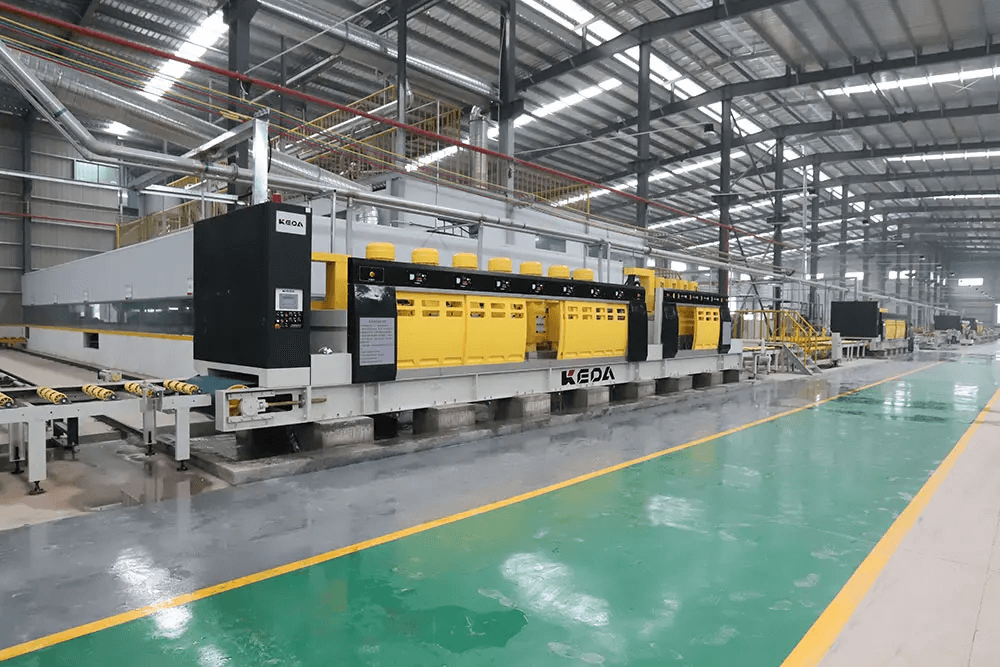
When you consider whether to import tiles from China, a factory tour — virtual or in person — is invaluable. At Contigo Ceramics, we offer remote live walkthroughs of our production line. Here is what experienced buyers watch for: the kiln temperature display (should show 1200–1250°C for porcelain), the press tonnage rating (3600T minimum for large formats), and the rectification line (mechanical edge calibration ensures ±0.2 mm size tolerance). We also show our digital inkjet print heads (Epson or Kerajet) and the polishing line for glossy finishes. During a physical factory audit, check for material storage bays, finished goods inventory, and the FOB loading dock. We welcome both virtual and on-site visits. Seeing the process firsthand eliminates the guesswork and builds trust long before the container ships.
How to Verify a Chinese Tile Factory Before You Import
Before you import tiles from China, verify the factory using three steps: check trade records, request test reports, and arrange a video call walkthrough. Contigo Ceramics has exported to North America, Europe, the Middle East, and Southeast Asia. We provide our ISO 9001:2015 certification and test reports from SGS on request. Ask the factory for a commercial invoice from a recent shipment to see product descriptions and pricing — a legitimate factory will share this. Most importantly, never wire full payment upfront. Standard terms are 30% deposit, 70% balance against scanned copy of bill of lading. For new buyers, we offer a “samples first” approach: order 2–3 m² of your chosen tile to evaluate color, size, and finish before placing a production order.
FOB Pricing and MOQ: What You Need to Know
FOB (Free on Board) pricing means the factory covers all costs until the goods are loaded onto the vessel at the port of departure — typically Foshan’s Guangzhou port or Shenzhen port. The FOB price per square meter includes manufacturing, packaging (wooden crates or fumigated pallets), inland transport, and loading fees. You pay for ocean freight, insurance, customs clearance, and inland delivery. Typical FOB pricing for standard polished porcelain tile (600x600mm, 8–12mm thickness) ranges from $4.50 to $9.00 per square meter depending on finish and quality. Minimum order quantities (MOQ) at Contigo Ceramics start at 100 m² for stock designs, 500 m² for custom colors. For large-format tiles (1200x2400mm or larger), MOQ is 300 m². We are flexible with first-time importers — ask about our trial order program.
Shipping and Logistics When You Import Tiles from China
After production, tiles are packed in cartons, then stacked and strapped on wooden pallets covered with protective corners and shrink wrap. Contigo Ceramics uses standard export packaging suitable for container shipping. Lead time after deposit is 20–25 working days for standard products, 30–35 days for custom sizes or full-body porcelain. Ocean freight from Guangzhou to a major West Coast US port costs approximately $3,500–$5,500 for a 20-foot container (depending on current rates). Transit time is 18–25 days. We recommend using a licensed freight forwarder for customs clearance. At Contigo Ceramics, we provide a full container loading report with photos and can arrange container loading supervision by a third-party inspector.
Frequently Asked Questions
Is it difficult to import tiles from China for the first time?
No, it is not difficult if you follow a structured process. Identify a verified factory, request samples, negotiate FOB pricing and MOQ, arrange payment terms (typically T/T 30% deposit, 70% against shipping documents), and hire a freight forwarder for customs brokerage. Contigo Ceramics provides all export paperwork including certificate of origin and packing list to make the process smooth.
What is the minimum order quantity when I import tiles from China?
MOQ varies by factory and product. At Contigo Ceramics, standard polished porcelain tiles require a minimum of 100 m² per design. Large-format slabs (1200x2400mm) start at 300 m². For outdoor 20mm tiles, MOQ is 200 m². We offer sample packs (2–4 pcs) for buyers wanting to evaluate quality before committing to a production order.
How do I know the tile quality will be good when I import from China?
Require test reports per ISO 10545 for water absorption, breaking strength, abrasion resistance, and dimension tolerances. A reputable factory like Contigo Ceramics tests every batch and can provide third-party reports from SGS or Bureau Veritas. You can also request a video factory tour or hire an inspection agency to visit before shipment.
What are anti-dumping duties on Chinese tiles and how do they affect me?
Anti-dumping duties are additional tariffs imposed by certain countries (e.g., USA, Canada, some EU nations) on Chinese ceramic tile imports. Rates depend on the manufacturer and product category. As of 2024, US anti-dumping duties on Chinese tile range from 10% to 30%. Contigo Ceramics can advise on duty rates based on your country and help with correct HS code classification (6907 for ceramic tile).
Can I see inside your factory before I place an order?
Yes. Contigo Ceramics offers live video walkthroughs of our Foshan manufacturing facility. We show the entire production line — from raw material mixing and press forming to kiln firing, digital printing, polishing, rectification, and final inspection. Virtual visits are free and can be scheduled within 48 hours. Physical factory audits are also welcome by appointment.
Conclusion: Import Tiles from China with Confidence
Importing tiles from China is not a mystery — it is a proven procurement strategy used by thousands of contractors, architects, and distributors worldwide. The key is choosing a direct factory partner that offers transparency, flexible terms, and adherence to international standards. Contigo Ceramics meets these criteria with factory-direct pricing, ISO 10545 tested products, and support from sample selection to container loading. Whether you need polished porcelain for a hotel lobby, outdoor 20mm tiles for a pool deck, or large-format slabs for a commercial facade, we can deliver. Start with a small shared-container order to test the process. Written by the Contigo Ceramics technical team, Foshan China. Read our complete sourcing guide for more details on FOB, MOQ, shipping, and factory verification. For specific quotes, contact our export department.