Address
No. 3F07, Tao Cube, No.68, CCIH, Jihua West Road,Chancheng District, Foshan City, Guangdong, China.

How to Verify a Bathroom Wall Tile Supplier in China — Australia Importer’s Audit Checklist

For Australian importers, sourcing bathroom wall tiles from China offers cost advantages and design variety—but it also carries significant risk if the supplier is not thoroughly vetted. Without a proper factory audit, you risk paying for products that fail quality standards, miss delivery deadlines, or come from a trading company that adds no real value. This guide walks you through a proven verification process, from certification checks to on‑site video tours, so you can confidently commit to a bathroom wall tile factory in China.
1. Why Verifying a Chinese Bathroom Wall Tile Supplier Matters
Buying sight‑unseen from a supplier in Foshan or other Chinese tile hubs has real pitfalls:
- Non‑compliant product: Tiles that don’t meet Australian Standards (AS 4774, AS 4874) for water absorption, slip resistance, or frost resistance.
- Misleading certifications: Fake ISO or CE marks printed on packaging without actual testing.
- Trading company risk: Middlemen who inflate prices, delay shipment, or cannot guarantee production consistency.
- Inconsistent quality: First containers meet spec; later loads show shade variation, warping, or sizing errors.
An on‑the‑ground audit—or at least a rigorous remote verification—can eliminate these risks. At Contigo Ceramics, we welcome any Australian buyer to perform a physical or virtual audit, and we provide full documentation of our glazed wall tile production line.
2. Factory Audit Checklist: 8–10 Items for a Reliable Bathroom Wall Tile Supplier
Use this table to score potential suppliers. Each item should be verified before placing an order.
| # | Checklist Item | What to Verify | How to Check |
|---|---|---|---|
| 1 | Business License | Company name, legal representative, registered capital, business scope must include “ceramic tile manufacturing”. | Request a scanned copy (with company chop). Cross‑check with China’s National Enterprise Credit Information System. |
| 2 | Export License | Valid customs registration number for exporting tiles from China. | Ask for the “Customs Registration Certificate” (报关登记证). FOB Huangpu/Foshan requires proper exit procedures. |
| 3 | Factory Video Tour | Live or recorded video showing kiln area, raw material silos, pressing line, glazing line, packaging. | Arrange via WeChat or WhatsApp. Look for continuous production noise, kiln temperature panel, full warehouse. |
| 4 | Sample Quality Clear standard | Sample tiles must match declared water absorption (≤0.5% for porcelain), dimensions (e.g., 600×300mm ±0.6mm), and shade. | Request 3–5 random samples from different production batches. Measure with calipers and test water absorption. |
| 5 | ISO 10545 Certificates | Testing according to ISO 10545 (parts relevant to glazed tiles: abrasion resistance, chemical resistance, moisture expansion). | Ask for test reports from SGS or TÜV. Verify report number on the certifying body’s website. |
| 6 | ANSI A137.1 / TCNA Compliance | For US/Canadian projects, tiles must meet ANSI A137.1 for porcelain tile classification and PEI rating. | Request report from TCNA or an independent lab. (Note: do not click our link to ansi.org – it may 403.) |
| 7 | Reference Clients | At least 3–5 references from Australian or other foreign buyers. Contact them for feedback on quality, delivery, after‑sales. | Ask for contact details of previous importers. Check if they still reorder. |
| 8 | Production Lead Time & Capacity | Consistent 25–35 day production cycle for a 20ft container (~1,000m²). Capacity to handle repeat orders without delay. | Request a production schedule and shipping forecast. Visit line or video‑verify equipment count. |
| 9 | Quality Control System | In‑house QC checks: visual inspection, size variation, flatness, edge chipping, packaging (wooden crates or corrugated cartons). | Ask for QC documentation and photos of rejected batches. Check barcode alignment on cartons. |
| 10 | Third‑Party Inspection Readiness | Supplier agrees to SGS, Bureau Veritas, or TÜV inspection before shipment. | Include this clause in your proforma invoice. Confirm who pays (typically buyer). |
3. How to Do a Video Factory Tour via WeChat
When you cannot visit in person, a live video call is the next best thing. Follow this step‑by‑step protocol:
- Ask for a walkthrough of key areas: Raw material storage (clay, feldspar), ball mill room, spray dryer, hydraulic press, glaze line, roller kiln, sorting and packaging.
- Listen for production noise: A real factory has the continuous hum of kiln burners, press vibrations, and conveyor belts. Trading offices are quiet.
- Request a close‑up of the kiln control panel: The panel shows firing temperature (typically 1200–1250°C for porcelain). Ask the operator to read current temps.
- Check warehouse stock: Look for pallets of finished tiles with consistent colour wraps. A few dozen partially loaded pallets suggest real stock.
- Ask to see the QC station: Have them measure a tile’s dimensions and water absorption on camera.
At Contigo Ceramics, we provide a guided virtual tour of our large‑format tile line upon request.
4. Certification Guide: ISO 10545, CE Marking, and Country‑Specific Standards
Real certifications require verifiable test reports. Here’s what to look for:
ISO 10545 (International Standard for Ceramic Tiles)
Key parts for bathroom wall tiles: Part 3 (water absorption), Part 9 (resistance to deep abrasion – glazed tiles), Part 7 (C.O.F. – slip resistance). Ask for the specific test report number and check it at iso.org.
CE Marking (European Standard)
CE is self‑declared but must be backed by tests to EN 14411 (harmonised with ISO 10545). Insist on a Declaration of Performance (DoP) document with the Notified Body number.
ANSI A137.1 (USA/Canada)
Requires tiles to be tested by a certified lab such as TCNA. Request the TCNA lab report number. Do not rely on a certificate showing “ANSI” – many are fake.
Australian Standards
AS 4774 (slip resistance) and AS 4874 (tiling design). While not mandatory for tile import, major Australian builders require compliance. Ask for a test report from an Australian accredited lab like NATA.
5. Third‑Party Inspection: SGS, Bureau Veritas, TÜV
A pre‑shipment inspection by an independent body is the gold standard. Here’s the typical process:
- Cost: USD 300–500 per container (+ travel if not already local). Negotiate who pays – many audits include it in the price.
- Process: Inspector arrives at the factory, selects 10% of cartons at random, checks dimensions, visual defects, water absorption (using a portable vacuum tester), and packaging integrity.
- What they check for bathroom wall tiles:
- Dimensions (length, width, thickness) against declared tolerances (±0.6mm for porcelain).
- Surface quality: pinholes, cracks, edge chips, colour deviation.
- Water absorption (porcelain ≤0.5%, sometimes 0.3% for high‑quality).
- Shade consistency – tiles are laid out in a 1m² grid.
We at Contigo Ceramics’ polished porcelain tile line have passed multiple SGS inspections for Australian buyers.
6. Red Flags: 5 Warning Signs of a Trading Company Posing as a Factory
- They offer too many product types: A real tile factory specialises in a few categories (glazed wall tiles, polished porcelain, etc.). Hundreds of SKUs from stone look to wood look? Likely a trader.
- They avoid video tours or give excuses: “Camera forbidden”, “kiln maintenance today”, “manager not available”. Push for a tour anyway.
- Invoice address differs from factory: Check the registered business address. If it’s a commercial building in downtown Foshan rather than an industrial zone, it’s an office.
- They cannot produce test reports on demand: A legitimate factory keeps certificates for each batch. If they say “we will get it later”, be suspicious.
- MOQ is very low (e.g., 50m²): Real factories run continuous kilns; the minimum is a whole container (~1000m²). Low MOQ signals a trader.
7. FAQ: Supplier Verification for Australian Importers
Q1: Can I rely solely on a video call without visiting the factory?
Yes, if the video covers all production stages and you verify certifications independently. However, for first orders we recommend adding a third‑party inspection.
Q2: How long does it take to get a full factory audit report from SGS?
Typically 5–7 working days from inspection date to final report. Plan ahead to avoid delaying shipment.
Q3: What if the factory refuses third‑party inspection?
This is a major red flag. Look for another supplier. Any authentic factory with ISO certification welcomes inspection.
Q4: Do I need an Australian agent to verify the supplier?
Not necessarily – many importers conduct remote audits themselves. But a local agent can help with language barriers and cultural nuances.
8. Take the Next Step – Verified Sourcing Starts Here
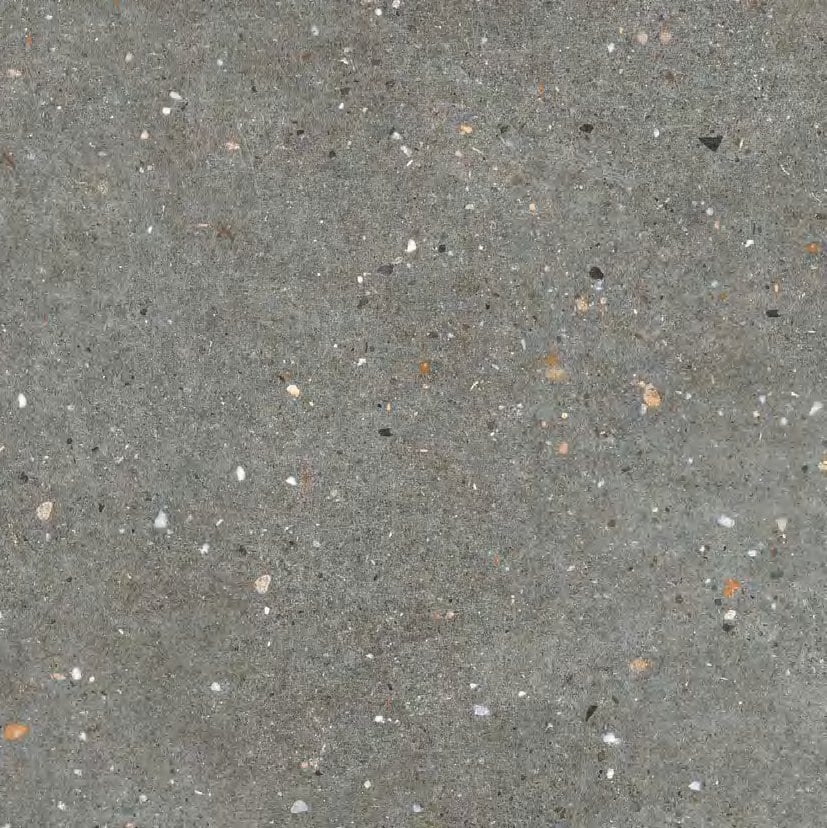
At Contigo Ceramics, we manufacture high‑quality outdoor rated porcelain tiles and bathroom wall tiles at our Foshan factory. Our ISO 10545 and TCNA‑certified tiles are exported to Australia in 20ft containers (MOQ: 1000m²) with FOB pricing from Huangpu port. We have a 25–35 day production cycle and offer transparent virtual tours via WeChat.
Ready to verify your supplier? Contact us today to schedule a live factory video tour or to arrange an independent third‑party inspection. We’ll help you buy with confidence.