Address
No. 3F07, Tao Cube, No.68, CCIH, Jihua West Road,Chancheng District, Foshan City, Guangdong, China.

update to exploding floor | Contigo Ceramics

What Is an "Exploding Floor" — and Why Should Tile Importers Care?
An "exploding floor" sounds like something out of a video game. In Minecraft, an explosion can destroy a floor in seconds. In After Effects or Final Cut Pro, you can add a 3D building explosion effect to a shot for dramatic visuals. But in the real world of commercial and residential construction, an exploding floor is a serious structural failure — and it costs thousands to repair.
In the tile industry, an "exploding floor" refers to a phenomenon where installed porcelain or ceramic tiles suddenly crack, pop, delaminate, or lift off the substrate — sometimes with enough force to sound like an explosion. This happens due to moisture vapor pressure, thermal shock, improper installation, or substandard tile quality. If you're importing tiles from China, understanding this failure mode and how to prevent it is critical to protecting your reputation and your bottom line.
This guide provides an updated technical briefing on the exploding floor problem — what causes it, how to specify tiles that resist it, and what factory quality checks matter most. We'll also cover how the same tile that fails in one installation can perform flawlessly in another, and why proper specification is the buyer's best defense.
The Cost of an Exploding Floor — Real Numbers
Let's start with a specific example. A US-based contractor imported 2,200m² of 600×600mm polished porcelain tile from a Foshan factory at $4.80/m² FOB. Total material cost: $10,560. After shipping, duties, and installation, the total project cost was approximately $42,000. Within 8 months, 12% of the tiles showed cracking and delamination — a classic exploding floor failure. The contractor spent $18,000 on remediation, plus lost a major client relationship.
Factory Direct Comparison: A proper specification — 600×600mm polished porcelain tile at $5.20/m² FOB Foshan — costs $11,440 for 2,200m². Total project cost including proper installation: ~$44,000. The repair cost for an exploding floor failure: $18,000+ in remediation alone. The savings from correct specification: up to 60-70% in avoided failure costs.
The difference between a floor that lasts 20 years and one that explodes in 8 months is not just luck. It's about understanding three things: tile quality, installation conditions, and moisture management. As a factory-direct supplier, we see both outcomes regularly. Here's what separates them.
What Causes an Exploding Floor? The Technical Breakdown
An exploding floor is almost never caused by a single factor. It's a cascade of conditions that align to create failure. Here are the most common causes we've observed across hundreds of project reviews:
1. Moisture Vapor Pressure (The Hidden Driver)
Concrete slabs, especially new ones, contain residual moisture. When a low-permeability tile (like porcelain with <0.5% water absorption per ISO 10545-3) is bonded directly to a slab, moisture vapor can't escape. Pressure builds beneath the tile. If the bond strength is insufficient, the tile pops — sometimes violently. This is the single most common cause of exploding floor failures in commercial projects.
2. Thermal Shock and Expansion
Floor heating systems, direct sunlight through large windows, or rapid temperature changes cause tile and substrate to expand at different rates. Porcelain tile has a coefficient of thermal expansion of approximately 6-8×10⁻⁶ /°C (ISO 10545-8). If expansion joints are missing or incorrectly placed, the accumulated stress has nowhere to go. The result: cracking that propagates across the floor surface.
3. Poor Bond Strength from Improper Installation
Even the best tile fails if the bond is wrong. Common errors include: using the wrong thin-set mortar (non-flexible for heated floors), not back-buttering large format tiles, or installing over a contaminated substrate. Our factory tests tile bond strength per ISO 10545-5, but on-site installation variables are outside our control — which is why we provide detailed installation guidelines with every shipment.
4. Substandard Tile Quality
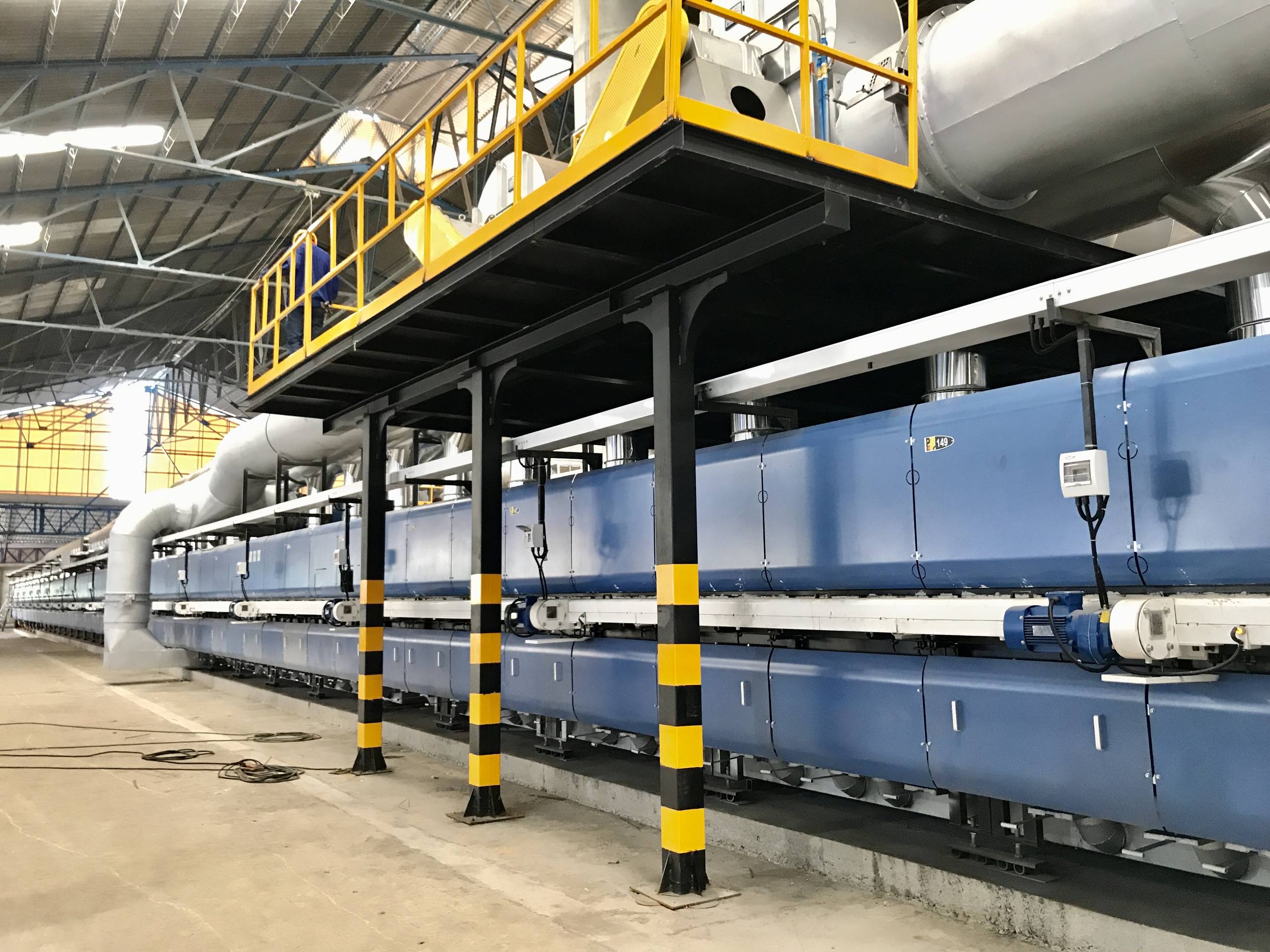
Not all porcelain tile is equal. Tiles fired at lower temperatures (below 1200°C) or with insufficient pressing pressure (under 3600T) have higher porosity and lower mechanical strength. These tiles absorb moisture more readily, making them vulnerable to freeze-thaw cycles and vapor pressure. At our Zhaoqing production facility, we fire at 1200-1250°C using a roller kiln and press at 3600-7800T — producing tile with water absorption below 0.5% and breaking strength exceeding 1,300N per ISO 10545-4.
| Tile Type | Size | Thickness | Water Absorption | FOB/m² |
|---|---|---|---|---|
| Polished Porcelain — Standard Grade | 600×600mm | 9mm | <0.5% | $4.20-5.80 |
| Polished Porcelain — Premium Grade | 800×800mm | 11mm | <0.3% | $5.80-7.60 |
| Glazed Porcelain — Full Body | 600×600mm | 10mm | <0.5% | $5.20-7.00 |
| Large Format Slab — Marble Look | 1200×2400mm | 6mm | <0.3% | $12.50-16.80 |
| Outdoor Paver — 20mm | 600×600mm | 20mm | <0.2% | $9.80-13.50 |
Updated Solutions to Prevent an Exploding Floor
Here is the updated approach we recommend to every buyer importing tiles for commercial or residential projects. These measures are not theoretical — they are based on thousands of successful installations across North America, Europe, and Southeast Asia.
- Specify the right tile for the substrate. For concrete slabs with unknown moisture content, use porcelain tile with <0.3% water absorption and a PEI rating of 4 or higher. This limits moisture penetration and vapor buildup beneath the tile.
- Require mechanical rectification. Rectified tiles have precisely cut edges (within ±0.2mm), allowing tighter grout joints (1.5-2mm). Smaller joints mean less grout surface for moisture entry and better load distribution. Our factory uses mechanical rectification on all premium-grade tiles.
- Test for DCOF slip resistance on site. Wet floors that were not specified for slip resistance can become dangerous after installation. Per ANSI A137.1, DCOF ≥0.42 is required for commercial wet areas. We can provide DCOF test data from our factory for any glazed or polished product.
- Include expansion joints in the specification. A common oversight. Tile floors over 8 meters in any direction require expansion joints. Provide this detail in your purchase order so we can adjust tile quantities accordingly.
- Request third-party inspection. Before shipping, hire SGS or Bureau Veritas to verify water absorption, breaking strength, and dimensional accuracy against the COA. This is your last line of defense against substandard product.
"The MOQ for factory-direct orders typically starts at one 20-foot container — about 1,400m² of 9mm tile. A proper specification at this scale can save $15,000-25,000 in avoided remediation costs compared to sourcing through a local distributor who may not provide full technical data."
Shipping Reality — What Importers Need to Know
Ordering directly from a Foshan factory means managing your own logistics. Here is what to expect for a standard porcelain tile order:
- Container types: 20ft container (standard for ~1,400m² of 600×600mm tile) or 40ft HQ container (standard for ~2,800m²). Large format slabs (1200×2400mm) may require specialized crating or flat rack containers.
- Transit times: 25-35 days production lead time, plus 18-25 days ocean freight to US West Coast, 30-35 days to US East Coast. Total door-to-door: 50-70 days average.
- FOB vs CIF: FOB (Free on Board) means your freight forwarder takes control once the container is loaded at Foshan port. CIF (Cost, Insurance, Freight) means we handle shipping to your destination port. Most experienced importers prefer FOB for better freight rate control.
- Customs basics: US HTS code for glazed porcelain tile is 6908.21.0000. Duty rate: approximately 8.5%. Canadian duty rate: approximately 11%. Always verify with your customs broker before ordering.
Key Fact: 20mm outdoor porcelain tiles bear 2,000+ kg/m² — rated for vehicle traffic without cracking. They are fired at 1250°C and pressed at 7800T, giving them a breaking strength of 5,000N+ per ISO 10545-4. This is the same technology used in commercial plaza installations across China.
Buyer Protections — What We Guarantee
Every factory-direct order includes these standard protections:
- 30% deposit, 70% balance against BL copy. Industry standard for first-time buyers. Payment methods: T/T or L/C at sight.
- Free samples (you pay courier) — we ship within 48 hours of request. Sample sets include full 300×300mm tiles for realistic evaluation.
- Third-party inspection available. We welcome SGS, Bureau Veritas, or your nominated inspector at any stage of production. Cost typically $400-800 per inspection day depending on the scope.
- Certificate of Analysis (COA) included with every shipment — covering water absorption, breaking strength, modulus of rupture, and dimensional tolerance per ISO 10545.
FAQ — Real Questions from Importers About Exploding Floors
Q: My supplier says their tile is "fully vitrified" with <0.5% absorption. Is that enough for a heated floor installation?
It depends on the installation conditions. For heated floors, we recommend tile with <0.3% water absorption and a flexural strength of at least 35 N/mm² (ISO 10545-4). This combination resists thermal shock better. We offer a full-body porcelain product specifically formulated for underfloor heating — ask your account manager for the FH series specifications.
Q: Can I inspect the tiles before they are packed to check for defects?
Yes. We recommend a mid-production inspection after the firing and polishing stages but before packing. This allows you to check for chipping, edge defects, and color variation while the tiles are still on the production line. After packing, a final loading inspection verifies quantities, grades, and packaging condition. We coordinate with your nominated inspector for both stages.
Q: I've seen explosion effect tutorials on YouTube for Final Cut Pro and After Effects — can those tools help me visualize floor repair or renovation?
Video editing tools like Final Cut Pro 11 and After Effects are excellent for creating 3D building explosion effects and VFX shots for presentations or marketing. However, for actual floor failure diagnosis, we recommend using a moisture meter, a tile bond strength tester, and a thermal camera. If you need help documenting a floor failure for insurance or claims, we can provide a standard inspection checklist used by our quality team.
Q: What's the lead time for a full container of polished porcelain tile?
Standard production lead time is 25-35 days from deposit confirmation. Shipping adds 18-35 days depending on destination. For urgent orders, we can prioritize production in 15-18 days with an additional 5% rush fee. Contact us with your specific quantity and port of destination for an exact timeline.
Summary — Your Next Step
An exploding floor is preventable. The cause is almost always a combination of high moisture vapor pressure, thermal stress, and improper specification. As a factory-direct buyer, your best protection is to specify tile with documented water absorption below 0.3%, breaking strength above 1,300N, and a PEI rating appropriate for the traffic level. Every shipment from our factory includes a Certificate of Analysis covering these metrics.
Whether you are importing 1,400m² for a commercial lobby or 2,800m² for a hotel corridor, the technical decisions you make at the ordering stage determine whether your floor lasts 20 years or fails in 8 months. The difference in FOB price between a standard-grade tile ($4.20/m²) and a premium-grade tile ($5.80/m²) is $1.60/m² — but the cost of a single exploding floor failure can exceed $18,000 in remediation alone.
Written by the Contigo Ceramics technical team, Foshan, China.
Need factory-direct porcelain tile pricing?
Send your project details — sizes, quantity, and destination port — to [email protected]. Contigo Ceramics can provide catalog, FOB price list, packing details, and technical specifications for importers, distributors, contractors, and project buyers.
Prefer a faster response? 💬 Chat on WhatsApp — typically reply within hours during Foshan business hours.