Address
No. 3F07, Tao Cube, No.68, CCIH, Jihua West Road,Chancheng District, Foshan City, Guangdong, China.

How to Verify a 20mm Outdoor Porcelain Tile Supplier in China: Audit Checklist for Singapore Importers

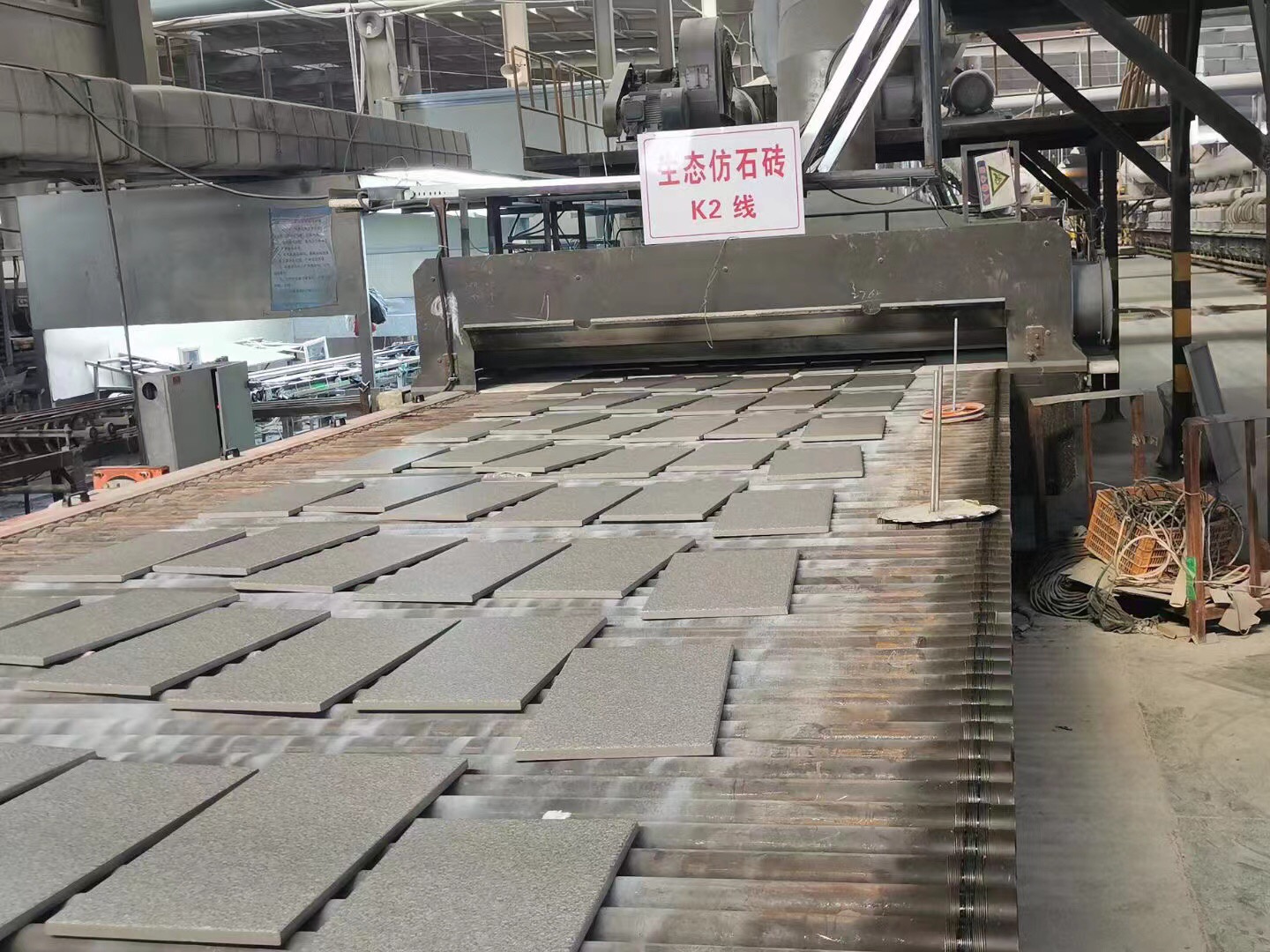
Why Every Singapore Importer Must Verify Their 20mm Outdoor Porcelain Tile Factory in China
Singapore’s humid tropical climate and high pedestrian traffic demand 20mm outdoor porcelain tiles that meet strict technical standards — from water absorption below 0.5% to breaking strength above 1,300 N. Yet every year, importers lose deposits on substandard batches because they relied on a pretty website or a cheap WhatsApp quote. A 20mm outdoor porcelain tile factory audit is not optional; it is the only way to ensure the tiles you order actually match the test reports you are shown.
Buying sight-unseen from China carries five real risks:
- Specification switching: The factory may use a thinner body (18 mm) or lower-density clay to cut costs, then claim it is 20 mm. Once the container lands in Singapore, replacement costs can exceed the original order value.
- Fake certifications: Many distributors photocopy ISO 10545 or CE marks from legitimate factories. The actual product may fail a simple water absorption test.
- Trade company bait-and-switch: An agent poses as a factory, takes your 30% deposit, and sources from the cheapest kiln — often with inconsistent colour shades across boxes.
- Hidden MOQ escalation: After negotiation, the supposed “factory” demands a second container to meet “minimum production run.” You are stuck holding extra inventory you did not plan for.
- Logistics delays: Unscheduled kiln shutdowns or raw material shortages are never disclosed until your FOB date has passed.
This guide gives you the exact checklist a Singapore importer can use to verify any 20mm outdoor porcelain tile factory in China, while still keeping the procurement process fast and cost-effective.
Complete Factory Audit Checklist for 20mm Outdoor Porcelain Tiles
Use the following 10-point checklist during your due diligence. Each item should be confirmed in writing or via live video before you transfer any payment.
| # | Checklist Item | What to Verify | Why It Matters for Singapore Importers |
|---|---|---|---|
| 1 | Business License (营业执照) | Unified Social Credit Code, company name matching letterhead, business scope including “ceramic tile manufacturing.” | Confirms legal factory status in Foshan or other tile cluster. Trade companies often list “trading” or “sales” in their scope. |
| 2 | Export License | Confirmed by China Customs registration number – valid and active. | Without it, your tiles cannot be exported under the factory’s own customs declaration. Delays at Huangpu port. |
| 3 | Real Factory Video Tour (WeChat) | Live walkthrough showing kilns, spray dryer, press, glazing line, and finished goods warehouse. No pre-recorded videos. | 80% of fraudulent suppliers will refuse a live tour or offer only a scripted “office tour.” |
| 4 | Physical Sample Verification | Request a 30 cm × 30 cm cut of the 20 mm tile. Measure thickness with a calliper at three points (±0.5 mm tolerance). | The actual tile often differs from catalogue specs. Surface flatness should be ≤0.5 % of diagonal. |
| 5 | ISO 10545 Test Report | Full 14-part test report from a CNAS-accredited lab (e.g., SGS, TÜV, or China National Center for Quality Supervision). | Covers water absorption, modulus of rupture, breaking strength, slip resistance (Pendulum test), and freeze-thaw cycle. |
| 6 | ANSI A137.1 Compliance | Verify that the tile’s physical properties meet American National Standard (PEI rating, abrasion resistance, etc.). | Required for commercial projects in Singapore referencing American standards. ISO alone does not cover all PEI requirements. |
| 7 | Reference Client List | Ask for 3-5 past export orders to Southeast Asia or Middle East. Contact 1-2 clients for feedback on delivery time and quality consistency. | Reveals if the factory has real experience exporting 20 mm tiles to humid climates. Avoid suppliers whose only references are in dry inland regions. |
| 8 | Production Capacity & Lead Time | Current press utilisation (typical: 85-95%). Ask how many square metres per day of 20 mm tiles they can produce. | A factory that claims it can ship your 20 ft container in 15 days but has only one old press is a red flag. |
| 9 | MOQ Policy (20 ft container) | Explicit written confirmation that MOQ is one standard 20 ft container (~1,000 m² for 20 mm tiles). | Many factories raise MOQ to 1.5 containers after order confirmation. Lock the exact MOQ in the contract. |
| 10 | FOB Port & Incoterms | FOB Foshan (inland CFS) or FOB Huangpu (port). Confirm loading port and container yard. | FOB terms shift risk to buyer at loading. Ensure the factory can handle container stuffing and customs clearance. |
At Contigo Ceramics, we provide all 10 documents upon request and schedule a live WeChat tour within 48 hours. We maintain a dedicated quality inspection team for every export order.
How to Conduct a Live Factory Tour via WeChat
A video tour is your best weapon against fake factories. Here is how to run one effectively.
Step 1: Demand a Live, Unscripted Walk
Ask the supplier to start the video call at the factory gate, then walk continuously to the production floor. Do not accept pre-recorded clips. Listen for background sounds — continuous press noise, line rattling, forklift beeps. If you hear only silence or a computer fan, you are likely viewing an empty showroom.
Step 2: Check the Kiln Panel
Ask to see the kiln control panel. A genuine factory will show you the firing temperature display (1,200–1,250 °C for porcelain) and production speed. Note the hour-meter reading to confirm the kiln has been running for weeks, not just turned on for the tour.
Step 3: Inspect the Finished Goods Warehouse
Look for pallets of 20mm outdoor porcelain tile with consistent batch numbers. A real factory will have at least 3-5 days of inventory for standard sizes (600×600, 600×900, 900×900 mm). Ask the guide to zoom in on the box labels — check that the thickness printed matches “20 mm” and that the date code is within the last month.
Step 4: Ask for a Spare Tile
During the tour, request a random tile from the warehouse floor and have it placed on a digital scale. The density of porcelain is 2.4 g/cm³, so a 600×600 mm × 20 mm tile should weigh around 17.3 kg. Any weight significantly lower indicates a hollow body or insufficient compaction.
We at Contigo Ceramics welcome unannounced video tours. Our Foshan factory operates three presses solely dedicated to large-format 20mm porcelain tiles, with real-time production visible 24/7 via a QR code sent to your WeChat.
Certification Verification: ISO 10545, CE Marking & Singapore-Specific Standards
Singapore building codes reference both ISO and ANSI A137.1 standards. Here is how to verify that the official-looking certificate a supplier shows you is legitimate.
ISO 10545 – The Core Standard
All 20mm outdoor porcelain tiles must pass Part 3 (water absorption ≤0.5%), Part 4 (modulus of rupture ≥35 MPa), Part 9 (breaking strength ≥1,300 N for 20 mm thickness), and Part 11 (slip resistance – pendulum test value ≥36 P4 for outdoor). Do not accept a certificate that only lists “passed” without numerical results. Request the full test report from a CNAS or ILAC-accredited lab. You can cross-check the report number at iso.org using the “certificate verification” portal.
CE Marking (EN 14411)
CE marking is the European standard required for many Singapore projects with international consultants. The CE certificate must reference the correct product standard (EN 14411, Group B1a – pressed porcelain tiles). Verify the Notified Body ID number on the NANDO database.
Singapore Code of Practice
Check that the factory’s test lab can also perform tests according to Singapore Standard SS 473 (slip resistance classification) and SS 537 (wet floor finishes). Most Chinese factories outsource these tests to SGS Singapore. Ask for a pdf of the test report and verify it with SGS directly via their client portal.
At Contigo Ceramics, our polished porcelain tile and outdoor series carry both ISO 10545 and TCNA/ANSI A137.1 certifications, and we provide third-party SGS reports for every container by default.
Third-Party Inspection: SGS, Bureau Veritas & TÜV – Cost, Process & What They Check
Even after a thorough audit, a pre-shipment inspection by an independent agency is essential. Here is what you need to know.
Cost
A typical third-party inspection for one 20 ft container of 20mm outdoor porcelain tile costs between USD 400 and USD 700, depending on the agency and whether testing is required. SGS and Bureau Veritas charge a per-day rate (around USD 350 – 500 per day) plus travel. For a quick quality check at the factory, most agencies can complete the inspection in one day.
Process
- Booking: Provide the inspection agency with the factory address, container details, and product specifications. The inspection date must be arranged at least 5 working days before loading.
- Sample selection: The inspector randomly picks 10–15 cartons from the finished goods warehouse or from the production line. For 20 mm tiles, they measure physical dimensions (length, width, thickness, flatness) and visual quality (shade, surface defects, chipping).
- Testing on-site: Basic tests include water absorption (ASTM C373 or ISO 10545‑3) using a portable moisture meter, breaking strength (ISO 10545‑4) with a breaking load machine, and PEI abrasion resistance (ISO 10545‑7).
- Report: Within 48 hours you receive a detailed report with pass/fail for each test, plus photos of the selected samples.
What the Inspector Checks for 20 mm Outdoor Tiles
- Thickness consistency across the batch (±0.5 mm tolerance)
- Dimensional deviation (≤0.6 % for length/width)
- Surface flatness – maximum deflection 0.5 % of diagonal length
- Water absorption – edge-to-centre variation should be below 0.1 %
- Slip resistance (dry and wet) – pendulum test values >36 P4
Contigo Ceramics encourages all Singapore importers to hire a third-party inspector. We offer a free on-site sample set and a 15 % discount on the first inspection fee if you book through our contact page.
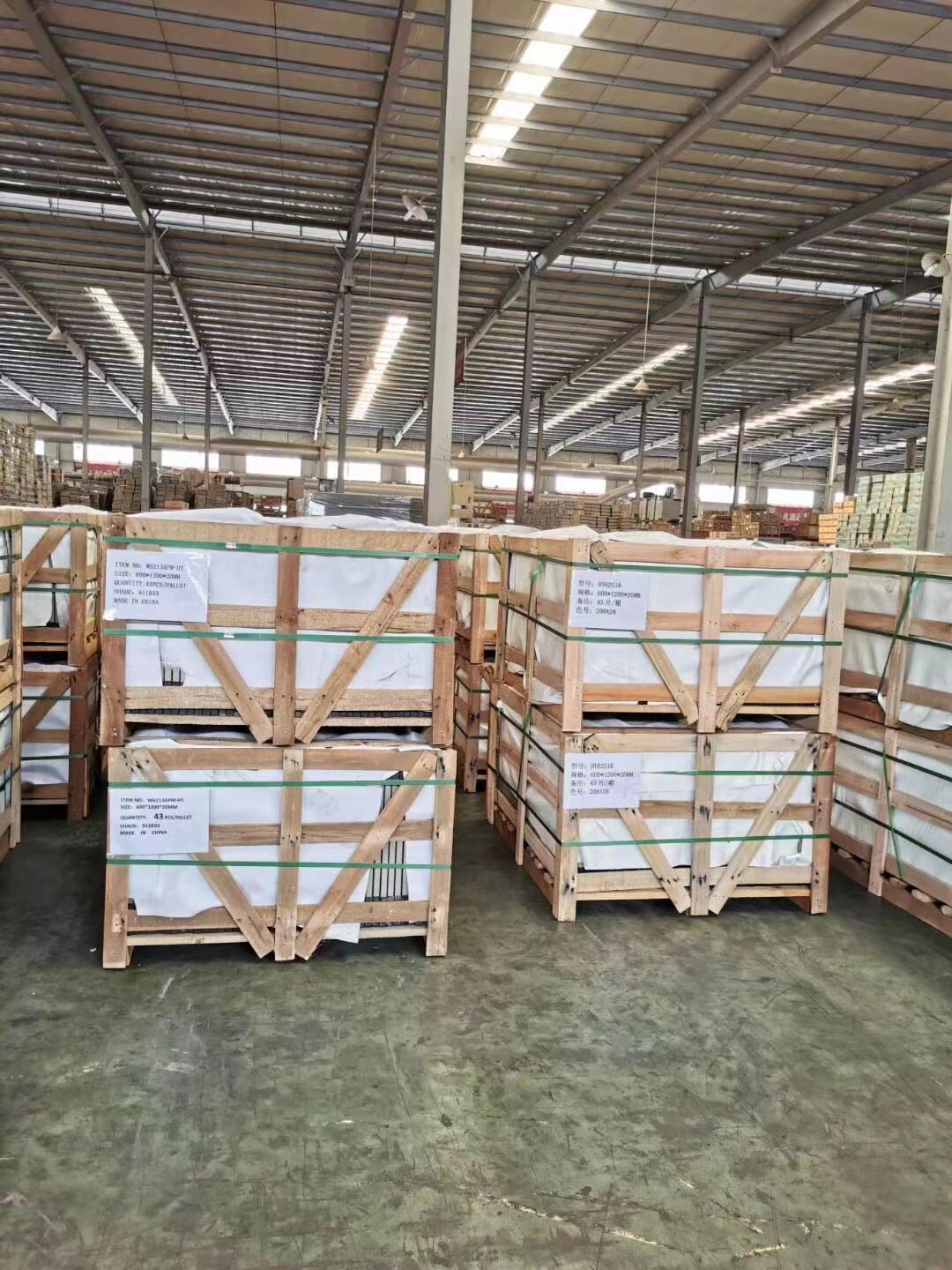
5 Red Flags That Indicate a Trading Company Posing as a Factory
- No video tour – only pre-recorded clips. A real factory welcomes live calls. If the supplier insists on showing you a “DVD” or a YouTube link, walk away.
- Business license showing “ceramic trading” or “import/export.” Ask for the license number and verify it on China’s State Administration for Market Regulation website. Any mention of “trading” in the scope means they are not a manufacturer.
- Unwillingness to share a client reference who has actually visited the factory. A fake supplier will give you references of other importers they have scammed or will use a friend’s company with no real tile business.
- Request for full payment before production. Standard terms are 30 % deposit and 70 % against copy of B/L only. Never pay 100 % upfront.
- MOQ of less than 1 container or a price that is 30 % below market average. For 20 mm porcelain tile from Foshan, a realistic FOB price in 2025 is USD 11–15/m² for standard solid colours (quantity 1 container). Anything below USD 9/m² is almost certainly an 18 mm tile claiming to be 20 mm.
Every month we hear from Singapore importers who lost deposits to trading companies. At Contigo Ceramics, our factory in Foshan has been operating since 1999, and we regularly host importer visits – no secrets, no shortcuts.
Frequently Asked Questions on Verifying a 20mm Outdoor Porcelain Tile Supplier in China
Q1: Can I rely on a supplier’s Alibaba verification badge alone?
No. Alibaba verifies only the business license, not that the company actually manufactures tiles. Many trading companies with “gold supplier” badges pass verification simply because they have a registered office in Foshan. Always demand a live video tour and independent test reports.
Q2: What if the factory refuses a third-party inspection?
Refusal is a major red flag. A legitimate manufacturer understands that inspection protects both parties. At Contigo Ceramics, we allow any accredited agency to enter our factory without notice. If a supplier blocks inspection, assume they are hiding quality issues or non-existent inventory.
Q3: How long does a full factory audit take from Singapore?
If you perform all steps remotely (license check, video tour, sample test, client references, third-party inspection), the process typically takes 7–10 working days. Visiting the factory in person can shorten this to 3–4 days but adds flight and hotel costs. Our WeChat tour can be scheduled within 48 hours, and we will send you the required documents immediately.
Q4: What is the minimum order quantity for 20mm outdoor porcelain tiles at Contigo Ceramics?
Our MOQ is one standard 20 ft container (~1,000 m² depending on tile size). We ship strictly on FOB Foshan or Huangpu port, with a production lead time of 25–35 days and sea freight to Singapore taking approximately 15–35 days. You can request a custom mix of sizes and colours within the same container.
External Reference: ISO 10545 ceramic tile standards
External Reference: TCNA tile installation guidelines
Start Your Supplier Verification Today
For Singapore importers looking to source 20mm outdoor porcelain tiles from China, the only way to protect your investment is to audit the factory first. Use the checklist above, conduct a live video tour, and insist on independent testing.
We invite you to skip the guesswork. Contact Contigo Ceramics today to request a live WeChat factory tour or to schedule a third-party inspection. Our team will provide all documents within 24 hours and arrange a video walkthrough of our kiln, pressing line, and finished goods warehouse. No false promises – just real tiles, real certifications, and real export experience since 1999.
Explore our other categories: outdoor porcelain tiles, glazed porcelain tiles, and all product lines.