Address
No. 3F07, Tao Cube, No.68, CCIH, Jihua West Road,Chancheng District, Foshan City, Guangdong, China.

How to Verify a Glazed Porcelain Tile Supplier in China — Audit Checklist for Singapore Importers


Every year, Singapore importers lose deposits and project deadlines to unverified Chinese tile suppliers. A container of glazed porcelain tiles that fails on rectification, shade variation, or PEI rating can trigger expensive claims and reputational damage. The solution is not blind trust — it is a structured factory audit. This guide provides a step‑by‑step checklist for verifying a glazed porcelain tile factory in China, with specific tactics for remote and on‑the‑ground inspection. Whether you are a distributor in Jurong or a specifier for a Marina Bay project, use this protocol to protect your procurement investment.
1. Why Verifying a Chinese Glazed Porcelain Tile Supplier Matters
Buying sight‑unseen from China carries three real risks:
- Quality inconsistency: A batch may differ from the sample in colour, size, or water absorption.
- Fake certifications: Some suppliers print ISO 10545 logos without actual test reports.
- Trading company camouflage: You pay factory prices but receive goods from a third‑party plant with no quality control.
For Singapore importers, regulatory compliance with Singapore Standards SS 547 or PSB certification adds another layer. A proper audit ensures that your supplier can deliver tiles that meet local building codes and your customer’s expectations. At Contigo Ceramics, we have produced glazed porcelain tiles from our own kilns in Foshan since 1999, and we welcome every level of scrutiny — including remote video tours and independent third‑party inspections.
2. Factory Audit Checklist for Glazed Porcelain Tile Suppliers
The following eight‑item table covers essential verification points. Print it out and check each box before placing a letter of credit or deposit.
| # | Audit Item | What to Check | Document / Evidence |
|---|---|---|---|
| 1 | Business License (营业执照) | Company name matches your contact; scope includes tile manufacturing; valid seal; registered capital > ¥5M as a rough indicator | PDF copy with QR code (verify on National Enterprise Credit Information) |
| 2 | Export License & Customs Registration | Valid export license number; ability to issue commercial invoices and packing lists under HS code 6907 | Copy of registration certificate |
| 3 | Factory Ownership Proof | Land use certificate, lease agreement, or utility bills showing own kiln line | Photographs of nameplate on factory building |
| 4 | ISO 10545 Certification | Test reports from SGS, TÜV, or an accredited lab; check issue date and validity | Certificates + test data (water absorption < 0.5% for porcelain) |
| 5 | ANSI A137.1 / TCNA Compliance | For North American projects, but also an industry benchmark; look for PEI rating (≥4 for commercial) and breaking strength > 850 lbf | TCNA product listing or lab report |
| 6 | Sample Quality (Physical) | Shade consistency across 3+ tiles; rectification tolerance ±0.2mm; no chipping on edges | Ship samples to Singapore for drop test (fall from 30cm onto concrete) |
| 7 | Reference Clients & Project Photos | At least 3 in Singapore or Southeast Asia; video calls with their procurement manager | Contact references or signed project letters |
| 8 | Production Capacity & MOQ | Daily output ≥ 1,000 m² for one glaze line; MOQ one 20ft container (~1,000m²) | Production log or video of kiln running |
3. How to Conduct a Video Factory Tour via WeChat
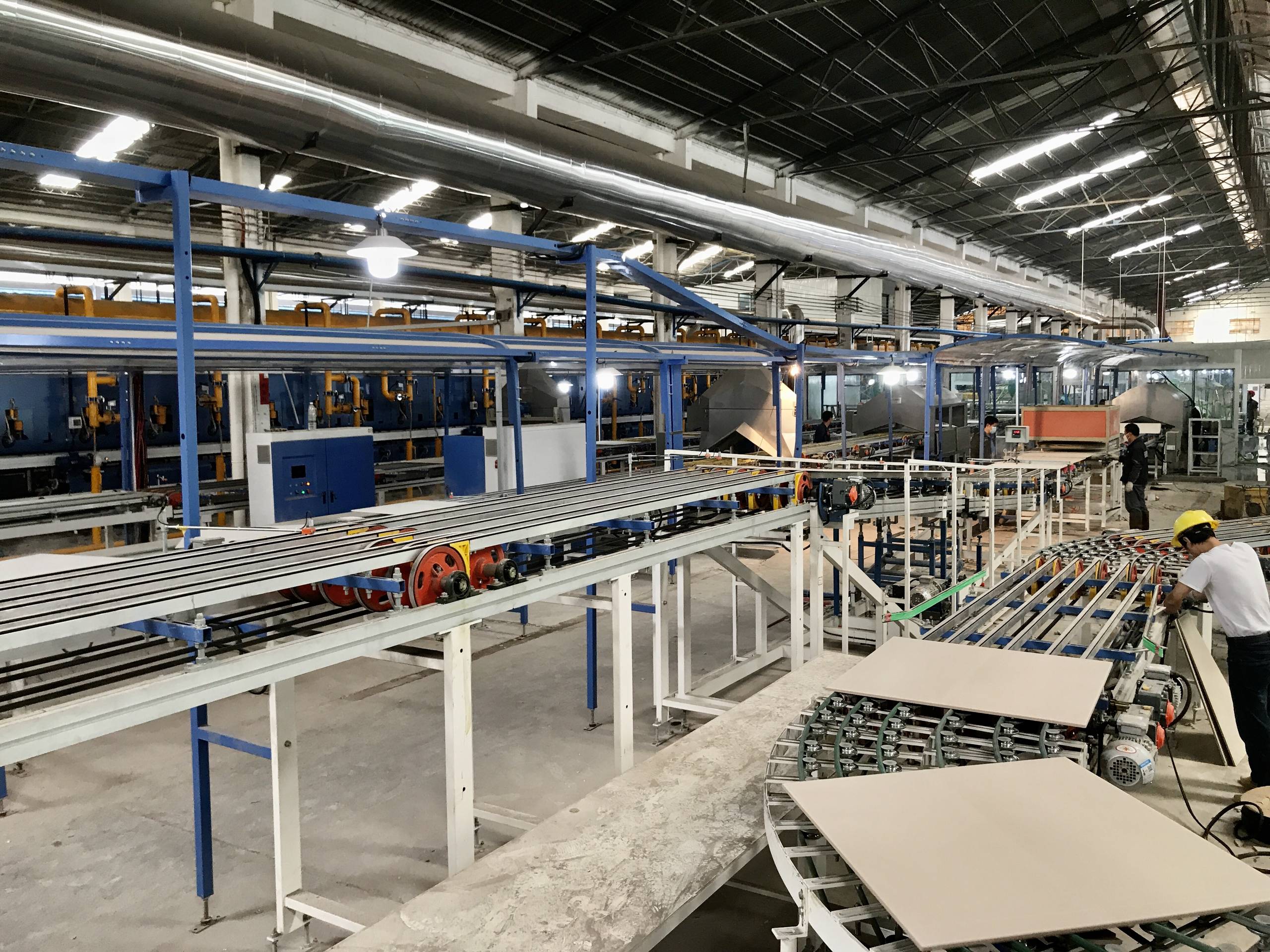
A pre‑shipment video tour can reveal more than a hundred spreadsheets. Plan a 30‑minute live walk‑through with these five focus areas:
- Raw material silos: Ask to see the spray‑dried powder. If it looks dusty or non‑uniform, the tile body may have colour variation.
- Hydraulic press area: Check the model number and tonnage. A 3600‑ton press is standard for 600x600mm glazed porcelain tiles.
- Glaze line & digital printer: Look for a clean, dust‑controlled environment. Inkjet printers (e.g., System or Kerajet) indicate quality decoration capability.
- Kiln control panel: Real‑time temperature curve should show a peak of 1200–1250°C for porcelain. Ask for the firing cycle time (typically 50–70 minutes for single‑fired glazed tiles).
- Warehouse stock: Barcode labels, rack numbers, and packaged pallets with export markings. If the warehouse is nearly empty, the factory may be a trading office.
At Contigo Ceramics, we offer scheduled WeChat video tours Monday to Friday. Simply contact our sales desk via /contact-us/ to set a time. Our kilns are located in Foshan’s Sanshui district, and we will show you every step from pressing to final sorting.
4. Certification Guide – How to Verify They Are Real
Fake certificates remain a persistent issue. Follow this verification workflow:
- ISO 10545: The standard covers water absorption, modulus of rupture, and dimensional tolerance. Request the test report number and verify with the issuing lab (e.g., SGS report #CN‑XXXX). Do not accept a photo of the cert alone.
- CE Marking (EN 14411): For European exports, check the Notified Body number (e.g., 0343 for TÜV Rheinland). Compare the address on the certificate with the factory’s business license.
- TCNA (Tile Council of North America): Visit tcnatile.com and search the manufacturer’s name in the product directory. If your supplier claims ANSI A137.1 but is not listed, ask for the third‑party lab report.
- Singapore PSB / SS 547: For large projects, insist on a factory audit by a SAC‑accredited body (e.g., SETSCO). This covers slip resistance (R9–R13) and chemical resistance.
Contigo Ceramics holds both ISO 10545 and TCNA‑certified ANSI A137.1 compliance. Our reports are issued by SGS and can be downloaded from our compliance page. We urge you to cross‑check every certificate you receive.
5. Third‑Party Inspection – Cost, Process and What They Check
Never rely solely on the supplier’s self‑inspection. Engage an independent company for the following phases:
- Pre‑production inspection: Check raw materials and equipment readiness (USD 300–500 per day per inspector).
- During production (DUPRO): Inspect body colour, glaze consistency, and thickness after the kiln (USD 350–600).
- Final random inspection (FRI): AQL Level II, normal severity – sample size depends on lot size. Inspectors test for dimension, flatness, surface defects (cracks, pinholes, colour variation).
Reputable agencies – SGS, Bureau Veritas, TÜV Rheinland – all operate in Foshan. For a 20ft container (approx. 1,000m²), budget USD 500–800 for a full FRI at the factory loading bay. Request the inspector to take photos of the carton markings, pallet strapping, and container condition.
6. Five Red Flags of a Trading Company Posing as a Factory
- They refuse a video tour of the kiln area – a legitimate factory will show you the production line, even if it is messy.
- Business license does not list “manufacturing” – look for 生产 (production) in the scope.
- Staff cannot answer basic technical questions – e.g., body porosity, press tonnage, or glaze recipe.
- They offer unrealistic MOQ (e.g., one pallet) – real factories have a minimum of one container for custom colour runs.
- No third‑party test reports available on demand – if they cannot show you a recent SGS or TÜV report, it is likely they trade from a desk.
7. FAQ – Supplier Verification for Singapore Importers
Q: Can I visit the factory in person if I am based in Singapore?
Yes. Foshan is a 3‑hour flight from Singapore (via Guangzhou). If you cannot travel, request a WeChat video as described. Contigo Ceramics can also arrange an independent inspection with SGS.
Q: How long does production take after audit approval?
Typically 25–35 days after deposit and colour approval. Transit to Singapore via Huangpu port takes 15–35 days depending on the shipping line.
Q: Do I need CE certification for Singapore projects?
Not mandatory, but many developers request it. CE under EN 14411 is a useful proxy for quality. For government projects, SS 547 compliance may be required.
Q: What is the minimum sample cost?
Most factories, including Contigo, provide free samples for up to 1m², with courier charges at your account. For a full set of 4 colours, budget around SGD 80–150 for DHL freight from Foshan to Singapore.
External Reference: ISO 10545 ceramic tile standards
8. Next Steps – Start Your Audit Today
A thorough glazed porcelain tile factory audit quality inspection china process is your best protection against substandard shipments. Use the checklist, watch the kiln, verify the certificates, and never skip third‑party inspection. At Contigo Ceramics, we have supplied thousands of containers to Singapore and Southeast Asia under full audit transparency.
Ready to verify our factory? Request a live WeChat video tour or schedule an SGS inspection by contacting us today.
📞 Request a Factory Video Tour or Schedule Third‑Party Inspection
Related product categories for your project:
- Glazed Porcelain Tiles
- Large‑Format Porcelain Slabs
- Outdoor Porcelain Tiles
- Polished Porcelain Tiles
- All Porcelain Tile Collections
Contigo Ceramics – Foshan, Guangdong, China | Own kiln since 1999 | MOQ one 20ft container | FOB Foshan/Huangpu | ISO 10545 & TCNA/ANSI A137.1 certified