Address
No. 3F07, Tao Cube, No.68, CCIH, Jihua West Road,Chancheng District, Foshan City, Guangdong, China.

tile supplier verification china | Contigo Ceramics

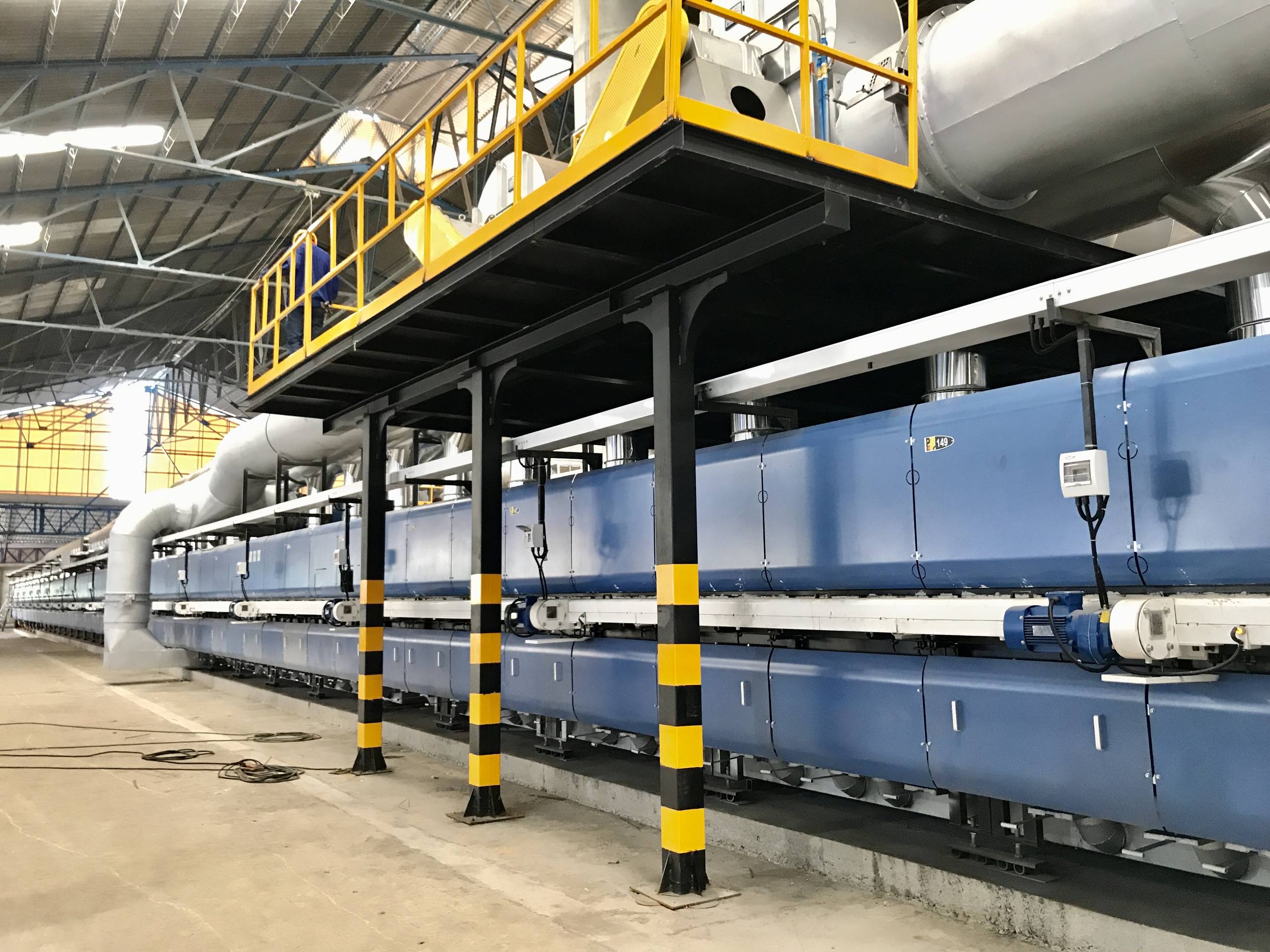
The $15,000 Question: Is Your Chinese Tile Supplier Real?
You’ve found a supplier on a B2B platform. Prices look competitive — $4.50/m² FOB for polished porcelain. MOQ is one container. The website looks professional. But you can’t fly to Foshan to see the factory.
Now you’re staring at a $15,000 wire transfer request for a 30% deposit, and that nagging question won’t go away: Is this actually a factory, or a trading company operating out of a shared office?
This isn’t paranoia. In 2025, industry estimates suggest that 30-40% of companies presenting themselves as “porcelain tile manufacturers” in Foshan are trading companies or brokers — not factory owners. They mark up prices 10-20%, control the communication, and add zero production value.
The solution isn’t a plane ticket to Guangzhou Baiyun Airport. It’s a systematic verification process you can run from your desk — starting with the checklist below.
Key Fact: At Contigo Ceramics, our Foshan facility operates three 1200-1250°C roller kilns, producing 12,000m² of porcelain tile daily. We welcome remote buyer verification — video tour or third-party audit, your choice.
The Complete Factory Audit Checklist
Use this table to evaluate any tile supplier in China. Score each item pass/fail before sending a deposit.
| Check Item | What to Ask | Red Flag | Good Answer |
|---|---|---|---|
| Business License (工商营业执照) | Request a scanned copy with English translation. Check the 经营范围 (business scope) — does it list “production” or just “sales”? | Scope only says sales or trading. Company registered within last 12 months. | Scope explicitly includes “production of ceramic tiles” or “manufacturing”. Registered 5+ years. |
| Export License | Ask for the customs registration number. Cross-check with China Customs database. | No export license. Reluctance to share the number. | Valid customs registration with 3+ years of export records. |
| Factory Photos & Video | Ask for photos showing specific equipment: roller kiln control panel, hydraulic press (3600-7800T), digital printer, polishing line. | Generic photos copied from other websites. Showroom photos only. No production equipment visible. | Original photos with company signage. Equipment matches claimed specifications. |
| Live Video Call (WeChat Tour) | Request a live walk-through of the production line. Ask to see the kiln temperature display. | “Our factory is in another city.” “The line is being maintained today.” Offer to send more photos instead. | Immediate tour. Kiln control panel reads 1200-1250°C. Workers visible on the line. |
| Sample Quality | Request 5-10 samples (10x10cm or 15x15cm). Use professional courier (DHL/FedEx). Cost ~$30-50. | Free samples that arrive in weeks, not days. Poor packaging. Chipped edges. | Samples shipped within 3 working days. Color consistent, edges sharp, rectified to ±0.2mm. |
| MOQ Clarity | Ask: “What is your MOQ in square meters per SKU per container?” | Vague answers: “Very flexible.” “It depends.” No number given. | Clear answer: 1×20ft container (approx 1,382m² of 9mm tile or 800m² of 20mm tile). |
| Payment Terms | What are the payment milestones? | 100% T/T upfront. 50% deposit. No L/C option. | 30% deposit, 70% before shipping. L/C at sight available for orders over $50,000. |
| Third-Party Audit Report | Has SGS, Bureau Veritas, or TÜV audited this factory in the last 12 months? | No audit report available. “Our factory is new.” Refuse third-party inspection. | Audit report from within 12 months. Willing to arrange a paid inspection ($300-500). |
| ISO Certificates | Request ISO 9001 and ISO 10545 test reports. Verify the certifying body. | No certs. Certs from unrecognized bodies (fake Chinese certs are common). | Valid ISO 9001 + product test reports to ISO 10545 standards. |
| Reference Clients | Ask for 2-3 references from importers in your region or similar markets. | “Confidential.” No references provided. | Contactable clients with repeat orders. References match your target market. |
“The MOQ for factory-direct orders typically starts at one 20-foot container — about 1,382m² of 9mm tile in 600×600 format. That’s 24 pallets, 960 boxes, roughly 26,880kg — right at the 27.5-tonne shipping weight limit.”
What to Look for in a Live Video Tour
A WeChat video call is the single most effective verification tool. Here’s what to specifically ask to see:
- Kiln control panel — The firing temperature should read 1200-1250°C for porcelain tile. Below 1180°C and you’re getting ceramic, not porcelain. The panel should show real-time data, not a static screen.
- Hydraulic press area — Ask to see the press model. A 3600-7800T press is standard for porcelain tile. Lower tonnage means lower density and higher water absorption.
- Warehouse stock — Look for pallets with consistent packaging, batch numbers, and production dates. A trading company’s “warehouse” is often a rented shared space with mixed stock.
- Workers on the line — A real factory has 30-50 workers visible on a single shift. An empty line is suspicious — it could be a temporarily rented facility.
- Rectification line — Ask to see the mechanical rectification equipment. This proves the factory can produce calibrated tiles (not just fired random sizes).
Red Flag Alert: If the “factory manager” can’t answer basic technical questions about your product — water absorption target, PEI rating, or DCOF value — you’re almost certainly talking to a trader. A real production manager knows these numbers from memory.
Verifying Certifications: ISO 10545, CE, SASO, SONCAP
A certificate is only as valuable as its issuing body. Here’s what to check:
ISO 10545 (Ceramic Tiles — Test Methods): This is a multi-part standard. The critical sections for porcelain tile are:
- Part 3 — Water absorption (≤0.5% for porcelain). This is the defining test.
- Part 4 — Breaking strength and modulus of rupture.
- Part 12 — Frost resistance (essential for outdoor tiles in freezing climates).
- Part 13 — Chemical resistance (for commercial kitchens, labs, hospitals).
CE Marking: Required for EU markets. The factory must hold a Declaration of Performance (DoP) and have been assessed by a Notified Body. Cross-check the Notified Body number at the EU NANDO database.
SASO (Saudi Arabia): Saudi imports require SASO certification or Saudi Quality Mark. Your supplier should have experience with the Saber platform and SABER product registration.
SONCAP (Nigeria): Nigeria requires SONCAP for ceramic tiles. Verify the certificate number at the SON portal.
How to spot a fake certificate:
- Look for the certifying body’s logo and contact details. Call or email them to verify.
- Check the certificate number format — fake certs often use non-standard numbering.
- Verify the certificate covers the product, not just the factory’s quality management system.
- ISO 9001 certifies the process, not the product. Don’t confuse them.
Third-Party Inspection: The $300 Insurance Policy
For a $15,000 container order, spending $300-500 on third-party inspection is the best ROI you’ll get. Here’s how it works:
- Book the inspection — Contact SGS, Bureau Veritas, or TÜV. Provide them with your supplier’s address, the PO number, and the inspection date (aligned with production completion).
- What they check — Visual inspection (shade consistency, surface defects, edge chips), dimensional verification (length, width, thickness, straightness, squareness), and physical tests (water absorption, breaking strength if requested).
- Sampling rate — Typically AQL (Acceptable Quality Limit) Level II, Normal. For a 1,000-box shipment, inspectors sample 80 boxes. If more than 7 fail, the lot is rejected.
- Timeline — 2-3 days to book, 1 day on-site, 2-3 days for the report. Total: 5-7 working days.
- Who pays — Buyer pays the inspection company directly. Never pay your supplier for a third-party inspection.
At our Foshan facility, we have SGS and Bureau Veritas visit regularly for pre-shipment inspections. We provide QC reports for every batch — water absorption per ISO 10545-3, breaking strength per ISO 10545-4, and shade consistency verified under natural daylight.
5 Red Flags That Scream “Trading Company”
Warning: These five signs indicate you’re dealing with a broker, not a manufacturer. Walk away.
- They push for a 50%+ deposit. Real factories typically ask 30%. Higher deposits are a cash-flow red flag — they might be funding your order through your deposit.
- They don’t know their own specifications. A factory manager can tell you the water absorption of their product without checking. If they can’t, they’re not the manufacturer.
- Their “factory” address is a commercial building. Genuine Foshan tile factories are in Nanzhuang town, on the industrial roads — not in a Grade A office tower in central Foshan.
- They can’t do custom sizes. Real factories have rotary cutters and rectification lines. They can make 300x600mm, 800x800mm, or 600x1200mm on demand. A trader only offers standard sizes.
- They have no physical inventory. Ask for warehouse photos with their company sign held in the frame. A trading company shows “warehouse” photos that are actually their supplier’s facility.
From Our Factory Floor: What a Real Verification Looks Like
At our Foshan facility in Nanzhuang — the ceramic tile capital of China — we welcome buyer inspections every week. A typical verification visit goes like this:
You arrive at our 40,000m² factory site. We walk you through the ball mill area where raw materials — feldspar, kaolin, clay — are ground into slurry. Then the spray dryer tower that converts slurry into press-ready powder. Then the 7800T hydraulic press that compacts that powder into green tile at 500kg/cm² pressure.
You watch the kiln control panel. The temperature display reads 1230°C — consistent full-body vitrification. You pick a freshly fired tile off the cooling line. It’s still warm. You tap it — that clear, bell-like ring confirms porcelain density.
We walk you to the testing lab. Your samples go through the water absorption test (ISO 10545-3). The result: 0.08%. That’s well under the 0.5% threshold for porcelain classification. You see the data yourself.
That’s the difference between buying from a factory and buying from a middleman. At Contigo Ceramics, you’re talking directly to the production team that fires your tiles. If there’s a quality issue, you call the person who can fix it — not a sales agent who forwards emails to someone else.
Frequently Asked Questions About Tile Supplier Verification
Q: I can’t visit China. Is a video tour good enough?
A: Yes, for a first-order verification. A live WeChat video call showing the production line, kiln control panel, warehouse, and QC lab gives you 80% of the confidence of an in-person visit. For the remaining 20%, use a third-party inspection report.
Q: How do I verify an ISO certificate is real?
A: Look up the certifying body (e.g., SGS, TÜV, BSI) and contact them directly. Provide the certificate number. They will confirm whether it’s valid. Never rely on the certificate document alone — fake documents are easy to produce.
Q: What’s the minimum viable order to verify a new supplier?
A: Start with one 20-foot container — roughly 1,382m² of 9mm tile. This keeps your financial exposure manageable while testing product quality, packaging, and shipping performance. If the first container arrives on spec, scale up.
Q: Should I use FOB or CIF for first orders?
A: FOB gives you more control. You pay for the tile and loading at Foshan port. You arrange shipping yourself — which means you can choose your own freight forwarder and control the logistics chain. CIF is simpler but includes the supplier’s freight margin.
Next Step: Verify Contigo Ceramics Yourself
We don’t ask you to trust us on reputation alone. Here’s what we offer every serious buyer:
- Live WeChat video tour — Walk our production line in real time. See the kilns, the presses, and the QC lab.
- Free samples — 5-10 pieces couriered within 3 working days. You pay the courier (~$30-50).
- Third-party inspection — We welcome SGS, Bureau Veritas, or TÜV at our facility. You pay the inspector directly.
- QC reports — Every batch tested to ISO 10545-3 (water absorption), ISO 10545-4 (breaking strength), and ISO 10545-12 (frost resistance). Report sent before shipping.
Written by the Contigo Ceramics technical team, Foshan, China. We’ve been manufacturing porcelain tile for international buyers since 2012. Our three roller kilns fire at 1230°C, producing 12,000m² daily — and we’re ready to show you every step.
Request a factory video tour or schedule a third-party inspection →
Need factory-direct porcelain tile pricing?
Send your project details — sizes, quantity, and destination port — to [email protected]. Contigo Ceramics can provide catalog, FOB price list, packing details, and technical specifications for importers, distributors, contractors, and project buyers.
Prefer a faster response? 💬 Chat on WhatsApp — typically reply within hours during Foshan business hours.