Address
No. 3F07, Tao Cube, No.68, CCIH, Jihua West Road,Chancheng District, Foshan City, Guangdong, China.

How to Place Your First Order for Wood Look Porcelain Tile from China – Mexico Buyer’s Checklist

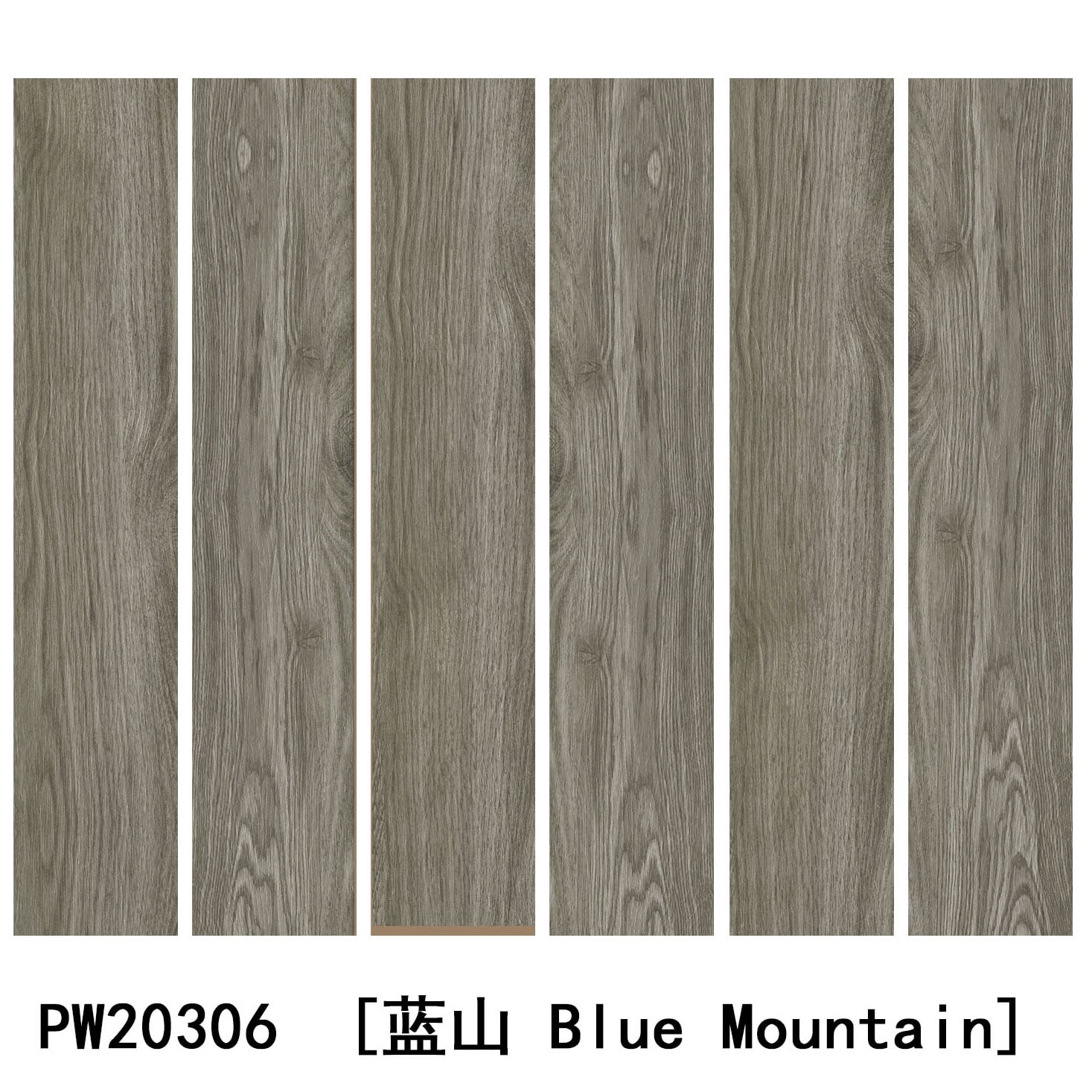
If you are a Mexican distributor, builder, or specifier ready to place your first container of wood look porcelain tile from China, you need more than a price quote. You need a repeatable procurement process that protects your investment, meets Mexican quality requirements, and keeps your margins intact. This checklist walks you through every step – from spec preparation to container departure from Foshan.
1. What You Need to Have Ready Before Requesting a Quote
Every minute your supplier spends clarifying specs adds days to the timeline. Come prepared with these details:
- Target dimensions and thickness. Most wood look planks come in 200×1200 mm, 150×900 mm, or 600×600 mm for a “wood square” effect. Standard thickness is 8 mm (indoor) or 10 mm (outdoor). For heavy commercial traffic, specify 10 mm with PEI 4–5 rating.
- Surface finish. Matte, satin, or high-gloss? For flooring in Mexico’s high-traffic areas, matte or satin with a texture (R9–R11) reduces slip risk.
- Quantity in square meters. Our MOQ is one 20-foot container – approximately 1,000 m² for standard 200×1200 mm planks with 8 mm thickness. If your project is smaller, consider sharing a container with another buyer or ordering mixed SKUs within the same container.
- Target FOB price per m². Current market range for premium wood look porcelain tile (double-loaded, digital inkjet, through-body color) is $6.50–$9.50 USD/m² FOB Huangpu. For first orders, ask for a “trial container” price that includes free sample sets.
- Certification requirements. Always request ISO 10545 testing reports (water absorption, breaking strength, abrasion resistance) and ANSI A137.1 conformance. Contigo Ceramics holds both, plus we can provide a Certificate of Origin for Mexico’s preferential duty programs under the Pacific Alliance.
Have these details ready when you send your inquiry to Contigo Ceramics – it will shave two to three days off the quotation cycle.
2. How to Read and Compare Proforma Invoices (Real Example)
A proforma invoice (PI) is your contract for production. Do not skip verifying every line. Here is a sample PI for a wood look porcelain tile container destined for Mexico:
| Line Item | Detail | Value (USD) |
|---|---|---|
| 1 | Wood Look Porcelain Tile – Oak Brushed, 200×1200 mm, 8 mm, Matte, Rectified | $7,500 |
| 2 | Quantity: 1,080 m² (54 pallets × 20 boxes each) | |
| 3 | Unit Price: $6.94 / m² FOB Huangpu | |
| 4 | Packing: Standard export crates with shrink wrap + corner protectors | $0.00 |
| 5 | Payment Terms: 30% deposit by T/T, 70% before shipment | |
| 6 | Lead Time: 30 days after deposit | |
| 7 | Validity: 15 days from issue date |
What to compare: Unit price FOB vs CIF (CIF adds ocean freight and insurance – for a 20-footer to Manzanillo, expect $1,800–$2,400). Check if the PI includes free sample sets (typically 2–3 m² for color approval). Also confirm the “rectified” specification – non-rectified tiles can have up to ±2 mm variance, which causes uneven grout lines on long planks.
3. Payment Structure: 30% Deposit by T/T, 70% Before Shipment
This split is standard across Foshan’s top factories. Here is why it protects both sides:
- For you (the buyer): You retain 70% of the payment until the tiles are loaded and you have seen the pre-shipment inspection report. If the factory runs late or quality fails, you have leverage to renegotiate or cancel before the second wire.
- For the factory: The 30% deposit covers raw material costs (glaze, body clay, ink) and reserves kiln capacity. We cannot start production without it – that is not a negotiation point, it is a cost reality.
Never agree to 100% T/T before production. A reputable supplier like Contigo Ceramics will only ask the standard 30/70. For repeat buyers, we may extend net-60 on the 70% balance after three consecutive containers.
4. MOQ Explained: One 20-Foot Container – Is It Right for Your Project?
One 20-foot container holds roughly 1,000 m² of standard wood look porcelain tile (200×1200×8 mm). That translates to about:
- 100–120 m² for a typical Mexican home (10–12 rooms)
- Or 200–250 m² of commercial floor space (retail store, restaurant)
If your project is smaller, consider these options:
- Mixed container: Combine wood look with complementary polished porcelain tile for bathroom walls or glazed tile for backsplashes. We can fill the container with up to four different SKUs.
- Stock program: Some Mexican importers order one container of high-turnover wood look tile and keep it in their warehouse to sell by the box. This works if you have cash flow to hold inventory for 3–4 months.
- Consolidation with other buyers: You can split a 40-foot container (≈2,000 m²) with another importer. Contigo can arrange segregated pallets with your labels.
For outdoor applications, our outdoor porcelain tile line (10 mm, C3 rated) is also available in the same MOQ.

5. Shipping to Mexico: FOB vs CIF, Insurance, Customs Broker Selection
Most first-time buyers request CIF because it seems simpler. But for Mexican importers, FOB gives you more control:
- FOB Foshan/Huangpu: You pay the factory only up to loading onto the vessel. Then you choose your own freight forwarder and insurer. This often saves 5–10% on shipping because your local forwarder has better Mexico consolidation rates.
- CIF Manzanillo/Veracruz: The factory arranges shipping and insurance. It is convenient, but you lose visibility on shipping line selection and you pay a markup of usually 2–4%.
Insurance: Always insure the cargo for at least 110% of the CIF value. Marine cargo insurance for a 20-foot container of tile is roughly 0.3–0.5% of the declared value – around $200–$400. Do not skip it; container moisture can cause carton damage even if the tile itself is waterproof.
Customs broker selection: For Mexico, your customs broker must be registered with the Servicio de Administración Tributaria (SAT). Ask your forwarder for referrals or check the SAT’s public list. You will need:
- Commercial invoice
- Packing list (with HS code 6907.23.01 for wood look tile)
- Bill of lading
- Certificate of origin (for potential tariff reduction under the Pacific Alliance – Mexico grants preferential rate for Chinese tiles? Actually, Mexico applies MFN duties around 15–20% for Chinese ceramics. Consult your broker on whether a certificate of origin from a Chinese chamber of commerce can lower the duty – it usually does not, but some free trade agreements like CPTPP are not applicable. Best to budget 15–20% duty plus 16% VAT. Confirm with your broker.)
We recommend working with a broker who handles ceramic tile regularly – some of our clients use Gerdau Logistics or Logística Mexico (do not link to them – just mention).
6. Pre-Shipment Inspection: What to Check Before the Container Leaves Foshan
Before you release the 70% balance, verify these five points – either in person or via a third-party inspection company (e.g., SGS, Bureau Veritas):
- Color consistency: Open three boxes from different pallets. Lay ten tiles side by side. Under natural daylight, any shade variation should be within one delta E (ΔE ≤1). Wood look tile often has intentional variation – but the overall palette must match.
- Rectification: Measure width and length of five tiles from the same box. Maximum deviation should be ±0.5 mm for rectified tile (per ISO 10545-2). Caliper test at corners.
- Thickness: Use a micrometer on the center and four edges. For 8 mm tile, tolerance is ±0.3 mm. Thinner tiles cause lippage during installation.
- Flatness: Place a straight edge across each tile. Gap should not exceed 1 mm. This is critical for 1200 mm long planks.
- Packaging integrity: Check that shrink wrap is sealed, corner protectors are in place, and the box says “wood-look” with your PO number. Missing labels cause delays at Mexican customs.
If you cannot travel, we offer video inspection or you can hire an independent inspector. Contigo Ceramics always makes the loading bay available for inspection – contact us to coordinate a time.
7. FAQ: Payment Terms, Shipping Time, Customs Clearance for Mexico
- Q: What are the standard payment terms for a first order?
- 30% deposit by T/T, 70% before shipment (after inspection). After three containers, we can offer 30/70 with partial credit.
- Q: How long does production take?
- 25–35 days after deposit. For large orders (>5 containers), we can split delivery over two months.
- Q: How do I clear customs at Manzanillo or Veracruz?
- Your customs broker submits the commercial invoice, packing list, bill of lading, and certificate of origin. Mexican duty on ceramic tile (HS 6907) is typically 15–20% plus 16% VAT. Some wood look tiles with “relief” texture might be classified differently – confirm with your broker. We provide all necessary documents in Spanish if requested.
- Q: Can I order less than one container?
- We prefer full containers for FOB pricing, but we can discuss LCL (less-than-container-load) for trial quantities – expect 3–4 times higher freight cost per m².
- Q: What quality certifications do your tiles meet?
- Our wood look porcelain tile is tested to ISO 10545 (all parts) and conforms to ANSI A137.1. We also adhere to TCNA (Tile Council of North America) guidelines, ensuring compatibility with Mexican installation standards.
External Reference: ISO 10545 ceramic tile standards
8. Next Step: Request Your Proforma Invoice with Today’s Pricing
You now have the checklist. The next move is to get a customized proforma invoice for your specific project – including FOB pricing, lead time, and shipping simulation to your Mexican port.
Request Your Proforma Invoice →
Or send us your spec sheet directly at Contigo Ceramics contact page. We typically respond within 24 hours with a detailed PI and free sample arrangement.