Address
No. 3F07, Tao Cube, No.68, CCIH, Jihua West Road,Chancheng District, Foshan City, Guangdong, China.

china tile factory certification | Contigo Ceramics

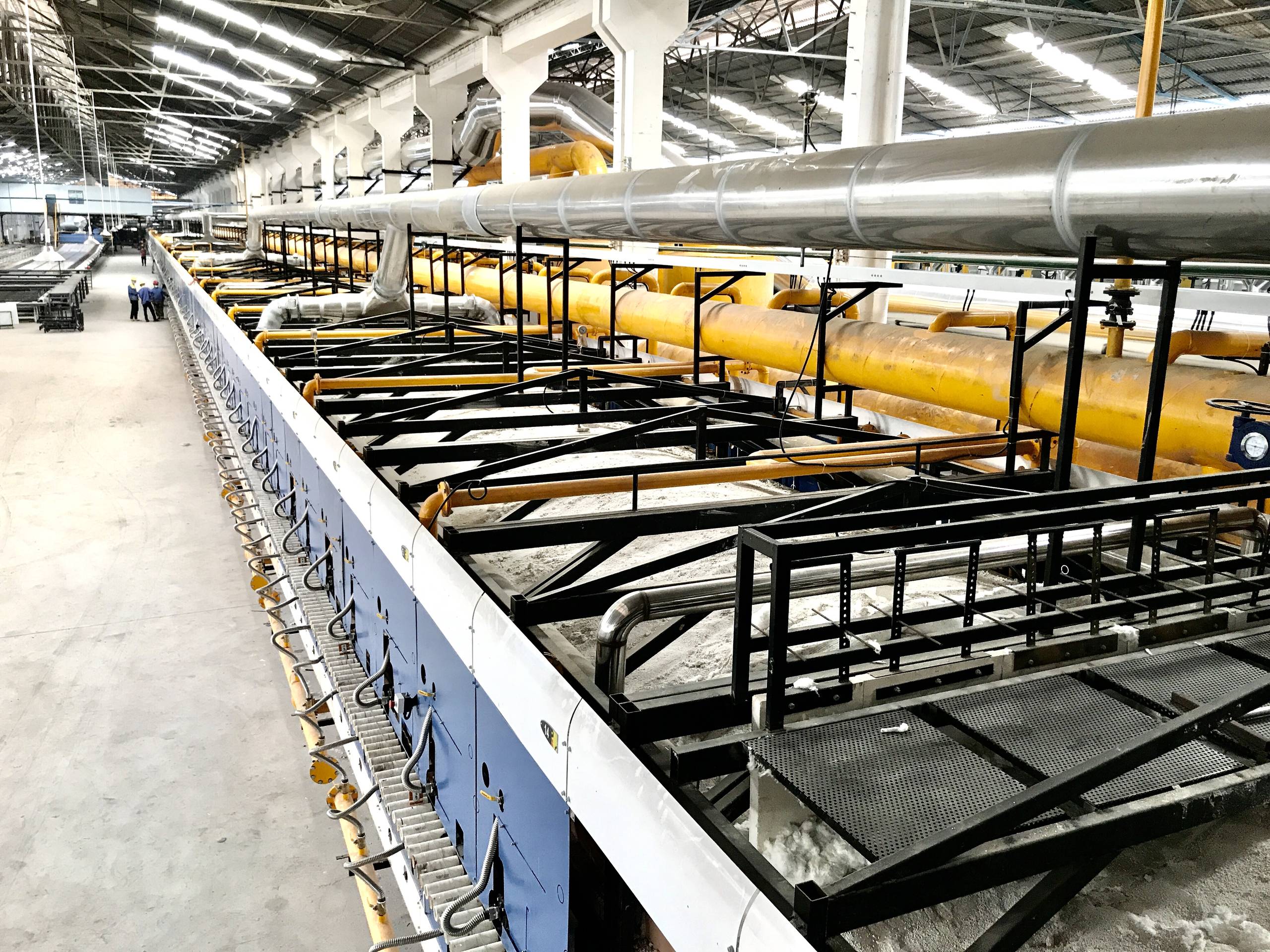
Why China Tile Factory Certification Matters for Your $15,000 Order
You have shortlisted three suppliers in Foshan. One offers prices 20% lower than the others. Another claims “ISO certification” for all its tiles. A third sends impressive factory photos.
The problem is trust. A $15,000 container order is a significant investment. Without a physical inspection, how do you know the China tile factory certification documents are real and not fabricated PDFs?
This guide provides a step-by-step audit framework. You will learn exactly which documents to request, what visual cues to look for on a live video call, and which independent verification steps protect your capital.
The 10-Point Factory Audit Checklist
Use this checklist when vetting any supplier. Print it out and check off the rows during your video call or document review.
| Check Item | What to Ask | Red Flag | Good Answer |
|---|---|---|---|
| Business License | Request the 营业执照 with 统一社会信用代码. | Blurred copy, mismatched address on the license vs website. | Clear scan matching the factory tour location in Nanzhuang, Foshan. |
| Export License | Do you hold self-managed import/export rights? | Uses a third-party trading company for all exports. | Yes, we export directly under our own name and tax ID. |
| Factory Video Tour | Can you show the kiln, press, and warehouse live on WeChat? | Provides only stock photos or prerecorded drone footage. | Walks the camera through the roller kiln, press line, and packed stock. |
| Sample Quality | Are production tiles visually and dimensionally identical to samples? | Sample is premium grade, production differs in shade or rectification. | Samples pulled from current production runs; rectification is exact to ±0.5mm. |
| MOQ Clarity | What is your minimum production run per design? | Any quantity, any time — signals a trader mixing stock from multiple factories. | One 20-foot container (approx. 1,000–1,500 m² depending on format). |
| Payment Terms | What are your standard payment terms? | 50% deposit, balance before shipping, TT only, no flexibility. | 30% deposit, 70% against copy of B/L (Bill of Lading). |
| Third-Party Audit | Will you accept an inspection by SGS, TUV, or Bureau Veritas? | Refuses or imposes high extra fees for a basic quality check. | Welcomes inspection; batch is held until the report is issued. |
| ISO 10545 Certification | Show the certificate registration number for ISO 10545-3 (Water Absorption). | “We are working on it” or a generic ISO 9001 management cert only. | Registration number verifiable on the certifying body’s public database. |
| Production Equipment | What is your kiln length and hydraulic press tonnage? | Vague answers without model specs or brand names. | 420m roller kiln, 7800T press, 20-color digital inkjet printer (e.g. System or Sacmi). |
| Reference Clients | Can you provide contact details of three recent international buyers? | Vague names, no verifiable emails or project locations. | Distributors in USA/Europe who consent to provide a reference. |
How to Conduct a Video Factory Tour (WeChat Walkthrough)
A photograph can be downloaded from the internet. A live video call cannot be faked easily. Here is what to look for during a 15-minute WeChat walkthrough.
- Start at the loading bay. Ask to see the warehouse floor. Look for pallets of tiles shrink-wrapped with factory logos. Genuine factories have thousands of square meters of stock.
- Walk to the kiln. The kiln should be running. Listen for the low rumble of rollers and the heat exhaust fans. The control panel should show temperatures between 1200°C and 1250°C. This is the required range for full vitrification of porcelain.
- Inspect the press line. Ask for the hydraulic press tonnage. Our 7800T press compresses the tile powder before firing. Lower tonnage (under 3600T) means higher porosity and weaker tiles.
- Look at the polishing line. If they claim polished tile, the polishing head machine should have 16-24 heads. Count them on screen.
- Check the raw materials area. Real factories store clay, feldspar, and silica in large bags or silos. Traders do not have these.
Key Fact: A genuine 1200-1250°C roller kiln vitrifies the clay body. This pushes water absorption below 0.5% per ISO 10545-3. No kiln = no porcelain. No certification.
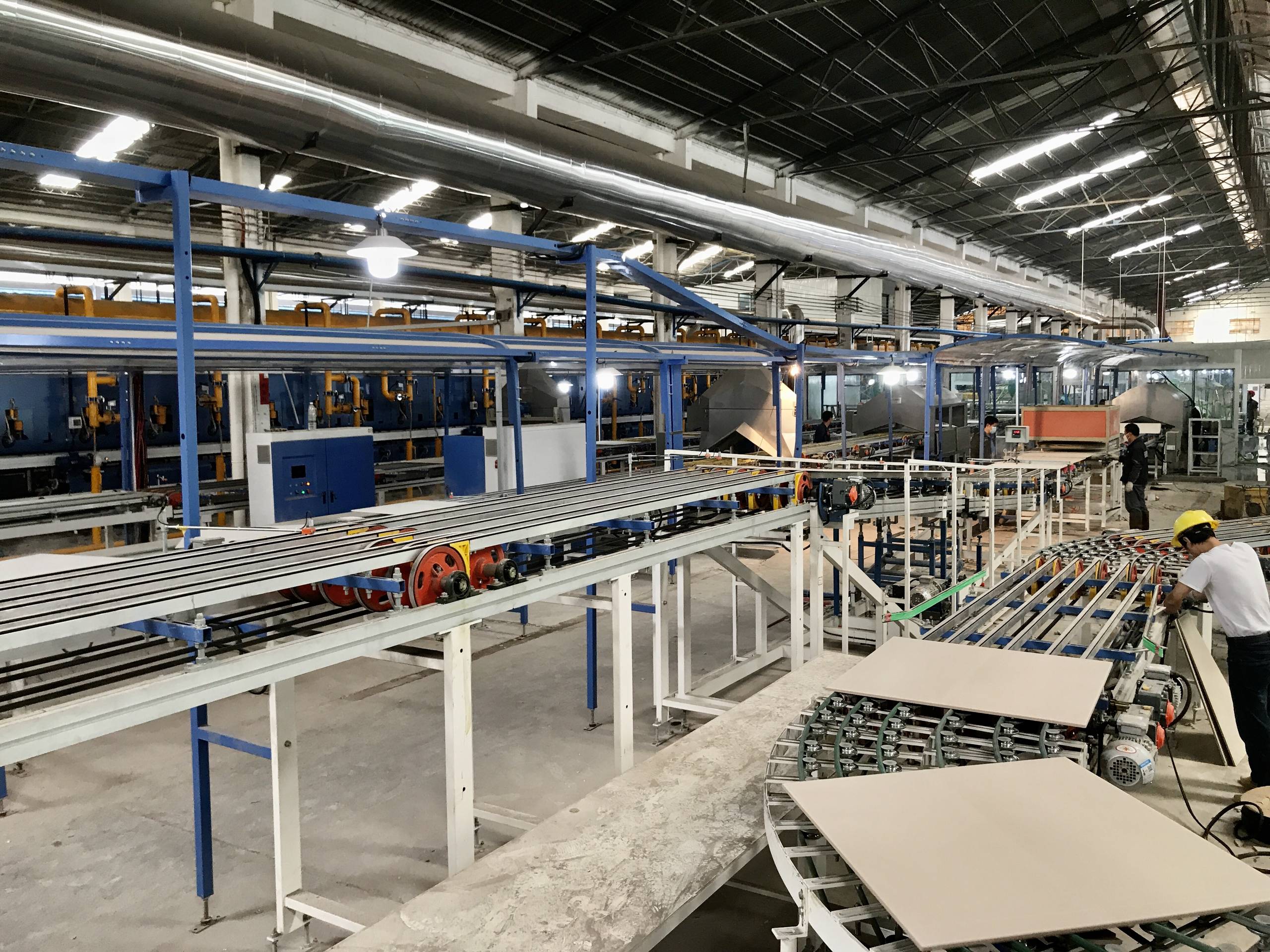
ISO 10545: The Gold Standard for Porcelain Tile Certification
The international standard for ceramic tiles is ISO 10545. It covers 16 parts. When a buyer asks for China tile factory certification, they usually mean compliance with at least the following key parts:
- ISO 10545-3 (Water Absorption): A sample is boiled in water for 2 hours and weighed before and after. Porcelain tile absorbs less than 0.5% moisture. This single number dictates frost resistance. If your supplier cannot prove <0.5% absorption, the tile will crack outdoors in winter.
- ISO 10545-4 (Breaking Strength): A steel rod presses the center of the tile until it breaks. Porcelain breaks at >1300 Newtons (equivalent to 130 kg on a single point). For commercial floors, look for values >2000 N.
- ISO 10545-8 (Thermal Expansion): Relevant for outdoor facades and heated flooring.
- ISO 10545-13 (Chemical Resistance): Critical for kitchen, restaurant, and industrial applications.
“A genuine ISO 10545-3 result of less than 0.5% mathematically proves the tile is porcelain and frost-proof. It is the single most important spec for exterior use.” — Contigo Ceramics Technical Specifications
How to verify the certificate is real: Every genuine ISO certificate has a unique registration number. Go to the website of the certifying body (SGS, TUV Rheinland, Bureau Veritas) and enter the number. If it does not appear in their database, the document is fabricated.
Verifying International Certifications (SASO, SONCAP, CE)
Different markets require different certifications. A factory that exports globally will hold all of these:
- CE Marking (EU): Required for European markets. Verifies compliance with EN 14411.
- SASO (Saudi Arabia): Required for Saudi imports. Includes energy labeling and product safety testing.
- SONCAP (Nigeria): Mandatory for West African markets. Pre-shipment inspection of product standards.
- TCNA / ANSI A137.1 (USA): While not an ISO standard, many US buyers require ANSI compliance for commercial projects.
Third-Party Inspection: Your $350 Insurance Policy
Even with a verified certificate and video tour, a third-party inspection is the most reliable check. Here is how it works:
- Book the inspection. Use SGS, TUV, or Bureau Veritas. Cost for a basic quantity and quality inspection ranges from $300 to $500 per container.
- Inspector checks during production. They verify dimensions (±0.5mm tolerance), thickness, surface quality (shade, pinholes, chipping), and packing.
- They witness sampling. They pull random samples for lab testing of water absorption and breaking strength.
- Report issued. You receive a full report within 24-48 hours. You decide to release payment or reject the batch.
At Contigo Ceramics, we have standard operating procedures for SGS and Bureau Veritas inspections. Our buyers regularly use this service to confirm our China tile factory certification before shipping.
5 Red Flags Your “Factory” is a Trading Company
5 Red Flags That a Supplier is Not a Real Factory:
- No operational kiln video. A real factory has a 1200-1250°C roller kiln running 24 hours a day. Silence on a video call is a warning.
- Offers mixed containers with zero lead time. Real factories have production schedules. Traders buy stock from multiple factories and can mix without delay.
- Certificate PDF looks old or generic. They cannot provide a registration number that checks out on the certifying body’s website.
- Refuses live video. They demand a deposit based on photos and written specifications only.
- Cannot name the machinery brands. Ask: “What brand is your kiln? Your press?” Real factory staff can answer immediately. A trader will guess.
Factory Direct Statement: Contigo Ceramics Foshan Facility
At our Foshan, China facility in the Nanzhuang tile district, we maintain transparent operations for international buyers. We operate a 420-meter 1200-1250°C roller kiln. We compress every tile using a 7800T hydraulic press. Our digital inkjet printers run at 360 dpi, producing photorealistic marble and wood designs.
We test water absorption to ISO 10545-3 in our on-site laboratory four times per shift. We recycle 100% of unfired production waste back into raw material. When a buyer requests verification of our China tile factory certification, we provide a direct link to our current SGS audit files.
We do not resell tiles from other factories. Every product shipped under the Contigo name was pressed, fired, polished, and packed in our own facility. Our commercial team is trained to facilitate third-party inspections within 24 hours of your request.
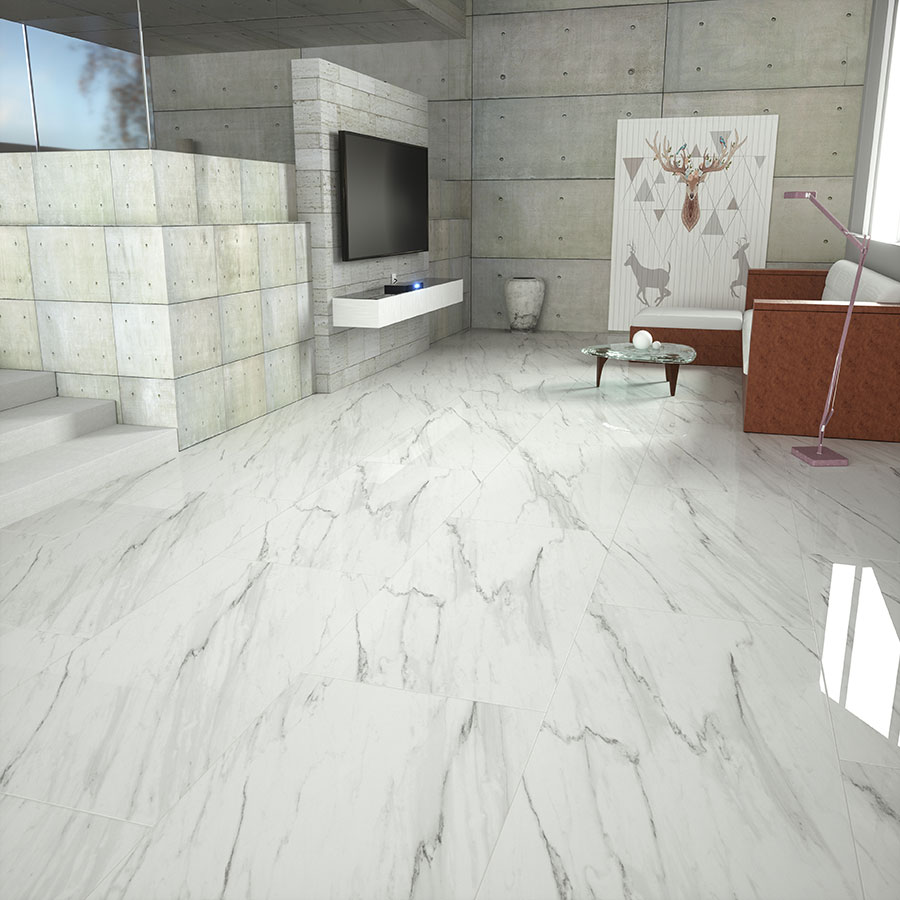
External Reference: International Trade Administration sourcing guides
Frequently Asked Questions About China Tile Factory Certification
Can I verify a factory certification without flying to China?
Yes. A live WeChat video tour combined with a third-party inspection report from SGS or Bureau Veritas provides very high confidence. We facilitate both processes for all new buyers.
What is the minimum order quantity for factory-direct certified tiles?
Our MOQ is one 20-foot container. This equals approximately 1,000 to 1,500 square meters of 9mm floor tile, depending on the format.
How do I know the ISO certificate is not fake?
Genuine certificates have a unique registration number. Enter this number on the website of the certifying body (SGS, TUV Rheinland, Bureau Veritas). If it does not appear in their database, the document is not authentic.
What certifications are required for importing to the United States?
The US market primarily references ANSI A137.1. Many global factories, including ours, test to ISO 10545, which overlaps significantly with ANSI. For commercial floors, DCOF slip resistance testing (per ANSI A137.1) is critical.
Written by the Contigo Ceramics technical team, Foshan, China.
Ready to verify a genuine factory partner? Request a live video tour of our Foshan facility or schedule a third-party inspection with SGS. Contact our team to begin the verification process.
Need factory-direct porcelain tile pricing?
Send your project details — sizes, quantity, and destination port — to [email protected]. Contigo Ceramics can provide catalog, FOB price list, packing details, and technical specifications for importers, distributors, contractors, and project buyers.
Prefer a faster response? 💬 Chat on WhatsApp — typically reply within hours during Foshan business hours.