Address
No. 3F07, Tao Cube, No.68, CCIH, Jihua West Road,Chancheng District, Foshan City, Guangdong, China.

380 pavers ideas backyard landscaping … | Contigo Ceramics

What Are 380 Pavers Ideas for Backyard Landscaping?
380 pavers ideas for backyard landscaping refers to the nearly limitless combinations of paver patterns, colors, sizes, and layouts you can use to transform an ordinary backyard into a functional outdoor living space. At Contigo Ceramics, a Foshan-based factory producing 20mm outdoor porcelain pavers, we see clients apply these ideas every day. Unlike concrete or clay pavers, porcelain offers superior durability, low water absorption (<0.5%), and consistent color across batches. The "380" often represents the approximate number of unique design variations possible when you combine material finishes (marble-look, wood-look, stone-look, solid matte) with laying patterns (herringbone, running bond, basketweave) and edge treatments. Whether you're planning a simple patio or a full backyard renovation, these paver ideas give you a practical starting point for choosing materials that perform under heavy foot traffic while matching your aesthetic goals. Contigo Ceramics offers FOB pricing 30–50% below retail, making these design ideas accessible for projects of any scale.
Key Takeaways
- Porcelain pavers (20mm) outperform concrete and clay in freeze-thaw resistance, slip resistance (DCOF ≥0.42), and color fade resistance.
- 380 pavers ideas for backyard landscaping range from simple grid patterns to complex herringbone designs; choose materials rated for your climate.
- DIY installation of a backyard paver patio is feasible with proper base preparation and mechanical rectified tiles for tight joints.
- Modern paver designs favor large-format slabs (60x90cm, 80x80cm) to minimize grout lines and create a seamless look.
- Direct factory sourcing from China reduces material cost by up to 50% while maintaining ANSI A137.1 compliance.
- Always request a shade/caliber uniformity certificate before ordering bulk containers for consistent installation.
Why Choose Porcelain Pavers for Your Backyard Landscaping?
Porcelain pavers offer distinct advantages over traditional concrete or natural stone for backyard use. They are fired at 1200–1250°C, resulting in a vitrified body with water absorption below 0.5% per ISO 10545-3. This makes them frost-proof—critical for climates with freeze-thaw cycles. At our Foshan facility, we test every batch using the ANSI A137.1 standard for dimensional accuracy and breaking strength. A 20mm porcelain paver typically exceeds 8000N breaking strength, far above the minimum required for pedestrian outdoor use. Additionally, the digital inkjet technology used in production replicates natural stone, wood, or concrete textures with a PEI 5 rating, suitable for commercial outdoor traffic. For backyard landscaping, these pavers require no sealing, resist stains, and maintain color for decades.
| Property | Porcelain Paver (20mm) | Concrete Paver | Natural Stone Paver |
|---|---|---|---|
| Water Absorption | <0.5% | 4–8% | 0.5–3% |
| Freeze-Thaw Resistance | Excellent (passes 300 cycles) | Moderate (passes 50–100 cycles) | Varies by stone type |
| DCOF Slip Resistance | ≥0.42 (wet) | 0.35–0.45 (wet) | 0.3–0.6 (wet) |
| Breaking Strength (EN 14411) | ≥8000N | ~4000N | Varies widely |
| Color Consistency | ±0.2 shade variance (rectified) | ±1.0 shade variance | ±2.0 natural variation |
| Maintenance | None (no sealing) | Seal every 1–2 years | Seal every 2–3 years |
5 Modern Paver Design Ideas for Your Backyard
1. Large-Format Slabs for a Seamless Patio
Use rectangular porcelain slabs 60x90cm or 80x80cm to create a clean, contemporary look. Fewer grout lines mean less weed growth and easier maintenance. These sizes work well in open patios adjacent to pool decks. Contigo Ceramics offers a full range of marble-look and matte finishes that match indoor tiles, extending the living space visually. When planning a large-format patio, order slabs from the same production run to ensure caliber consistency — our factory provides batch coordinates on request.
2. Herringbone Pattern for Visual Interest
Herringbone adds dynamic texture to driveways, walkways, or fire pit areas. Porcelain pavers cut precisely with a wet saw due to their high density. We recommend using rectified edges (mechanical calibration to ±0.2mm tolerance) for tight joints without lippage. This pattern consumes about 5% more material due to cuts, so factor that into your quantity calculation.
3. Mixed Material Borders and Inlays
Combine porcelain wood-look planks (for a boardwalk feel) with stone-look squares, or add a contrasting band around the perimeter. For example, use a 20x80cm wood-look paver in a staggered pattern, bordered by a 40x40cm charcoal matte paver. This creates defined zones without structural changes. Ensure all materials share the same thickness (20mm) for a level surface. Our factory can produce custom sizes and mixed pallets for single-container orders — ask about MOQ flexibility.
4. Geometric Grid with Permeable Gaps
For eco-friendly landscaping, install pavers with 5–10mm sand-filled joints to allow water percolation. Porcelain’s low porosity means it won’t absorb and degrade like concrete in moist conditions. Use a layer of crushed granite base below for drainage. This design works well for garden paths or parking pads.
5. Step-and-Riser Coordination
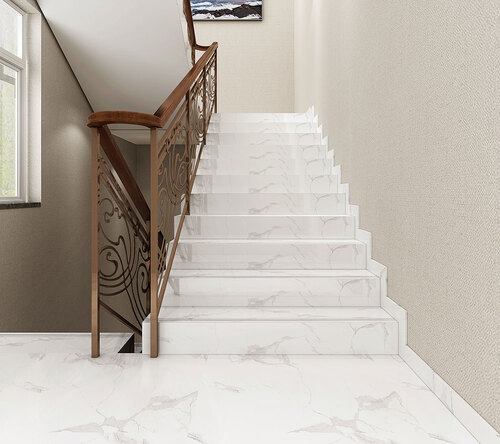
Extend the paver look to steps using matching 20mm porcelain treads and bullnose edges. Our factory pre-cuts step tiles with an anti-slip surface (DCOF ≥0.42). Coordinate risers with the same material or a complementary solid color. This unified approach ties the entire backyard landscape together.
How to Build a Backyard Paver Patio by Yourself
DIY installation of a porcelain paver patio is achievable if you follow proper base preparation. The process is similar to concrete paver installation but requires tighter base compaction due to porcelain’s rigidity. Watch detailed video guides on YouTube for visual steps — many contractors share their methods openly. Contigo Ceramics provides installation specifications with every container shipment.
- Excavate to a depth of 150–200mm (depending on soil type). Slope away from structures at 1-2% grade for drainage.
- Compact sub-base with a plate compactor using 100–150mm of crushed stone (0–20mm aggregate). Compact until no movement visible.
- Add bedding layer of 25–30mm sharp sand or stone dust. Screed to level using pipes as guides.
- Lay pavers on the bedding layer, tapping with a rubber mallet. Use spacers for 3–5mm joints if not rectified.
- Cut perimeter tiles with a wet saw fitted with a continuous-rim diamond blade (faster cuts) or a bridged saw for large formats.
- Compact pavers with a plate compactor fitted with a polyurethane pad to avoid scratching the surface.
- Fill joints with polymeric sand or fine aggregate. Sweep and compact multiple times until joints are full.
- Seal only if desired — porcelain does not require sealing, but some homeowners opt for a penetrating sealer for easier cleaning.
According to the National Concrete Masonry Association, properly installed interlocking pavers can last 30+ years. Porcelain pavers, with lower water absorption, often exceed this lifespan. For official design guidelines, refer to Interlocking Concrete Pavement Institute (ICPI) technical publications on base preparation.
Technical Specifications for 380 Pavers Ideas Backyard Landscaping
When selecting pavers for any of the 380 pavers ideas backyard landscaping, understanding technical specs ensures long-term performance. Porcelain outdoor pavers must meet ANSI A137.1 class for exterior use — specifically slip resistance (DCOF ≥0.42 wet), breaking strength (minimum 6000N for pedestrian, 8000N recommended for light vehicular), and frost resistance (no crazing after 300 freeze-thaw cycles per ISO 10545-12). Contigo Ceramics tests every production batch against these standards. For modern paver designs, rectified edges (caliber <0.5mm) allow 3mm minimum joints, reducing weed growth and tripping hazards. Always request a shade/caliber uniformity certificate from your supplier before shipping.
Comparing Paver Sizes and Layouts
| Paver Size (cm) | Common Pattern | Joint Width | Material per m² | Best Use |
|---|---|---|---|---|
| 20×20 | Grid, stacked bond | 3–5mm | 25 pieces | Small patios, accents |
| 30×60 | Running bond, herringbone | 3–5mm | 5.55 pieces | Walkways, medium patios |
| 60×90 | Large format, modular | 2–4mm | 1.85 pieces | Large patios, pool surrounds |
| 80×80 | Square grid, offset | 2–4mm | 1.56 pieces | Contemporary patios, terraces |
Frequently Asked Questions
What is the best paver size for 380 pavers ideas backyard landscaping?
The best size depends on your design preference. For modern minimalism, large-format 60x90cm or 80x80cm slabs reduce grout lines. For traditional patterns like herringbone, 30x60cm planks are versatile. The 380 pavers ideas backyard landscaping approach encourages mixing sizes, but keep thickness consistent at 20mm.
Can I install porcelain pavers over concrete?
Yes, provided the concrete is structurally sound, sloped for drainage, and clean. Use a 10–15mm bedding layer of sand or rubberized leveling pads. Porcelain pavers can be placed directly onto concrete with a pedestal system for raised patios. Our outdoor porcelain 20mm guide covers pedestal installation in detail.
How do I clean and maintain porcelain paver patios?
Porcelain requires minimal maintenance. Sweep debris regularly. For stains, use a mild detergent and pressure washer (max 1500 psi). No sealing is needed. For 380 pavers ideas backyard landscaping, we recommend testing cleaning products on a spare tile first to ensure no residue.
Are porcelain pavers slippery when wet?
Not if you select tiles with DCOF ≥0.42. Our outdoor 20mm pavers are tested using the ASTM C1028 method for wet slip resistance. For poolside areas, consider textured finishes (R11 or higher). Our outdoor tile product category lists DCOF values for each finish.
What is the MOQ for direct factory orders?
Minimum order quantity for container shipment is typically 500 m² per color/size. For samplers or small projects, we offer mixed containers on request. FOB pricing includes factory audit availability — verify production quality before payment. Contact our sales team for current MOQ flexibility.
Conclusion
Applying 380 pavers ideas backyard landscaping to your outdoor project doesn’t require a huge budget. By choosing 20mm porcelain pavers from a direct factory like Contigo Ceramics, you get consistent quality at FOB prices 30–50% below retail. Whether you build a simple patio yourself or hire a contractor for a complex herringbone design, the material choices you make now affect durability for decades. Visit our porcelain tile sourcing guide to learn how to verify factory credentials and arrange a container shipment. Written by the Contigo Ceramics technical team, Foshan China.