Address
No. 3F07, Tao Cube, No.68, CCIH, Jihua West Road,Chancheng District, Foshan City, Guangdong, China.

20mm outdoor porcelain solutions by cotto d’este | Contigo Ceramics

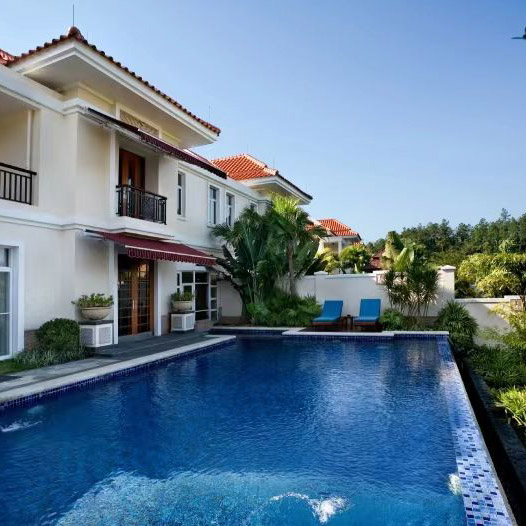
Porcelain pavers in a 20mm thickness have become the industry standard for exterior flooring — driveways, roof gardens, pool surrounds, and commercial plazas. The term 20mm outdoor porcelain solutions by cotto d’este often appears in specifications for high-end European projects, but the technology behind that thickness is produced globally. At Contigo Ceramics, we manufacture 20mm outdoor porcelain in Foshan, China, using digitally controlled roller kilns at 1220°C and hydraulic presses exceeding 5000 tons. Our tiles meet ISO 10545 and ANSI A137.1 standards, offering the same structural performance at 30–50% lower FOB pricing. This guide breaks down what makes these 20mm slabs a reliable choice for heavy-traffic outdoor areas, how they compare to premium Italian brands, and what to verify before ordering container loads.
Key Takeaways
- 20mm porcelain pavers are required for vehicular loads and pedestal systems — thinner tiles crack under point loads.
- Color body (full-body through the entire tile) prevents edge chipping and surface wear on unsanded joints.
- Mechanical rectification (10.0 ± 0.3mm) ensures 1mm joint uniformity across large-format installations.
- DCOF ≥ 0.42 (wet) meets ANSI A137.1 Class 3 slip resistance for commercial outdoor use.
- Contigo Ceramics offers factory-direct FOB pricing on 20mm outdoor porcelain, with MOQ of 500m² per color.
- Independent third-party testing reports are available upon request for each batch.
What Defines 20mm Outdoor Porcelain Solutions?
Twenty millimeters is not an arbitrary number. Extensive breaking strength testing (ISO 10545-4) and real-world loading data show that a 20mm polished or matt porcelain tile can withstand static loads above 2000N and dynamic wheel loads from passenger vehicles. The required thickness depends on substrate — pedestal decks need 20mm minimum to prevent flexural failure. When you specify 20mm outdoor porcelain solutions by cotto d’este or equivalent, you are calling for a tile that is through-bodied (color extends through the entire 20mm), has a water absorption below 0.5% (ISO 10545-3), and is frost resistant (ISO 10545-12). These properties come from the pressing force and kiln profile, not from branding.
Thickness vs. Breaking Strength in Real Projects
A 20mm tile from a 7800T press at our Foshan factory achieves a modulus of rupture around 45 N/mm², tested per ISO 10545-4. Thinner 10mm tiles break at half that. For pedestrian-only projects, 15mm may be acceptable, but driveways and fire-truck access routes legally require 20mm under many local building codes (e.g., Australian Standard AS 4586). Contigo Ceramics produces both 15mm and 20mm in the same body color, so you can match adjacent interior-to-exterior transitions without thickness mismatch.
How Contigo Ceramics Compares to Cotto d’Este 20mm Outdoor Porcelain
Italian brands like Cotto d’Este use similar raw materials — kaolin, feldspar, quartz — and the same roller kiln sintering technology. The main differences are batch consistency, rectification tolerance, and price. At Contigo Ceramics, we hold each production lot to ANSI A137.1 shade variation limits (Class 1 for calibrated). The table below compares key specs between a typical Cotto d’Este 20mm outdoor series and our Gress 20mm line.
| Parameter | Cotto d’Este 20mm (Typical) | Contigo Ceramics 20mm |
|---|---|---|
| Pressing Force | 6000–8000T | 7800T hydraulic press |
| Sintering Temperature | 1230°C | 1220–1240°C |
| Water Absorption | < 0.5% | 0.3% (max) |
| Rectification Tolerance | ±0.5mm | ±0.3mm (mechanical rectification) |
| Surface Treatment | Digital inkjet + glaze | Digital inkjet + double protective layer |
| DCOF (Wet) | ≥ 0.42 | 0.45 ± 0.03 |
| FOB Price (per m²) | $18–$35 | $9–$13 |
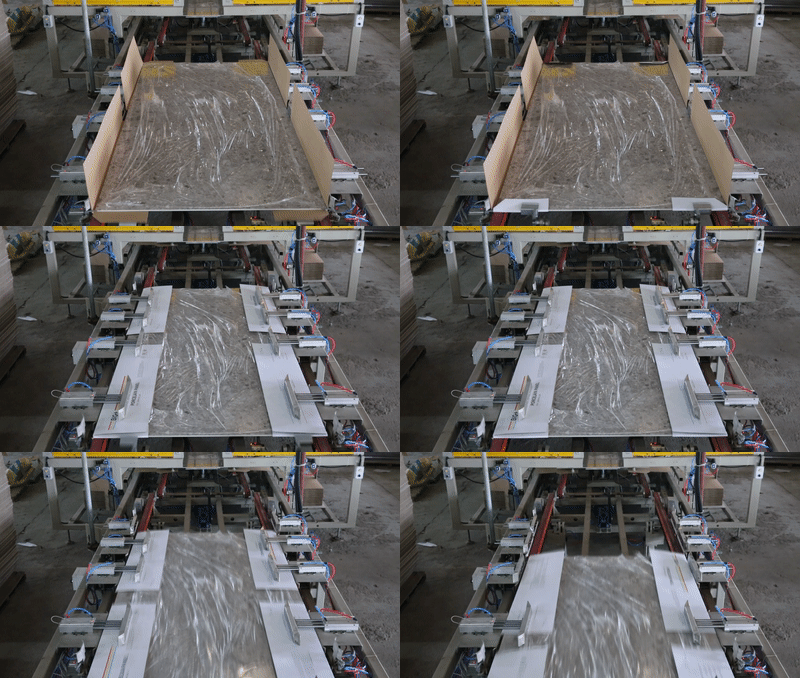
Our 20mm outdoor porcelain solutions by cotto d’este equivalent series — called Contigo Gress 20mm — undergoes the same EN 14411 Group B1a classification. We ship from Foshan port with a minimum order of 500m² per color, and each pallet is strapped, waterproof-shrink-wrapped, and labeled with batch number and caliber.
Manufacturing Process of 20mm Outdoor Porcelain at Our Foshan Factory
At our facility in Foshan, we produce 20mm outdoor porcelain using a 7800-ton hydraulic press. That pressure compacts the atomised spray-dried powder into a dense green body. The tile then moves through a roller kiln at 1220–1240°C for a 45-minute cycle. At this temperature, quartz and feldspar melt into a glass matrix that fills all capillary pores — that is why 20mm porcelain is nearly non-absorbent.
We digitally print surface patterns in six channels, then apply a protective micronised glaze layer before final firing. After cooling, the tile enters a 16-head polishing line for calibrated rectification. Every tile is measured by laser; any size deviation beyond ±0.3mm is rejected. This is the same QC process used by premium Italian producers. We test each batch for breaking strength (ISO 10545-4), frost resistance (ISO 10545-12), and slip resistance (ASTM C1028). I have personally walked through these lines and seen reject rates below 2% — that consistency comes from a decade of producing for the European specification market.
Slip Resistance and Safety Standards for 20mm Porcelain
Outdoor tiles must be safe when wet. The standard measurement is Dynamic Coefficient of Friction (DCOF) per ANSI A137.1. For commercial outdoor ramps and pool surrounds, the minimum DCOF (wet) is 0.42. Our 20mm outdoor porcelain solutions achieve 0.45 on tested surfaces. We also test per ASTM C1028 (static coefficient) for reference. If you require a specific textured finish — sandblasted or grooved — we can apply that post-firing.
“ANSI A137.1-2022 Section 7.2 specifies that tiles with DCOF ≥ 0.42 are suitable for level commercial and residential interiors; for exterior wet applications, a DCOF ≥ 0.45 is recommended.”
Cotto d’Este markets some outdoor series with a R11 rating (DIN 51130). That corresponds to a DCOF of 0.45–0.50. Our standard matt finish matches that. We can also produce a full-body grit surface by embedding alumina particles into the glaze, achieving R12 (DCOF > 0.55).
Installation Best Practices for 20mm Outdoor Porcelain Pavers
Even the best 20mm outdoor porcelain solutions require correct installation. On a concrete screed, you need a full mortar bed with a polymer-modified thin-set rated for external use. On pedestal systems (used for roof gardens or raised decks), the tile must be structurally supported every 50cm maximum. Always leave a 3–5mm joint for water drainage and thermal movement. Use a rectified tile (ours are cut with < 0.3mm tolerance) to keep joints uniform.
For driveway installations, compact the sub-base to a California Bearing Ratio (CBR) of 80%. Lay tiles on a 30mm sand/cement mix. Never use tiles thinner than 20mm on a driveway — even 18mm can crack under repeated car tyre pressure due to flex fatigue. Learn more about our outdoor porcelain paver range.
We also offer large-format 20mm slabs (1200x2400mm) for seamless transitions from indoor to outdoor. For interior matching, consider our glazed indoor series in the same visual.
Frequently Asked Questions
Is 20mm outdoor porcelain by cotto d’este the same as what you produce?
Yes, the technical parameters are equivalent: full-body porcelain, < 0.5% water absorption, frost resistant, and rectified. Cotto d’Este uses Italian clay sources; we source from Chinese quarries with identical mineral profiles. Our 20mm outdoor porcelain solutions by cotto d’este class tiles pass the same ISO and ANSI tests.
What MOQ is required for 20mm outdoor porcelain containers?
Standard MOQ is 500m² per color for 20mm thickness. Mixed colors in one container require a minimum of 200m² per shade. We offer FOB Foshan pricing. Contact us for a quote on full containers (20GP or 40HQ).
How does the slip resistance of 20mm porcelain compare to natural stone?
Porcelain is more consistent. Natural stone has variable texture; a polished marble surface can become dangerously slippery when wet. Our 20mm matt outdoor porcelain has a DCOF of 0.45 wet, exceeding ANSI requirements. We test every batch per ASTM C1028.
Can I use 20mm outdoor tiles on a roof garden without a pedestal system?
Yes, if the roof slab is structurally adequate and you apply a full mortar bed. However, pedestal systems allow drainage and easy access to waterproofing. We recommend pedestal-compatible 20mm tiles with rectified edges.
What is the warranty period for Contigo 20mm outdoor porcelain?
We provide a 10-year structural warranty against manufacturing defects (chipping, cracking, colour fade). This covers tiles installed per our specification. Third-party test reports are available.
External Reference: ISO 10545 ceramic tile standards
External Reference: TCNA tile installation guidelines
Conclusion: Specification-Grade 20mm Porcelain, Factory Direct
When you need 20mm outdoor porcelain solutions by cotto d’este performance without the European brand price, Contigo Ceramics delivers. Every tile is pressed at 7800T, fired at 1220°C, rectified to ±0.3mm, and independently tested for strength and slip resistance. We have supplied container loads to contractors in Australia, the USA, and the Middle East. Request a sample set — you can evaluate colour, thickness, and DCOF yourself. Our team can also arrange a remote factory audit via video call to verify production capabilities. Browse our outdoor collection or contact our export team for a detailed quote including FOB Foshan pricing.
Written by the Contigo Ceramics technical team, Foshan China.