Address
No. 3F07, Tao Cube, No.68, CCIH, Jihua West Road,Chancheng District, Foshan City, Guangdong, China.

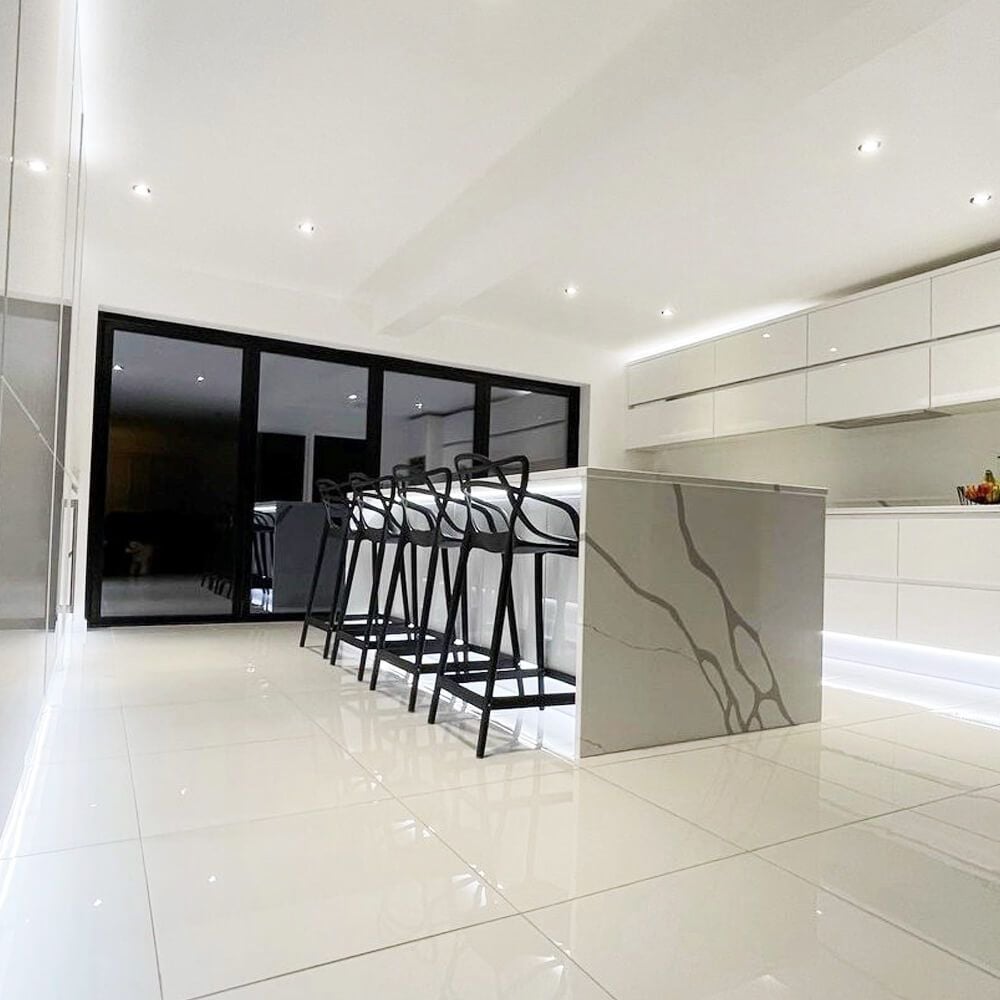
porcelain floor tile | Contigo Ceramics


When you need a flooring material that combines exceptional durability, water resistance, and design versatility, porcelain floor tile is the industry benchmark. At Contigo Ceramics, our Foshan factory produces premium large-format and outdoor porcelain tiles that ship directly to buyers worldwide — eliminating middleman markups. Whether you’re a contractor sourcing for a hotel or a homeowner planning a renovation, understanding the real differences between porcelain and ceramic, as well as between standard and full-bodied porcelain, is essential for making a cost-effective choice. This guide covers the critical facts you need to know before purchasing.
Key Takeaways
- Porcelain floor tile is denser and more moisture-resistant than ceramic, making it suitable for high-traffic and wet areas.
- Full-bodied porcelain tiles offer color throughout the thickness, ideal for commercial spaces where chips may occur.
- Factory-direct sourcing from China can reduce costs by 30–50% compared to buying through distributors.
- Always verify compliance with ISO 10545 or ANSI A137.1 standards to ensure product quality.
- Large-format (60x120cm and above) porcelain tiles require proper subfloor preparation and use of a leveling system.
- Contigo Ceramics offers FOB pricing and flexible MOQ for project-based orders.
What Is Porcelain Floor Tile?
Porcelain floor tile is a ceramic product made from finer, more purified clay fired at higher temperatures (typically above 1200°C). This process creates a denser, less porous material with a water absorption rate of 0.5% or less per ASTM C373. Unlike ceramic tiles, porcelain can be used in exterior applications, showers, and commercial kitchens because it resists moisture damage, staining, and freeze-thaw cycles. At Contigo Ceramics, every batch of porcelain floor tile undergoes rigorous testing in our Foshan facility to ensure it meets international standards including ISO 10545 and ANSI A137.1. The result is a flooring solution that offers unmatched longevity — often 20 years or more with proper installation.
Porcelain vs. Ceramic Tile: Which Is More Durable for Flooring?
The most common question buyers ask is whether ceramic or porcelain floor tile is better for flooring. The answer depends on where you plan to install it. Ceramic tile is softer, more porous (water absorption over 3%), and easier to cut — but it scratches, chips, and stains more readily. Porcelain, on the other hand, has a Mohs hardness rating of 7–8 out of 10, compared to 5–6 for ceramic. This makes porcelain far more resistant to heavy foot traffic, dropped tools, and furniture scratches.
At our factory, we have seen many cases where ceramic tiles in commercial corridors needed replacement within five years, while porcelain floor tiles from the same installation remained intact after a decade. For areas like entryways, kitchens, bathrooms, and retail spaces, porcelain is the clear winner. If you need outdoor flooring, only porcelain — specifically full-bodied or through-body porcelain — can withstand freeze-thaw cycles without cracking.
“According to the Tile Council of North America, porcelain tile is defined as having a water absorption rate of 0.5% or less. This classification ensures superior performance in wet and heavy-use environments.” — TCNA Handbook
Porcelain Tile vs. Full-Bodied Porcelain Tile: What’s the Real Difference?
Many buyers confuse standard glazed porcelain with full-bodied (or through-body) porcelain floor tile. Standard porcelain has a color layer applied only to the surface. If chipped, the white or beige body below becomes visible. Full-bodied porcelain, by contrast, has pigment mixed throughout the entire tile body. This makes it ideal for commercial floors, outdoor patios, and areas where edge chips or heavy abrasion are likely.
At Contigo Ceramics, we offer both options. Our 20mm outdoor porcelain tiles are exclusively full-bodied, ensuring consistent color even after years of exposure. For indoor residential use, glazed porcelain provides more design choices (marble look, wood grain, etc.) at a lower cost. When you compare porcelain floor tile vs. full-bodied variants, consider: if your project involves high-impact zones or if you plan to cut tiles to create patterns, full-bodied is the safer investment.

Pros and Cons of Porcelain Tile Flooring
Pros
- Extreme durability — withstands heavy loads, high traffic, and impact.
- Low water absorption — suitable for bathrooms, basements, and outdoor areas.
- Stain resistance — impervious to spills when sealed (though most modern tiles require minimal sealing).
- Wide design range — can mimic natural stone, wood, concrete, and even fabric textures.
- Low maintenance — simple sweeping and damp mopping keep it looking new.
Cons
- Hardness — can be uncomfortable to stand on for long periods and may break dropped glassware.
- Cold underfoot — requires radiant heating in colder climates for comfort.
- Difficult to cut — requires a wet saw with a diamond blade; DIY installation is challenging.
- Higher material cost than ceramic or vinyl — but lower lifecycle cost due to longevity.
- Potential for lippage with large-format tiles — requires careful subfloor leveling.
How to Choose the Right Porcelain Floor Tile for Your Project
Not all porcelain floor tile is created equal. When sourcing, consider these factors:
- PEI rating — A PEI 3 or 4 rating is sufficient for residential; PEI 5 for commercial.
- Rectification — Rectified tiles have perfectly straight edges for minimal grout lines.
- Slip resistance — Look for a COF (coefficient of friction) of 0.6 or higher for wet areas.
- Size — Large-format tiles (e.g., 60x120cm, 75x150cm, 120x240cm) create a seamless look and require fewer grout lines.
At Contigo Ceramics, we provide technical data sheets with every order so you can verify these parameters before shipping. Our factory-direct model also allows us to be transparent about FOB prices — no hidden distributor margins.
Why Source Porcelain Floor Tiles from a Factory-Direct Supplier?
Buying directly from a Chinese manufacturer like Contigo Ceramics gives you significant advantages. You get genuine factory prices, not markups from importers or retailers. We offer flexible MOQs — from single pallets for small projects to full container loads for large developments. Our team can also coordinate with your freight forwarder or handle shipments to over 60 countries.
We invite serious buyers to schedule a virtual factory tour to see our production lines and quality control labs. For those who prefer independent verification, our tiles are tested by third-party labs per ISO 10545 and ANSI A108 standards. Recently, a Dubai-based contractor chose our porcelain floor tiles after comparing FOB quotes from three suppliers — we offered the lowest price per square meter without compromising on the PEI 5 rating.
Installation and Maintenance Best Practices
Even the best porcelain floor tile will fail if installed incorrectly. We recommend following ANSI A108 guidelines for large-format tiles: use a minimum 95% mortar coverage, a 1/2″ notch trowel, and a leveling system to prevent lippage. For outdoor installations, ensure a proper slope (1/4″ per foot) and use epoxy grout for maximum freeze-thaw resistance.
At our Foshan facility, we train installers from over 20 countries. One frequent mistake is using a regular tile cutter on full-bodied porcelain — it will dull blades quickly. Always use a wet saw with a continuous rim diamond blade. Maintenance is simple: sweep regularly and mop with neutral pH cleaner. Avoid abrasive scrubbers that can dull the glaze over time.
Frequently Asked Questions
Is porcelain floor tile more expensive than ceramic?
Yes, porcelain floor tile typically costs 20–50% more than ceramic per square foot. However, its longer lifespan and lower maintenance costs often make it more economical over 10–20 years.
Can porcelain floor tile be used outdoors in freezing climates?
Yes, but only if it is full-bodied porcelain with a water absorption rate below 0.5% and certified for freeze-thaw cycles. Our 20mm outdoor tiles are designed for such conditions.
What thickness should I choose for porcelain floor tile?
Residential areas: 8–10mm is sufficient. Commercial or outdoor: 20mm for pedestrian use, 12mm for light commercial. Heavier loads may require thicker tiles or reinforcement.
How do I clean porcelain floor tile without damaging it?
Use a soft mop, warm water, and a neutral pH tile cleaner (pH 7). Avoid vinegar, bleach, or ammonia as they can damage the grout and eventually the glaze. Seal grout lines annually.
Does Contigo Ceramics offer samples before bulk order?
Yes, we provide sample tiles (up to 30x30cm) for a nominal shipping fee. We also offer virtual showroom tours to help you select colors and textures remotely.
External Reference: ISO 10545 ceramic tile standards
Conclusion
Choosing the right porcelain floor tile for your project requires understanding its composition, performance, and sourcing options. Glazed porcelain offers unlimited design flexibility, while full-bodied porcelain delivers unmatched durability for high-traffic or outdoor use. By working directly with a factory supplier like Contigo Ceramics, you gain quality control, competitive FOB pricing, and the ability to customize sizes and finishes.
At our Foshan facility, we test every batch against ISO 10545-3 for water absorption and ANSI A137.1 for dimensional tolerances. This commitment to quality ensures that every container — whether for a single home or a multi-story commercial building — meets your expectations. Contact our sales team today for a quote or to arrange a factory audit. Written by the Contigo Ceramics technical team, Foshan China.