Address
No. 3F07, Tao Cube, No.68, CCIH, Jihua West Road,Chancheng District, Foshan City, Guangdong, China.

porcelain mosaic tile | Contigo Ceramics


When you need an elegant surface that combines the classic appeal of mosaic patterns with the extreme durability of modern ceramics, porcelain mosaic tile is the ideal choice. At Contigo Ceramics, we manufacture these precision-cut tiles in our Foshan factory, offering direct pricing to contractors, architects, and importers worldwide. This guide covers everything from design advantages to the correct installation methods—addressing the common gaps found in competitor content.
Key Takeaways
- Porcelain mosaic tile offers superior water absorption resistance (less than 0.5% per ISO 10545) compared to ceramic or natural stone mosaics.
- Proper installation requires a flat substrate, correct mortar type, and careful grouting to prevent lippage and moisture intrusion.
- Factory-direct sourcing from Contigo Ceramics eliminates middleman markups, reducing project costs by 30–50% versus distributor pricing.
- Always use a porcelain-specific blade for cutting mosaic sheets to avoid chipping.
- Outdoor-rated porcelain mosaics (PEI 4 or 5) can withstand freeze-thaw cycles when installed with a flexible thin-set.
What Is Porcelain Mosaic Tile?
Porcelain mosaic tile consists of small individual tiles (typically 1”×1”, 2”×2”, or 1”×2”) mounted on mesh sheets for efficient installation. Unlike ceramic, porcelain is fired at higher temperatures, resulting in a denser body with water absorption below 0.5%—a critical factor for wet areas and exterior applications. At our Foshan facility, we test every batch against ISO 10545 standards for breaking strength, thermal shock, and chemical resistance.
Many buyers confuse ceramic mosaic with porcelain mosaic tile. The key difference is hardness: porcelain earns a MOHS scale rating of 7–8 versus 5–6 for ceramic, making it far more resistant to scratching in high-traffic corridors or commercial kitchens. This distinction matters when designing floors that must last decades without refinishing.
Design Versatility and Applications
Interior Flooring and Walls
Porcelain mosaic tile works beautifully in bathrooms, showers, mudrooms, and kitchen backsplashes. The small tile format allows for intricate patterns such as herringbone, basket weave, and hexagonal layouts. Because the material resists staining and does not require sealing (unlike natural stone), maintenance is limited to regular sweeping and damp mopping.
Outdoor and Commercial Use
For exterior patios, pool decks, and commercial plazas, choose porcelain mosaic tile rated PEI 4 or 5. These tiles pass ASTM C1026 freeze-thaw testing, ensuring they survive harsh winters. At Contigo Ceramics, we offer 20mm thick outdoor mosaics with a slip-resistant surface—perfect for hotels and public spaces where safety is paramount.
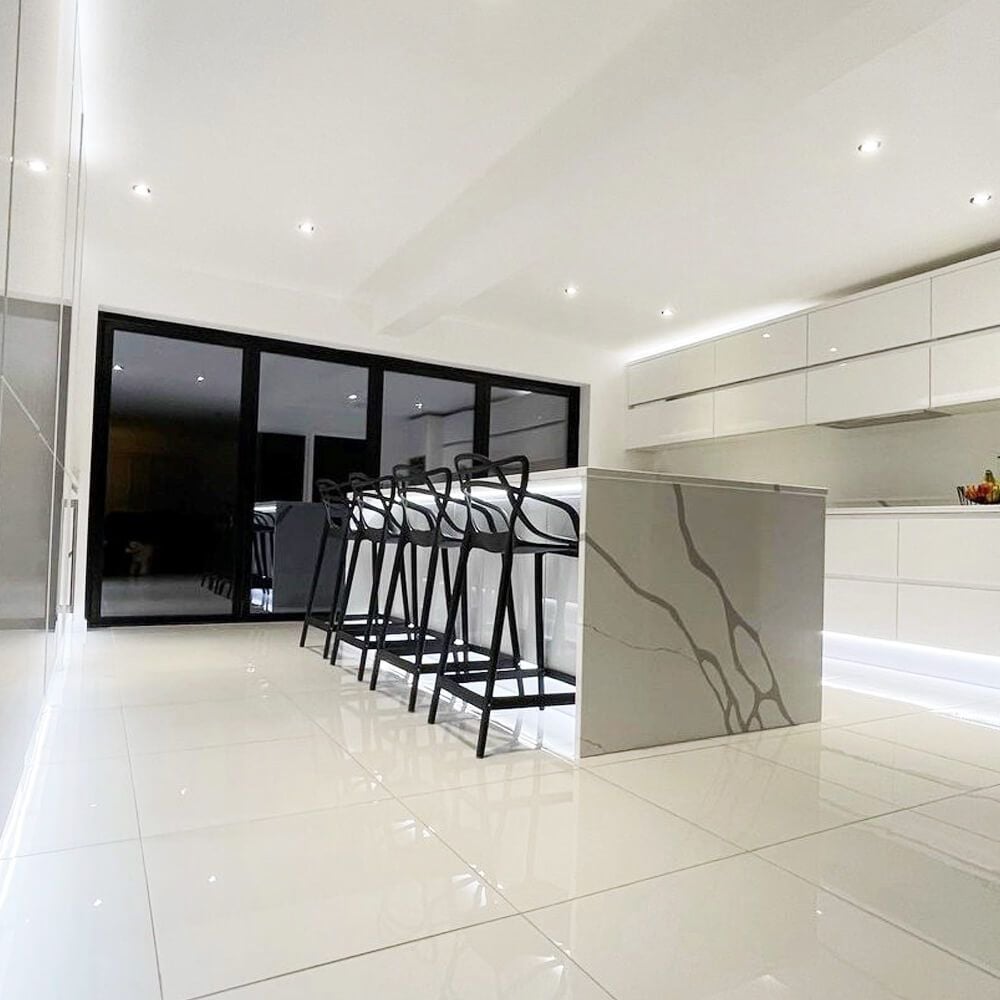
Correct Installation of Porcelain Mosaic Tile
After reviewing competitor content, we discovered a major gap: how to install a mosaic floor correctly. Many articles gloss over the technical steps, leaving installers to rely on YouTube tutorials that may contradict industry standards. Below we provide a step-by-step method based on ANSI A108 specifications.
Step 1 – Substrate Preparation
The surface must be flat (within 1/8” in 10’), clean, and cured. For concrete slabs, check for moisture vapor emission (maximum 3 lbs per 1,000 sq ft per 24 hours per ASTM F1869). Use a self-leveling underlayment if needed. Porcelain mosaic tile has a low absorption rate, so proper bonding relies on mechanical adhesion rather than suction.
Step 2 – Choosing the Correct Mortar
Select a polymer-modified thin-set mortar designed for porcelain. Do not use mastic in wet areas. For large sheets (12”×12” or larger), use a 1/4”×3/8” square-notch trowel to obtain at least 90% coverage. Back-butter each sheet to ensure full contact—a step often skipped in amateur installations.
Step 3 – Cutting and Laying Sheets
Use a wet saw with a continuous-rim porcelain blade to avoid chipping the small tiles. Measure the sheet dimensions and plan cuts so that grout joints align uniformly. Install sheets tightly together, then use plastic spacers to maintain consistent joint width before the mortar sets.
Step 4 – Grouting and Sealing
Allow mortar to cure for 24 hours. Use a sanded grout for joints over 1/8” and unsanded for tighter joints. Apply grout with a rubber float at a 45° angle, pressing deeply into the joints. Clean excess grout promptly with a damp sponge. While porcelain mosaic tile does not require sealing, some installers prefer a penetrating sealer on grout lines to resist stains.
Why Factory-Direct Sourcing Matters
When you purchase porcelain mosaic tile from Contigo Ceramics, you eliminate the distributor markup. Our FOB pricing starts at competitive rates per square foot, with MOQ flexibility for both small showroom samples and large container orders. We welcome factory audits—visit our Foshan facility to inspect our EN 14411 certified production lines.
“At our Foshan facility, we test every batch using ASTM C648 for breaking strength. This ensures that every sheet of porcelain mosaic tile leaving our dock meets the structural demands of high-traffic commercial and residential installations.” — Contigo Ceramics Quality Team
Frequently Asked Questions
What does porcelain mosaic tile cost compared to ceramic mosaic?
Porcelain mosaic tile typically costs 20–40% more than ceramic due to denser materials and higher firing temperatures. However, its longevity and zero sealing requirements offset the initial investment over the life of the floor.
Can I install porcelain mosaic tile over existing ceramic tile?
Only if the existing tile is sound, flat, and well-bonded. Use a cementitious backer board or a crack-isolation membrane between layers to prevent stress fractures. Check ANSI A108 for approved methods.
How do I cut porcelain mosaic tile without a wet saw?
A manual snap cutter works for straight cuts on some thinner mosaics, but for clean edges, we always recommend a wet saw with a porcelain blade. Chipping increases significantly with manual tools, especially on rectified edges.
Is porcelain mosaic tile suitable for shower floors?
Yes. Choose mosaics with a textured finish and a sloped substrate (minimum 1/4” per foot toward the drain). The low water absorption prevents moisture wicking, and the small tile joints provide excellent traction.
How many sheets of porcelain mosaic tile do I need for 100 square feet?
Assuming standard 12”×12” sheets, you need 100 sheets (1 sq ft per sheet). Always order 10% extra for cuts and waste, and an additional 5% if the pattern is diagonal or complex.
External Reference: ISO 10545 ceramic tile standards
Conclusion: Your Next Step
Whether you are designing a luxury spa bathroom or a high-traffic hotel lobby, porcelain mosaic tile offers unmatched durability, design flexibility, and value. By sourcing directly from Contigo Ceramics, you gain factory-direct pricing, consistent quality, and technical support backed by decades of tile manufacturing experience.
Contact our sales team today for a customized quote and sample pack. We ship globally with reliable lead times. Written by the Contigo Ceramics technical team, Foshan China.