Address
No. 3F07, Tao Cube, No.68, CCIH, Jihua West Road,Chancheng District, Foshan City, Guangdong, China.

What Thickness Porcelain Slab for Countertop: 6mm vs 12mm Guide

Understanding the Ideal Thickness for Porcelain Countertops
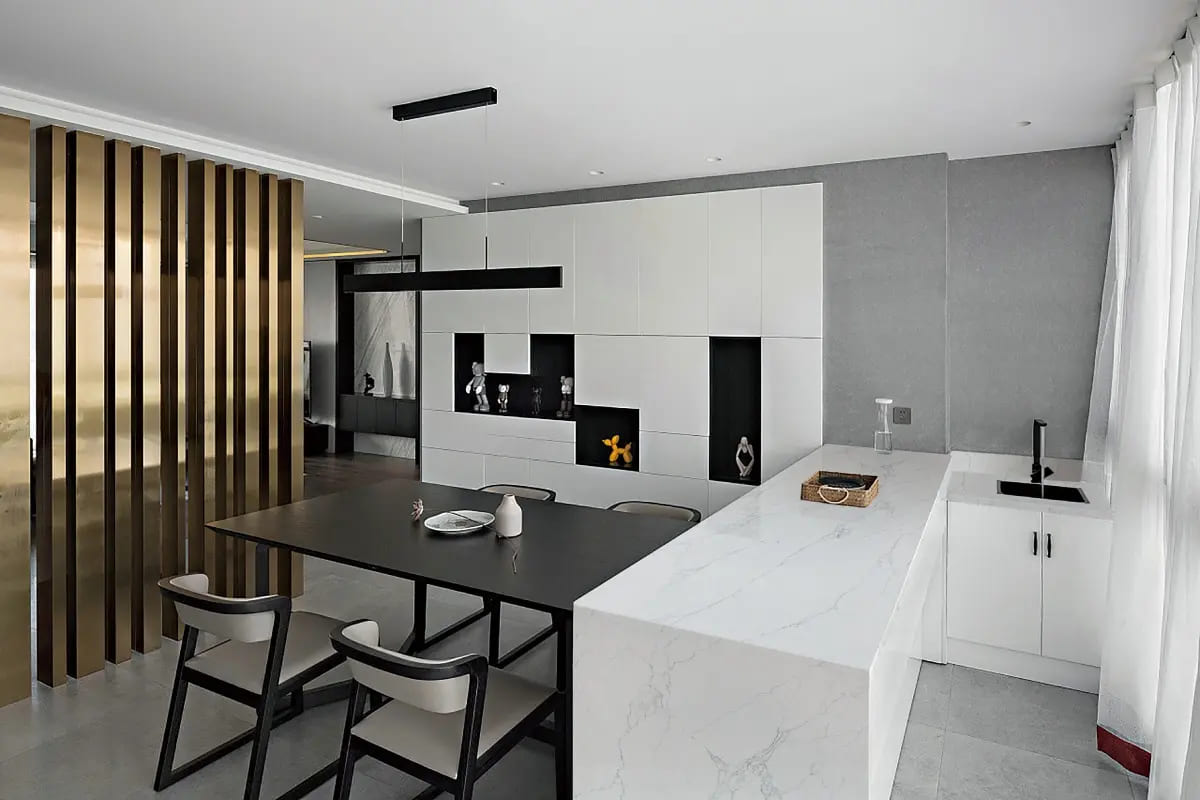
If you are planning a kitchen or bathroom renovation and asking what thickness porcelain slab for countertop is best, you are not alone. Porcelain slabs have become a top choice for countertops due to their durability, stain resistance, and aesthetic versatility. Unlike natural stone, porcelain is engineered for consistent performance. However, selecting the correct slab thickness directly impacts the longevity, installation cost, and overall look of your project.
At Contigo Ceramics, we supply factory-direct large format porcelain slabs and have helped hundreds of contractors and architects choose the right material for countertop applications. In this guide, we answer the critical question: what thickness porcelain slab for countertop is recommended, and what factors should influence your decision.
Why Thickness Matters in Porcelain Countertops
The thickness of a porcelain slab affects its structural integrity, weight, and resistance to impact. A slab that is too thin may crack under heavy loads or thermal shock, while an overly thick slab increases shipping costs and requires stronger substrate support.
According to the Tile Council of North America (TCNA), the minimum recommended thickness for horizontal surfaces like countertops is typically 12 mm. However, this can vary based on span, installation method, and whether the slab is used with an undermount sink or as a backsplash.
“For counters with unsupported overhangs longer than 10 inches, 20 mm thick porcelain slabs are strongly advised to prevent deflection and cracking.” — TCNA Handbook for Ceramic, Glass, and Stone Tile
Standard Thickness Options: What Thickness Porcelain Slab for Countertop Projects?
1. 6 mm Slabs
Typically used for backsplashes and vertical cladding. For countertops, 6 mm is too thin unless laminated to a rigid substrate. We do not recommend this thickness for working surfaces.
2. 12 mm Slabs
This is the most common answer to what thickness porcelain slab for countertop in residential kitchens. A 12 mm slab provides sufficient strength for standard countertops with plywood or cement board substrate. It is lightweight enough for easy handling and cost-effective.
3. 20 mm Slabs
Ideal for large island overhangs, bar tops, and commercial applications. A 20 mm porcelain slab can span longer distances without deflection. It also offers a premium, stone-like feel. Contigo Ceramics offers polished porcelain tiles in 20 mm thickness for countertops that mimic marble or granite.
Factors That Influence the Right Thickness
Substrate and Support
If you install the slab over a continuous plywood or cement board base, a 12 mm slab is sufficient. For “floating” or open-cabinet installations, a thicker slab provides better load distribution.
Overhang
An overhang of more than 12 inches (30 cm) requires a 20 mm slab or additional steel support. The ISO 10545-4 standard for modulus of rupture gives guidance on the maximum safe span for ceramic materials.
Undermount Sinks and Cooktops
For undermount sinks, a 12 mm slab is adequate if the edge is properly profiled. However, many fabricators prefer a 20 mm slab to avoid chipping when cutting openings for larger cooktops.
Weight Considerations
A 12 mm porcelain slab weighs approximately 24–28 kg per m², while a 20 mm slab weighs about 40–45 kg per m². Ensure your cabinetry can handle the extra load if choosing thicker slabs.
Comparing Porcelain Thicknesses: Which Is Best for Your Project?
| Thickness | Best For | Pros | Cons |
|---|---|---|---|
| 6 mm | Backsplashes, wall cladding | Lightweight, easy to cut | Too fragile for countertops alone |
| 12 mm | Standard kitchen/bath counters | Cost-effective, good strength | Requires solid substrate for overhangs |
| 20 mm | Islands, commercial counters, outdoor kitchens | High durability, can span long overhangs | Heavier, higher material cost |
For most homeowners, the answer to what thickness porcelain slab for countertop is 12 mm. However, if you plan a large island with seating, upgrade to 20 mm for peace of mind.
Installation Tips for Different Thicknesses
Tools and Cutting
Thicker slabs require heavy-duty wet saws with diamond blades. We recommend professional fabrication for 20 mm slabs. Our factory offers pre-cut outdoor porcelain tiles that are also suitable for countertops when cut to size.
Edge Profiles
Full 12 mm slabs can take an eased or beveled edge. For a more substantial look, a 20 mm slab can be mitered or bullnosed to resemble natural stone.
Support Structure
Always consult the ANSI A108.1 installation guidelines. Use a continuous adhesive and ensure the substrate is perfectly flat to avoid point loading.
Frequently Asked Questions
Can I use 6 mm porcelain for countertops if I laminate two sheets together?
Yes, but this is rarely advised. Laminating requires precise adhesive application and risks delamination. A single 12 mm or 20 mm slab is more reliable.
What thickness porcelain slab for countertop with an undermount sink?
12 mm is the minimum. For a seamless look, 20 mm gives more material to polish the visible edge.
Will a 12 mm slab crack under a hot pan?
Porcelain withstands high heat. However, thermal shock can occur if a hot pan is placed directly on a cold slab. Always use trivets, regardless of thickness.
Why Choose Contigo Ceramics for Your Porcelain Countertop Slabs
As a factory-direct supplier, Contigo Ceramics offers premium porcelain slabs in 12 mm and 20 mm thicknesses. We control every step of production, from raw materials to finished tiles, ensuring consistent quality and competitive pricing. Our polished porcelain tile collection includes realistic marble- and wood-look finishes perfect for modern countertops.
We ship globally with professional packaging to prevent breakage. Whether you need a few slabs for a residential project or a container for a commercial development, we can meet your volume and timeline.
External Reference: ISO 10545 ceramic tile standards
Conclusion
Choosing what thickness porcelain slab for countertop comes down to your specific design requirements, support structure, and budget. For the vast majority of countertop applications, a 12 mm slab is the perfect balance of strength, cost, and ease of installation. For large islands or commercial spaces, a 20 mm slab offers unmatched durability.
Ready to order? Contact our sales team for a quote on our large format porcelain slabs available in various thicknesses and finishes. Let Contigo Ceramics help you build a countertop that lasts a lifetime.