Address
No. 3F07, Tao Cube, No.68, CCIH, Jihua West Road,Chancheng District, Foshan City, Guangdong, China.

Ceramic Tile Production Process: How Tiles Are Made in China | Contigo Ceramics

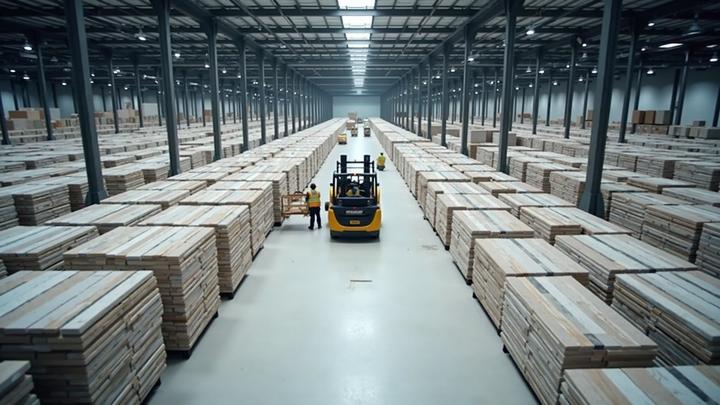
For architects, contractors, and international buyers, understanding the ceramic tile production process factory operations are the key to sourcing high-quality materials at competitive prices. From raw mineral blending to the final quality inspection, modern facilities employ advanced automation to produce durable, aesthetically superior tiles. This article takes you inside that journey, explaining how ceramic tile manufacturing process works, the step-by-step production stages, and why buying ceramic tiles directly from a factory like Contigo Ceramics saves you money without compromising on quality.
What Is the Ceramic Tile Production Process? Step-by-Step From Clay to Tile
Ceramic tile manufacturing is a precise industrial sequence that transforms natural clays, minerals, and pigments into finished slabs with controlled dimensions and surface properties. Whether you’re sourcing large-format polished porcelain or 20mm outdoor pavers, the fundamental ceramic tile production process factory workflow remains consistent. Below is a detailed walkthrough of each stage, answering the question: what is the step by step ceramic tile production?
1. Raw Material Preparation and Batching
The process begins with carefully selected raw materials—plastic clays for body strength, feldspar for fluxing, and silica sand for dimensional stability. At a well-run factory, these minerals are stored in separate silos and precisely weighed using automated batching systems. Consistent proportions are non-negotiable; even minor variations in the recipe can cause warping or shade variations in the final tile.
Wet grinding in large ball mills reduces the mixture to a uniform slip—a creamy liquid suspension. This slip is screened and passed through magnetic filters to remove iron impurities that could cause specks on white-body tiles. The refined slip is then spray-dried into a fine, free-flowing powder with controlled moisture content (typically 5–7%), ready for forming.
2. Forming: Pressing and Shaping
The spray-dried powder is fed into hydraulic presses capable of exerting thousands of tons of force. Under high pressure, the powder particles compact into a solid green body with precise dimensional accuracy. For large-format tiles (up to 3200×1600mm), continuous compaction technology is often used to prevent density variations. This is a critical juncture in the ceramic tile production process factory because the pressing stage determines the tile’s strength and its ability to handle subsequent glazing and firing. For trim pieces and special shapes, extrusion may be employed instead.
3. Drying the Green Body
After pressing, tiles still contain residual moisture that must be removed before glazing and firing. High-efficiency horizontal or vertical driers reduce this moisture to below 0.5%, using controlled hot air recirculation from the kiln’s cooling zone. Rapid but gentle drying prevents cracks and ensures the tile body has sufficient mechanical strength for automated handling and glaze application. This energy-saving step is what makes a modern ceramic tile factory direct wholesale price competitive, as waste reduction directly lowers cost per square meter.
4. Glazing and Decoration
Glazing transforms the porous green body into a waterproof, stain-resistant, and visually stunning surface. In a fully automated line, tiles pass under cascading waterfall glazers or spray booths to apply the base coat. Digital inkjet printers, with resolutions up to 400 dpi, then deposit water-based pigmented inks to replicate natural stone, wood, or abstract designs with photorealism. Unlike traditional screen printing, digital decoration allows for non-repetitive patterns and rapid design changes—a key advantage for buyers who need custom looks. For polished tiles, a transparent frit layer is applied on top for the final glossy or lappato finish.
5. Firing: The Heart of the Process
Glazed tiles enter a roller hearth kiln, where they are subjected to temperatures between 1100°C and 1250°C, depending on whether the product is earthenware, stoneware, or porcelain. The kiln’s careful thermal profile—pre-heating, firing, rapid cooling, and annealing—must be precisely controlled to avoid thermal shock. During firing, organic binders burn off, the clay vitrifies, and the glaze matures, fusing with the body to create a dense, frost-resistant material. For the ceramic tile production process factory, the kiln is both the biggest capital investment and the highest energy consumer, so efficient firing cycles are essential to maintaining a lean operational cost.
6. Sorting, Inspection, and Packaging
Exiting the kiln, tiles are cooled gradually before reaching automatic flatness, shade, and dimensional gauges. Laser systems scan each tile for size calibration, while digital cameras detect surface defects down to the sub-millimeter level. Tiles that pass are sorted by shade and caliber, then robotically packaged with protective spacers and corner protectors. This rigorous quality control is why you can buy ceramic tiles directly from factory sources like Contigo Ceramics with confidence in batch-to-batch consistency. Defective pieces are crushed and recycled back into the raw material stream, minimizing waste.
How a Modern Ceramic Tile Factory Operates: Automation and Scale
Today’s ceramic tile factories are highly integrated production ecosystems where digital controls link every stage. A ceramic tile production line factory video would reveal a seamless flow: spray-dried powder entering the press, green tiles gliding through driers and glazing stations, and the kiln discharging finished product to packaging robots—all with minimal human intervention. Such automation not only increases throughput but also ensures the repeatability that global buyers demand.
According to the World Ceramic Review, fully automated lines can achieve over 20,000 square meters of output per day, while keeping dimensional tolerances within ±0.2%, a level of precision that manual methods simply cannot match.
For importers and project managers, visiting or remotely auditing these facilities is now easier than ever. Many factories offer live video walkthroughs of their production lines, showing real-time compliance with international standards like ISO 13006. When you assess a potential supplier, look for clean, organized raw material storage, advanced digital printers, and modern roller kilns. These indicators reveal a facility committed to quality—exactly what Contigo Ceramics showcases in its operations at our factory.
Why Buy Ceramic Tiles Directly from a Factory?
Cutting out intermediaries transforms your project budget. When you buy ceramic tiles directly from factory, you access the lowest possible pricing tiers and gain complete transparency into manufacturing standards. Here’s why this model benefits serious buyers.
Ceramic Tile Factory Direct Wholesale Price Advantages
Traditional supply chains involve distributors, regional wholesalers, and retailers, each applying a 20–40% markup. By partnering with a factory like Contigo Ceramics, you pay a true ceramic tile factory direct wholesale price that reflects raw material and processing costs plus a slim margin. Bulk container orders (typically 1000+ square meters) unlock further economies of scale. Even for moderate volumes, direct sourcing can reduce total expenditure by 25–30%.
- Transparent, itemized quotations based on production cost, not shelf price.
- Custom sizing, thickness (e.g., 20mm for outdoor use), and surface finishes without middleman surcharges.
- Reduced risk of counterfeits; you receive exactly the batch you sampled.
Quality Consistency and Production Control
A factory that manages every step of the ceramic tile production process can guarantee that the samples you approved match the shipment. Third-party dealers often pool stock from multiple factories, causing shade and caliber mismatches. Direct oversight means if a project requires exact RAL color matching or consistent rectification, the production team can parameterize their digital printers and grinding lines accordingly. Browse our tile collections to see available ranges and specifications that remain constant from order to order.
Flexible Logistics and Global Shipping
Factory-direct suppliers are well-versed in export documentation, FOB/CIF terms, and container optimization. They can load mixed containers holding multiple tile sizes, trims, and decorative pieces, streamlining your international logistics. Because the factory packs the tiles itself, it can reinforce pallets and apply weather-protective wrapping for sea freight—minimizing in-transit damage. For large-scale residential or commercial developments, this end-to-end control is invaluable.
How Ceramic Tile Manufacturing Process Works for Specialized Products
Not all tiles are produced identically. The nuances in the ceramic tile production process factory setup become evident when you examine large-format slabs or thick outdoor pavers.
Large-Format Porcelain Slabs (1200×2400mm and Larger)
Producing massive slabs demands reinforced presses, specialized kiln rollers to prevent sagging, and computer-guided rectification to achieve laser-straight edges. After firing, slabs travel through a continuous polishing line where diamond heads grind the surface to a high-gloss finish. For matt or lappato surfaces, the final step includes a super-fine matt lapping process. The sheer size reduces grout lines, creating seamless visual expanses highly prized in luxury architecture.
20mm Outdoor Tiles
Outdoor porcelain requires a dense, impervious body with a breaking strength exceeding 10,000 N. To achieve this, factories use a higher proportion of feldspar and press with elevated tonnage, followed by a longer firing cycle. The result is a 20mm tile that can be laid on grass, gravel, or pedestals without a concrete sub-base. Direct buyers can also request anti-slip textures (R11 or R12 ratings) for pool decks and plazas, all part of the customizable options available when you contact us directly.
Contigo Ceramics: Your Partner in Factory-Direct Sourcing
At Contigo Ceramics, we open our doors to global buyers. From raw mineral selection to final palletizing, every step of our ceramic tile production process factory is designed for export-grade quality. Our in-house quality control lab tests water absorption, scratch hardness, and frost resistance following EN and ASTM standards, so your order arrives pre-qualified for local building codes.
- Factory video tours: Request a live ceramic tile production line factory video to see automation, cleanliness, and scale firsthand.
- Sample service: We dispatch physical samples and digital lab reports before you commit to a container.
- Dedicated account managers: A single point of contact manages your order from production schedule to bill of lading.
Whether you’re an importer stocking for distribution or an architect specifying tiles for a signature project, our direct model shortens lead times and cuts costs. Read our blog for more insights on tile trends, installation tips, and case studies featuring our products.
“Factory-direct partnerships don’t just save money—they build reliability. When you’ve walked the production line and met the quality team, every container that arrives reinforces that trust.” — Contigo Ceramics Supply Chain Director
Conclusion: Make Your Next Project a Direct Sourcing Success
Understanding the ceramic tile production process factory dynamics equips you to make smarter procurement decisions. From batching and pressing to glazing and final inspection, each step influences the durability, appearance, and price of the finished tile. By eliminating distributors, you harness the full value of a factory’s expertise and capacity. Whether you’re sourcing polished indoor tiles or 20mm outdoor pavers, the path to a robust supply chain begins at the source. Reach out to Contigo Ceramics today to discuss your specifications, request a quote, and experience the advantages of buying ceramic tiles directly from a factory committed to your success.